AI Tools for Summarization 20 apps
Summarization is the process of distilling long-form content — articles, reports, PDFs, meeting transcripts, research papers — into shorter versions that preserve the core message. People summarize to read faster, review research efficiently, brief teammates, study for exams, and keep up with information overload at work. AI summarization tools now read thousands of words in seconds and return accurate, readable digests, turning what used to be a manual reading task into a one-click operation.
How AI helps with summarization
Modern summarizers rely on large language models and natural language processing to identify the main ideas, key entities, and supporting evidence in a document. They handle three practical steps automatically: parsing the source (text, PDF, web page, or video transcript), ranking sentences by relevance, and rewriting the survivors into a coherent short form. Many tools also let you control the output length, switch between extractive and abstractive styles, or ask follow-up questions about the source material.
For research and content workflows, AI summarizers save hours per week. Instead of reading every report cover to cover, you can skim a summary, decide whether the source deserves deeper attention, and jump straight to the relevant sections. Teams use them to digest meeting notes, customer feedback, and competitive intelligence; students use them to review lectures and journal articles.
What to look for
Input formats and sources
The first thing to check is whether the tool handles the formats you actually work with. Some summarizers accept only pasted text, while others ingest PDFs, Word documents, web URLs, YouTube transcripts, and even local files. If your work is research-heavy, PDF and article support is essential; if you live in a browser, a one-click extension is more useful than a document uploader.
Summary quality and control
Look for tools that produce fluent, abstractive summaries rather than choppy sentence excerpts. Adjustable length (short, medium, long), tone presets, and the ability to focus on specific questions or themes all make a noticeable difference. A chat or "ask the document" feature is increasingly common and lets you probe deeper without rereading the full text.
Pricing and usage limits
Summarization pricing ranges from fully free with daily caps to subscription-based with unlimited use. Free tiers are great for occasional use; if you summarize daily or process long documents, a paid plan usually pays for itself in time saved. Check word-count limits, document-size caps, and whether the free tier adds watermarks or strips features.
Privacy and data handling
If you summarize confidential business documents, legal files, or unpublished research, review how the tool stores inputs and whether it trains on user data. Enterprise-grade options offer no-retention policies and SOC 2 compliance; consumer tools vary widely. For sensitive workflows, prefer tools that process in-session without archiving your text.
Best AI tools for summarization

AI Summarizer is a free tool that turns long documents into concise summaries with no setup required. It is well suited for quick research tasks, content analysis, and anyone who needs a clean digest without adjusting advanced settings. Because it is free, it works well for students and casual users who summarize occasionally.

Summarizing Tool is a paid AI summarizer focused on preserving the core meaning of the source while cutting length. It is aimed at professionals who need reliable, polished output for reports, briefs, and client deliverables. The paid model typically unlocks higher word limits and priority processing.

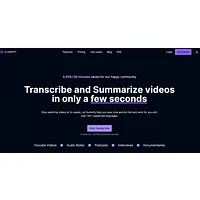
Summarizing Tool.io offers free, instant summarization of long texts, documents, and articles through a clean web interface. It is a good fit for users who want a no-frills tool that handles multiple input types without an account. Casual readers, bloggers, and students tend to get the most from it.

AI PDF Summarizer is built specifically for PDF documents, making it useful for research papers, contracts, eBooks, and reports. It extracts the essential content from uploaded files and returns a concise summary in seconds. If your daily work involves reading PDF-heavy material, this focused tool removes the friction of copying text out of a viewer.

Ai Summary Generator uses advanced NLP to convert lengthy documents into concise summaries, and is offered as a paid service. It is positioned for users who want higher quality and longer inputs than free tiers typically allow. Professionals handling white papers, market research, or technical documentation are the typical audience.

Grasp AI Summarizer Tool is a freemium summarizer that emphasizes intelligent condensation while preserving essential insights. The free tier covers light use, while paid plans typically unlock longer documents and richer features. It works well for knowledge workers who want flexibility between quick summaries and deeper analysis.
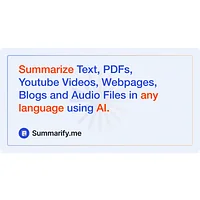
Summarify.me is a free AI summarizer that accepts a broad range of inputs including blogs, PDFs, websites, and videos. That format versatility makes it useful for creators and researchers who pull information from mixed sources. It is a strong general-purpose option when you do not want to switch tools for each content type.

Summarizer.org is a paid summarizer that highlights customizable output length, letting users tune summaries to short briefs or longer recaps. It targets users who need predictable, adjustable output for editorial or content workflows. The paid model generally includes higher volume and better consistency.
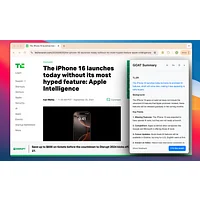
AI Summary Generator is a freemium browser extension that condenses any web page into a summary with a single click. It is built for people who spend most of their day in the browser and want summaries without leaving the tab. News readers, analysts, and competitive intelligence teams often prefer this lightweight approach.

AI Text Summarizer is a free tool that condenses long documents and adds an interactive chat layer for follow-up questions. The combination is useful when you want a summary first, then need to dig into specific points without rereading the original. Students and self-learners get a lot of value from the Q&A capability.

AI Text Summarizer is a freemium tool that extracts essential information from lengthy documents and delivers accurate summaries in seconds using NLP. It is geared toward users who want speed and reliability on long inputs, with the free tier covering light use and paid plans handling heavier workloads.

Genei is a free AI research assistant that summarizes articles and extracts key information to boost productivity. It is designed for researchers and students managing large reading lists, with features aimed at note-taking and reference management. According to Genei's own site, the tool focuses on accelerating literature review workflows.
How to choose
Match the tool to your dominant workflow rather than chasing the longest feature list. If you read mostly PDFs, start with AI PDF Summarizer; if you live in a browser, AI Summary Generator is faster. For mixed sources, Summarify.me handles blogs, PDFs, sites, and videos in one place. Researchers who need to ask follow-up questions should look at AI Text Summarizer or Genei, while users who need adjustable length and higher quality for client work can consider Summarizer.org or Ai Summary Generator. Free options like AI Summarizer and Summarizing Tool.io cover occasional needs without any cost.
More AI tools to explore

Smatr-AI
Smatr-AI is a browser extension that summarizes text and answers questions using AI language models.

TLDR This
TLDR This is a free AI summarization tool that condenses long articles and documents into key summary points instantly.

Saya
Saya is an AI summarization tool that transforms podcasts, videos, and articles into concise insights.
PDF Summarizer
PDF Summarizer is an AI tool that condenses lengthy documents into concise summaries in seconds.

WPS | AI Summarizer
WPS | AI Summarizer efficiently condenses lengthy texts into concise summaries, streamlining information intake for users.

Shortify
Shortify is an AI summarization tool that instantly condenses articles, videos, and web content into customizable summaries.