


Best C2Story Alternatives 6 apps
Compare the top alternatives to C2Story — pricing, features, and ratings.
C2Story is an AI storytelling platform that helps writers turn prompts, outlines, or rough drafts into structured narrative content, often with visual or multimedia accompaniment. Plenty of creators land on it, get value from it, and then start shopping around for something that fits a slightly different medium, budget, or workflow. That is healthy. Alternatives exist because no single tool can be the best comic maker, manga studio, children's book illustrator, and video story producer at the same time.
Why look for a C2Story alternative?
Most people weighing a switch aren't unhappy with C2Story's core writing flow. More often, they have realized that their actual goal is visual rather than purely textual, and C2Story is best as a narrative engine rather than an image-first output tool. Others run into output format limits: they want print-ready comics, vertical-scrolling manga, illustrated children's books, or short-form video instead of a written story with attached stills.
Cost is a second common driver. Many of the strongest competitors on HyperStore offer a free tier or one-time-credit pricing that differs from C2Story's subscription structure, which matters for hobbyists and students. A smaller group switches because they want a more opinionated visual style, multi-character consistency, or a built-in animation pipeline that their current tool simply doesn't provide.
What to look for in a C2Story alternative
Output medium matters more than feature lists
Be honest about what you actually want at the end of a session: a PDF, a printed book, a manga page, a social video, or an animated clip. Each alternative below is optimized for one of these outputs. Choosing by feature parity usually ends in frustration, because the underlying rendering pipeline, aspect ratios, and text-handling are different across these tools.
Character and style consistency
If your story revolves around a recurring protagonist, look for tools that explicitly market consistent characters across frames or pages. This is a hard technical problem in generative AI, and the platforms that lead on it tend to call it out. Anything that only generates one panel at a time without character locking will start to drift quickly.
Pricing model and generation credits
Free tiers, subscriptions, and credit packs behave very differently. If you only generate a few stories a month, a free tool is plenty. If you produce weekly content, a subscription with generous monthly credits usually works out cheaper than pay-per-render. Always check whether exported video or print-ready files count as an extra cost.
Practical integrations
Writers moving off C2Story often care about export formats, language support, and whether the tool publishes to platforms like YouTube, Kindle, or Webtoon directly. A tool that produces beautiful images but only exports as a proprietary project file is rarely the right upgrade for someone iterating on a story.
The best C2Story alternatives
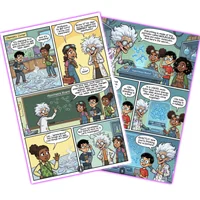
ComicInk is an AI comic book platform focused on visually striking pages with consistent characters and dynamic panel layouts. Compared to C2Story's text-first storytelling, it leans heavily into the comic format, which makes it a strong pick if you have always wanted a print-ready or web-friendly comic rather than a written narrative. The free tier makes it approachable for first-time creators testing the workflow.
MyImagineer turns story ideas into illustrated children's books with consistent characters and artwork, generating pages that look closer to a picture book than a script. Where C2Story produces narrative text with optional visuals, MyImagineer treats the page layout as the primary artifact, which is ideal for parents, teachers, and small-press authors. It is free to try, so it is a low-risk way to prototype a children's book before committing to a paid pipeline.

Oniichan is an AI manga generator that produces fully illustrated manga from a story prompt in minutes, with the conventions of panel flow, speech bubbles, and tone that readers expect. It suits creators who specifically want manga output rather than the broader, more text-oriented approach C2Story takes. If your switching reason is "I want it to actually look like manga," Oniichan is one of the closest fits on the list, and it is free to use.
Plot Party turns ideas into visually compelling narratives and short videos, sitting a bit closer to C2Story's storytelling remit but with stronger video output. It is a paid tool, so it makes the most sense for creators who want a single workspace that handles both narrative and motion rather than stitching together two or three separate apps. Think of it as a step up rather than a sideways move.
StoryIntoVideo converts written narratives into professional short videos with AI-generated characters, settings, and voiceovers. The trade-off is clear: you give up the reading-first experience of C2Story in exchange for a finished shareable video. It is paid, and it fits marketers, educators, and creators who measure success in views and watch time rather than chapters read.
Zorq AI animates static images into motion video inside a unified creative workspace, which is a different angle than C2Story's narrative generation. It works best when you already have storyboards or illustrations you want to bring to life, which pairs naturally with the image-heavy competitors above. As a paid tool, it is most useful for creators who already produce visual assets and need the animation step.
How to choose
If your sticking point with C2Story is "I want a proper comic book," start with ComicInk. For a children's book instead, try MyImagineer. Manga fans should test Oniichan. If you need both narrative and video in one place, look at Plot Party or StoryIntoVideo, and pick between them based on whether written story is still your starting point or finished video is the true end goal. If you already have art and just want motion, Zorq AI is the targeted pick.