


Best Lewis by Keytalk Alternatives 7 apps
Compare the top alternatives to Lewis by Keytalk — pricing, features, and ratings.
Lewis by Keytalk is a storytelling tool for turning ideas into personalized narrative experiences. People may look for Lewis by Keytalk alternatives when they need a different format, more visual control, a child-focused workflow, or a price and access model that better fits their project. The strongest option depends on whether the finished result should be an illustrated book, a bedtime story, or a short video. This guide compares the available choices by use case rather than assuming every creator needs the same kind of app.
Why look for Lewis by Keytalk alternatives?
Lewis may already be a good fit for someone who likes its approach to creating stories. An alternative becomes worth considering when the desired output is more specifically an illustrated children's book, a personalized bedtime story, or video; creators may also be comparing free and paid options, or looking for a workflow that feels easier on their preferred device.
Switching is not automatically an upgrade. Check whether a competitor's focus solves a real gap, such as visual customization, character consistency, photo-based personalization, or voice-and-video output, and weigh that benefit against the learning curve and the experience you already have with Lewis.
What to look for in a Lewis by Keytalk alternative
Final format
Start with the finished format you need. A tool centered on illustrated storybooks may be a better fit for a keepsake or read-aloud, while a video-focused platform makes more sense when the story needs motion, settings, characters, or voiceovers as part of the final result.
Personalization and consistency
Look at how personalization works, not just whether it is advertised. A child's photo, customizable characters and worlds, or consistent characters and artwork across a book each serve a different purpose, so choose the approach that matches the people and stories you want to represent.
Ease of use and review
Consider how much input the workflow expects from you and how easily you can review the generated result before sharing it. For a broader framework for thinking about reliability and risk in AI systems, consult NIST's AI Risk Management Framework; in practice, a straightforward editing and review routine is often more useful than a long list of controls.
Price, access, and privacy
Compare the free or paid listing with the amount of content you plan to make, and check access requirements on the product page before committing. For child-focused services, review how photos and stories are handled and read the FTC's COPPA guidance before uploading personal material.
The best Lewis by Keytalk alternatives

C2Story is a strong fit when you want illustrated stories with customizable characters, worlds, and 50+ visual styles. Compared with Lewis, it is the better choice for creators who want to explore visual variation and shape the story world directly. It is marked free on HyperStore, while Lewis may still be the simpler choice if its current storytelling workflow already does what you need.

Lullaby is designed around a child's photo: it turns that photo into a cartoon character in a personalized, AI-generated illustrated storybook. It is a better fit than a general storytelling workflow when the child's likeness is central to the keepsake, whereas Lewis may suit readers who do not need photo-led personalization. Lullaby is marked paid on HyperStore, so include that trade-off in the decision.
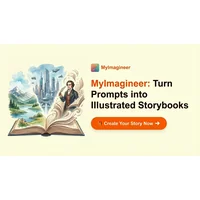
MyImagineer turns story ideas into professional illustrated children's books, with consistent characters and artwork across the book. Choose it over Lewis when a cohesive book format and character continuity matter most. It is marked free on HyperStore, making it a practical option to test for families, educators, or independent creators.
Plot Party is aimed at transforming creative ideas into visually compelling narratives and video content. It is the better fit when you want to move from a story concept toward a more visual, video-oriented result rather than staying with a book-first workflow. Plot Party is marked paid on HyperStore; Lewis remains worth considering if you prefer its existing way of developing stories and do not need video output.
StoryIntoVideo starts with a written narrative and turns it into a professional short video with AI-generated characters, settings, and voiceovers. Choose it when video is the final deliverable and you want those production elements in one workflow; it is a more focused choice than a general story tool for that scenario. It is marked paid on HyperStore, so compare the value of video output with staying on Lewis.

TuckMeIn focuses on personalized AI-generated bedtime stories in which a child becomes the hero. It is a strong fit for families looking for a repeatable, child-centered bedtime use case, while Lewis may remain preferable for people creating stories outside that routine. TuckMeIn is marked free on HyperStore.

Wonder Wisp creates personalized AI-illustrated children's storybooks that make a child the hero of custom bedtime stories. Choose it when you want the bedtime experience presented as an illustrated book, especially if that child-as-hero framing is the main appeal. It is marked free on HyperStore, giving it a low-friction option to compare with Lewis.
How to choose
Use C2Story for customizable worlds and visual styles, Lullaby when a child's photo should drive the story, and MyImagineer when consistent illustrated children's books are the priority. Pick Plot Party or StoryIntoVideo for visual narratives and short videos; choose TuckMeIn or Wonder Wisp for personalized bedtime stories. Stay with Lewis if its current workflow meets the need and none of those focused differences solves a meaningful problem.