


Best Liminary Alternatives 6 apps
Compare the top alternatives to Liminary — pricing, features, and ratings.
Liminary helps people discover and follow information from the web in one place. People compare Liminary alternatives when they want different source coverage, a more focused workflow, or a tool built for meetings, research, or customer support. The options below are not all direct substitutes, but each can be a better fit for a particular job. That makes the comparison useful whether you are ready to switch or simply checking what else is available.
Why look for a Liminary alternative?
A change is often prompted by fit rather than a problem with Liminary itself. Someone may want global trend analysis, personalized web monitoring, live event signals, or a workspace for documents instead of a general discovery flow. A different platform can also make more sense when the surrounding workflow matters more than the feed, such as meeting summaries or customer-facing documentation.
Practical constraints matter too. The way an app handles sources, browser access, collaboration, and cost can shape its day-to-day usefulness. Keep Liminary in the comparison if its discovery experience matches your routine, and use the alternatives below to test a more specialized approach rather than switching on feature lists alone.
What to look for in a Liminary alternative
Source coverage and relevance
Look at which sources an app can monitor, how it groups topics, and whether its output helps you judge relevance. For a broader view of how digital news use is studied, the Reuters Institute's Digital News Report is a useful reference, but your own source needs should drive the choice.
Workflow fit
Decide whether you need quick discovery, interest-based monitoring, live event awareness, meeting capture, customer documentation, or collaborative research. The best Liminary alternative is usually the one that supports the next action you take with information, not simply the one with the most general capabilities.
Freshness and control
Check how clearly an app presents recency, topics, and filtering choices. If you follow fast-moving subjects, prioritize a workflow that makes important changes easy to spot; if you are building a knowledge base, prioritize organization and retrieval instead.
Privacy and cost
Check what content leaves your browser, what permissions are requested, and how free or freemium access is defined. The NIST Privacy Framework offers useful vocabulary for thinking about privacy risk, while a small real-world test can reveal whether the pricing model works for your use.
The best Liminary alternatives

DailyScope.ai uses AI to track global news trends by analyzing the most covered countries and themes across multiple sources. It is a stronger fit than a general Liminary workflow when you want a high-level view of what is receiving attention across regions, and HyperStore lists it as free. Choose it for broad trend scanning rather than for meeting notes or a document workspace.

Kolva captures, transcribes, and summarizes meetings directly in your browser, with its description stating a cost of $0.25 per hour; HyperStore marks it as free. It is not a like-for-like replacement for Liminary's information-discovery role, but it is a better fit when the information you need to retain comes from conversations. Teams that want browser-based meeting records should consider it alongside Liminary.
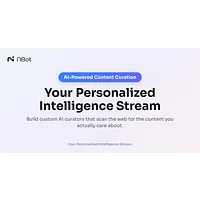
NBot AI creates personalized AI curators that monitor the web for specific interests, helping cut through noise and surface relevant content. Compared with Liminary, it suits people who want narrowly defined, interest-based monitoring rather than a broader discovery routine. HyperStore lists NBot AI as free.

Observe.Earth is a live global events monitoring platform that tracks natural disasters, social movements, and economic trends in real time. It is a better fit when Liminary is not specialized enough for event awareness or when you need to follow those categories as they develop. HyperStore lists it as free, making it a straightforward option to test for monitoring-focused use cases.

Paperbook is an AI-powered help center builder that automates customer support with intelligent documentation. It is a much more specialized alternative to Liminary, suited to support teams that need to turn knowledge into customer-facing documentation rather than browse updates. Its freemium listing gives teams a way to evaluate that support-documentation workflow before committing.

SurfSense is an AI research assistant that transforms documents into collaborative workspaces with intelligent search and knowledge management. Compared with Liminary, it is better suited to people who need to organize source material, find information within it, and work with others rather than simply discover new information. HyperStore lists it as freemium.
How to choose
Choose DailyScope.ai for country- and theme-level news trends, NBot AI for personalized web monitoring, or Observe.Earth for live global events. Choose Kolva when meetings are the source of important information, Paperbook when the goal is a customer help center, and SurfSense when research documents and collaboration matter most. Stay with Liminary if general information discovery remains the closest match to your routine.