


Best Squido AI - Video Generator Alternatives 7 apps
Compare the top alternatives to Squido AI - Video Generator — pricing, features, and ratings.
Squido AI - Video Generator is an AI video-generation tool for creating video content. Someone may look for an alternative because of price, a missing workflow, platform requirements, or a need to start with a different type of media. These Squido AI - Video Generator alternatives are aimed at distinct jobs, from captioning existing files to producing faceless social content or animating still images. Squido may still be the right choice if its current workflow matches your needs, so use the comparison to identify the specific reason to switch.
Why look for a Squido AI - Video Generator alternative?
People usually compare alternatives when their current video workflow stops matching the job. A creator may need captions from an existing recording, motion from still images, or a ready-to-post faceless format instead of a general video-generation workflow. Platform fit can matter just as much when the intended destination is YouTube, TikTok, or Reels.
Cost is another practical trigger, especially when a project is still experimental or requires frequent production. The listings below are marked free or paid, but that label is only a starting point; current limits, export terms, and usage rights still need checking. If Squido already handles the bottleneck without extra steps, staying with it can be more efficient than changing tools.
What to look for in a Squido AI - Video Generator alternative
Start with the final format
Decide whether you need a generated video, a polished clip from existing assets, image animation, captions, a faceless social post, or an email digest. The closest alternative is the one that removes your actual bottleneck, not necessarily the one with the broadest description.
Match the input to your workflow
Text prompts, images, video files, and audio files lead to different tool choices. Scenes AI is text-led, Kinovi accepts images, videos, and audio, MojoMake starts with images, and FlowSub works from video or audio. Identify what you already have before comparing the outputs.
Check finishing and publishing needs
For caption-heavy work, check whether the output can be used in the caption format your workflow expects; the W3C WebVTT specification is a useful reference point. For social content, confirm that the tool's workflow matches the destinations you use and the amount of manual review you can support.
Review access and practical limits
The supplied listings mark some options as free and others as paid, but that shorthand does not answer every buying question. Before switching, verify current usage limits, export conditions, commercial rights, and whether the result fits the platform where you publish; YouTube's official upload guidance is a useful baseline for that review.
The best Squido AI - Video Generator alternatives
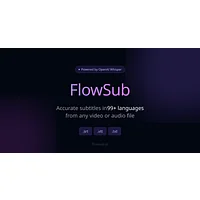
FlowSub is an AI subtitle generator for video and audio files that creates accurate, multi-language captions. Compared with Squido, it is a better fit when the main gap is captioning existing media rather than generating an entire video. FlowSub is listed as paid, so compare its current access terms with the value of the caption workflow you need.

GoFaceless creates ready-to-post faceless content for YouTube, TikTok, and Reels. Compared with Squido, it suits creators whose priority is a repeatable faceless publishing workflow and those destinations, rather than a general video-generation starting point. It is listed as paid, so review the current plan before committing to a regular content schedule.
Kinovi transforms images, videos, and audio into polished clips using Seedance 2.0 technology, according to its listing. Choose it over Squido when you want to start from existing visual or audio assets and that creation method fits your process. Kinovi is listed as free, making it a useful option to test before taking on a paid workflow.

MojoMake is an image-to-video generator that provides unified access to multiple video-creation models in one account. It is a stronger fit than Squido for creators whose work begins with still images or who want model choice in one workspace. MojoMake is listed as free, so it may be the first alternative to evaluate when access cost is the deciding factor.
MurmurCast turns YouTube videos, podcasts, and newsletters into AI-summarized daily email digests. It is not a direct replacement for a video-generation workflow; it fits someone whose real need is to consume or repurpose source content into concise updates rather than produce a new video. The listing marks MurmurCast as free.

Scenes AI transforms text prompts into polished, full-length videos with a script, visuals, voiceover, and music in minutes. Compared with Squido, it suits users who want a text-led production flow with several media elements handled together. Scenes AI is listed as paid, so it makes most sense when that workflow justifies a paid tool.
Zorq AI animates static images into videos through AI-powered motion synthesis inside a unified creative workspace. Pick it over Squido when the starting point is still imagery and the desired change is motion rather than a broader generation workflow. It is listed as paid, so compare the value of image animation against your current process.
How to choose
If captions are the bottleneck, start with FlowSub; for faceless social publishing, compare GoFaceless. Image-led workflows point to Kinovi, MojoMake, or Zorq AI, while text-led, full-length production points to Scenes AI. Choose MurmurCast when the job is digesting source media, then weigh free versus paid access and test the result on a representative project before leaving Squido.