


Best Summate Alternatives 6 apps
Compare the top alternatives to Summate — pricing, features, and ratings.
Summate is an AI-powered tool that condenses long articles, reports, and web pages into short summaries, helping readers extract key insights in seconds. People often search for Summate alternatives because they want broader format support (PDFs, podcasts, videos), better language coverage, transparent pricing, or integrations with their existing reading workflow. Below, we compare the strongest Summate competitors currently available on HyperStore.
Why look for a Summate alternative?
Summate is a solid choice for quick text summarization, but it isn't always the best fit for every workflow. Some users want broader input support, for example summarizing PDFs, podcasts, or YouTube videos rather than only web articles. Others hit walls on pricing tiers, language coverage, or the depth of the summary itself, particularly for technical or research-grade material. Switching tools is usually less about dissatisfaction and more about finding one that matches your specific reading habits and output needs.
What to look for in a Summate alternative
Input format and source coverage
The most useful summarizers support the formats you actually consume. If you read long PDFs, watch video lectures, or rely on RSS feeds, pick a tool that natively handles those sources instead of forcing copy-paste. Match the tool's input range to your daily content mix rather than chasing a long feature list.
Summary quality and customization
Look past marketing claims and read sample outputs. A good alternative lets you set summary length, tone, or focus area, and produces text that reads like a human wrote it. For research or business use, pay attention to citation handling and faithfulness to the source. Benchmarks like those tracked on Papers with Code offer a useful reference for comparing summarization approaches.
Pricing and usage limits
Free tiers are useful for trialing, but pay attention to monthly summary caps, word limits, and paywalled features like exports or API access. If you process large volumes daily, a paid plan often pays for itself through saved reading time. Always compare the effective per-summary cost rather than just the headline subscription.
Privacy and data handling
Summarizers ingest content that may include sensitive documents. Review each provider's data retention policy, whether inputs are used to train models, and whether enterprise or on-device options exist. The NIST AI Risk Management Framework is a solid baseline for evaluating AI tools on trust and transparency.
The best Summate alternatives

AI PDF Reader focuses specifically on document-heavy workflows, instantly summarizing, translating, and analyzing PDF files with NLP technology. Where Summate generally targets web articles, AI PDF Reader is the stronger choice when most of your reading is in PDF form, including academic papers, contracts, reports, or scanned books. It is free, making it attractive for students and researchers who need quick document triage without a subscription.
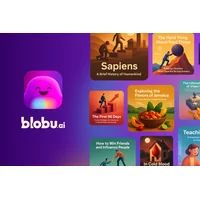
Blobu AI is built for readers who want book-length summaries without reading the full text, distilling long-form books into concise overviews of key concepts. Compared with Summate's article-first approach, Blobu AI caters to users who consume knowledge in book format and want a fast way to decide whether a title is worth their time. The free tier makes it easy to test on a few titles before committing to a new reading habit.
Pismo is a desktop AI writing assistant focused on improving your own writing through grammar correction, tone adjustment, and real-time refinement rather than summarizing other people's content. It is a different category from Summate, useful when your bottleneck is producing polished prose, emails, or reports rather than consuming summaries. Best for professionals who want a paid, always-on writing coach alongside their reading tools.

PodShrink compresses long podcasts into concise audio summaries, preserving key insights in a fraction of the listening time. Where Summate works on text, PodShrink addresses the audio-first audience of commuters, walkers, and anyone whose reading time is limited. It is free, which makes it a natural companion rather than a replacement to Summate for users who want both text and audio summarization.

SenseFeed focuses on two specific input streams, YouTube videos and RSS feeds, and delivers AI-generated summaries straight to your inbox on a personalized schedule. This automation is what sets it apart from Summate. Instead of summarizing on demand, SenseFeed keeps a continuous digest of topics you follow. It is a paid tool, best suited to professionals and enthusiasts who track many channels and want a low-effort daily briefing.

Talk2Page turns any webpage into an interactive AI chatbot you can query for instant Q&A rather than a static summary. This conversational model differs from Summate's one-shot summary output and works well for research, dense documentation, or pages you will return to multiple times. Its freemium pricing means you can try the core chat experience before paying for higher limits or premium features.
How to choose
Pick by workflow rather than feature list. If your reading is mostly PDFs, start with AI PDF Reader; if it is books, try Blobu AI; if you want to improve your own writing, Pismo is the right fit. For audio-first schedules, PodShrink handles podcasts well. To track many channels passively, SenseFeed's email digests are unmatched. If you need to query and revisit dense pages rather than skim them, Talk2Page's conversational model is the most distinctive option.