


Best Unify AI Alternatives 7 apps
Compare the top alternatives to Unify AI — pricing, features, and ratings.
Unify AI is a general AI workspace for bringing creative tasks into one place, which can appeal to people who want a broad starting point rather than a single-purpose app. If you are comparing Unify AI alternatives, the decision usually comes down to whether you need a more focused output, a different access model, or a workflow built around a particular medium. The options below cover subtitles, faceless video, image-to-video creation, summaries, and prompt-led production. Unify AI may still be the better fit when breadth and one general workspace matter more than specialization.
Why look for a Unify AI alternative?
A general AI workspace can reduce the need to jump among tools, but it may not be the fastest route when your goal is narrow. Someone producing captions may prefer a dedicated subtitle generator; someone publishing short-form channels may want a ready-to-post faceless-video workflow. Price, input format, output style, or the platforms you publish to can also make a specialist more practical.
That does not make Unify AI a poor choice. It can remain a sensible starting point when you are still exploring use cases or prefer a broad workspace; an alternative is most useful when it solves a concrete bottleneck with less setup or a closer match to the finished asset.
What to look for in a Unify AI alternative
Match the tool to the finished asset
Start with what you need to publish: subtitles, a complete faceless video, an animated image, or a summarized digest. A focused app can be a better fit than a general workspace when its core output matches the job and reduces extra steps.
Check inputs and workflow shape
Compare whether the tool begins with uploaded audio or video, images, existing media, text prompts, or source content such as YouTube videos and newsletters. The best choice is the one that fits the material you already have, not simply the one with the broadest description.
Review quality and accessibility needs
For caption-heavy work, check timing, language coverage, and how easily captions can be reviewed before publishing. The W3C guidance on captions is a useful reference for thinking about accessible media, even when your chosen app handles generation for you.
Compare access and publishing needs
Use the listing's free or paid signal as an initial filter, then consider whether the workflow suits your destination. If YouTube is central, YouTube's official captions guidance can help you check what the final upload and review process requires.
The best Unify AI alternatives
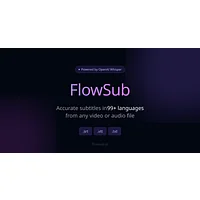
FlowSub is a more specialized choice than Unify AI when the main job is turning video or audio into accurate, multi-language subtitles. It suits creators who need captions rather than a broader creative workflow, and the HyperStore listing marks it as paid. Choose it when caption generation is the bottleneck; keep Unify AI in consideration if you want a wider starting point.

GoFaceless focuses on creating ready-to-post faceless content for YouTube, TikTok, and Reels, so it is a closer fit for repeatable social-video production than a general AI workspace. It suits creators who want to build videos without appearing on camera and value platform-oriented output. The listing marks GoFaceless as paid, while Unify AI may appeal more if your needs extend beyond this format.
Kinovi is an AI video generator that transforms images, videos, and audio into polished clips using Seedance 2.0 technology. Compared with Unify AI, it offers a concrete media-in, clip-out path for creators who already have source assets and want to turn them into video. The listing marks Kinovi as free.

MojoMake is a focused image-to-video option with unified access to multiple video creation models in one account. It suits creators who want model choice within a single video workflow, rather than a broader AI workspace, and the listing marks it as free. Choose it when still images are the starting point and motion is the desired result.
MurmurCast serves a different need from video-first tools: it turns YouTube, podcasts, and newsletters into AI-summarized daily email digests. It is a practical fit for people who want a regular reading or listening summary instead of a media-production workflow. The listing marks MurmurCast as free, while Unify AI may be the better comparison point for broader creative work.

Scenes AI turns text prompts into polished, full-length videos with a script, visuals, voiceover, and music in minutes. It is better suited to creators who want a prompt-led path from idea to complete video, whereas Unify AI may be preferable when the task is less specifically video-oriented. The HyperStore listing marks Scenes AI as paid.
Zorq AI focuses on transforming static images into animated videos through AI-powered motion synthesis within a unified creative workspace. It suits creators who already have still visuals and want to add motion without choosing a broader production route. The listing marks Zorq AI as paid, so compare that access model with Unify AI before switching.
How to choose
Choose FlowSub when captions are the priority, GoFaceless for ready-to-post faceless social content, and Kinovi or MojoMake when you are starting from images or mixed media. Pick MurmurCast for daily email digests, Scenes AI for text-to-full-video production, and Zorq AI for animating still images. If those use cases are only part of your needs, staying with Unify AI's broader workspace may be more convenient.