


Best VideoFlux Alternatives 7 apps
Compare the top alternatives to VideoFlux — pricing, features, and ratings.
VideoFlux is an AI video creation app for turning ideas into shareable video content. People compare VideoFlux alternatives when they need a different workflow, platform fit, feature set, or price model. The right option depends on whether the job is captioning existing media, producing faceless posts, animating images, summarizing source material, or creating a fuller video from a prompt. This guide keeps the comparison practical so you can decide whether to stay with VideoFlux or switch.
Why look for a VideoFlux alternative?
Video creation needs vary more than the label suggests. One creator may need subtitles for existing footage, while another wants ready-to-post faceless content, image animation, or a complete prompt-led production flow. If VideoFlux does not match the input format, publishing destination, level of automation, or budget you have in mind, a specialized alternative can remove friction.
Switching is not automatically better. A focused app can be easier for one task but less suitable for a broader workflow, and a free listing may not replace every capability you use today. Compare the actual job, the assets you start with, and the way you want to review or publish the result before moving your whole process.
What to look for in a VideoFlux alternative
Workflow match
Start with the first step, not the final format. If you begin with audio and video files, captions may be the priority; if you begin with a text prompt or still image, a generation or animation workflow may save more time. Choose the tool whose stated job is closest to the work you repeat most.
Input and output fit
Check what you can bring in and what you need to take out: source video, audio, images, scripts, full-length videos, short clips, or daily digests. For caption-heavy projects, the W3C WebVTT specification is a useful reference when evaluating how subtitles may fit into a web publishing workflow. This keeps the comparison grounded in handoffs rather than just the demo.
Automation and control
Some workflows benefit from a ready-to-post result, while others need control over source assets, model choice, scripts, voiceover, music, or motion. Decide how much of the process you want the app to handle and where human review still matters. A more focused tool can be the better alternative when it removes steps you do not need.
Platform and pricing fit
Match the tool to the destination and to the way you plan to use it, whether that means YouTube, TikTok, Reels, email, or a broader creative workspace. You can also consult YouTube's official caption guidance when captions are part of the publishing routine. Treat the free or paid label as a starting point, then verify the current offer and whether it suits your volume and review process.
The best VideoFlux alternatives
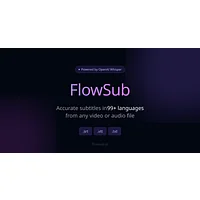
FlowSub is a more specialized alternative when the central task is turning video or audio files into accurate, multi-language captions. It suits creators who already have source media and want subtitles to be the main deliverable, rather than a broader video-making workflow. HyperStore lists FlowSub as paid, so it is worth comparing the cost of a caption-focused tool with the value of your current VideoFlux process.

GoFaceless focuses on creating ready-to-post faceless content for YouTube, TikTok, and Reels. It is a good fit for creators building platform-specific content without making on-camera presentation the center of the format, while VideoFlux may still suit a less specialized workflow. GoFaceless is listed as paid on HyperStore.
Kinovi is suited to asset-led creation: it transforms images, videos, and audio into polished clips with Seedance 2.0 technology. Choose it when you want to combine existing media and turn it into clips, rather than start with a caption-only or summary workflow. HyperStore lists Kinovi as free, making it a practical option to evaluate alongside VideoFlux.

MojoMake is aimed specifically at turning images into video and provides unified access to multiple video creation models in one account. It suits users who begin with still images and value having model options in a single workspace. HyperStore lists MojoMake as free, so it is an accessible alternative to test when VideoFlux is not the right image-to-video fit.
MurmurCast is an adjacent alternative rather than a direct video-production replacement: it turns YouTube, podcasts, and newsletters into AI-summarized daily email digests. It suits people whose real goal is to keep up with or repurpose source material in email, not to produce another finished video. HyperStore lists MurmurCast as free.

Scenes AI turns text prompts into polished, full-length videos with a script, visuals, voiceover, and music in minutes. It is a strong fit for someone who wants an end-to-end, prompt-led production path and prefers those elements to be part of one generated result. Scenes AI is listed as paid on HyperStore, so compare that workflow with the breadth and control you get from VideoFlux.
Zorq AI focuses on turning static images into animated videos through AI-powered motion synthesis in a unified creative workspace. It suits creators who already have still visuals and want to add motion, rather than users looking primarily for captions, summaries, or faceless production. HyperStore lists Zorq AI as paid.
How to choose
Choose FlowSub when captions are the priority, GoFaceless for ready-to-post faceless content, Kinovi or MojoMake for image-led creation, MurmurCast for AI-summarized email digests, Scenes AI for prompt-to-full-length video, and Zorq AI for animating static images. If none maps cleanly to your workflow, staying with VideoFlux may be the simpler choice.