
Appomate
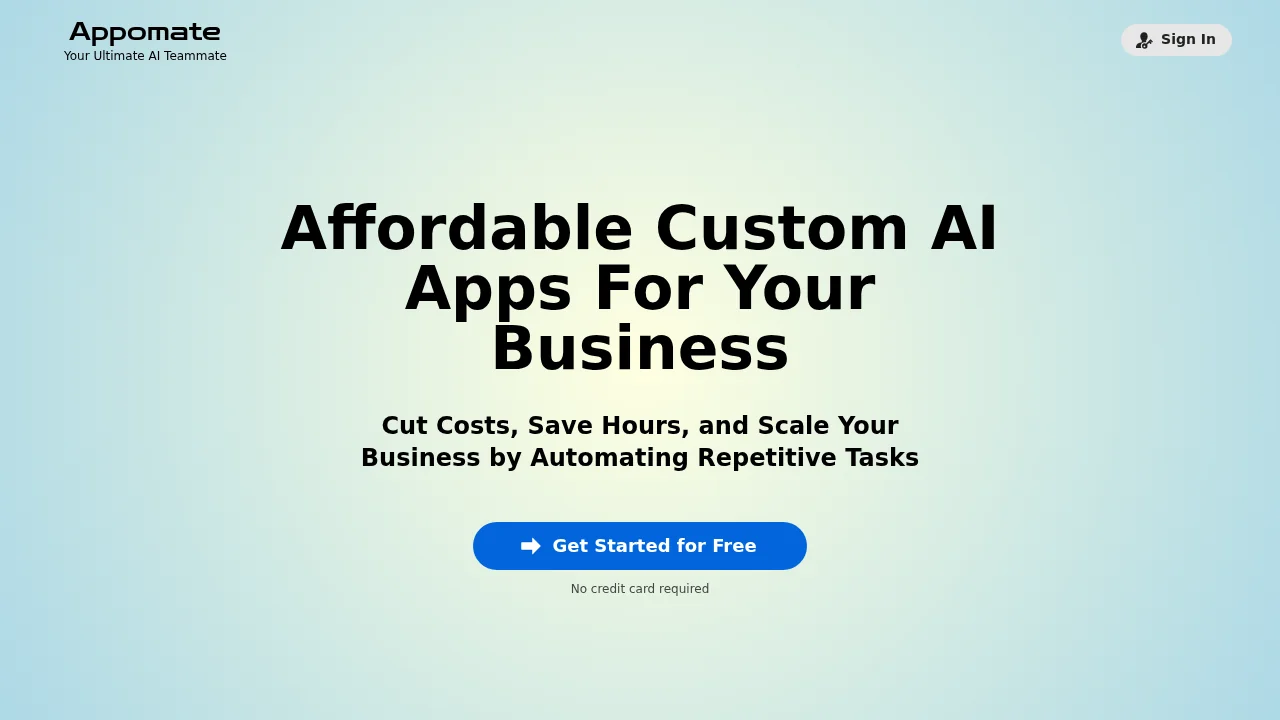
Appomate lets you build custom AI agents and applications tailored to your exact automation needs.
Screenshots
About Appomate
Appomate is a platform designed for users who need custom AI solutions without building from scratch. Instead of wrestling with complex development, you describe your specific automation requirements—whether streamlining workflows, automating repetitive tasks, or deploying intelligent agents—and Appomate's AI and development team designs a tailored solution. The platform bridges the gap between your vision and execution, handling the technical complexity so you can focus on results.
The creation process emphasizes transparency and control. You can test your custom AI application or agent in a sandboxed environment before committing financially, ensuring it meets your exact specifications and performs as expected. This 'Try before you buy' approach reduces risk and lets you validate functionality comprehensively. Once satisfied, the team deploys your solution, making it accessible through Appomate's intuitive dashboard or via a dedicated public URL for seamless integration into your existing workflows.
Beyond individual deployment, Appomate offers integration support and free assistance post-launch, minimizing friction in adoption. For users looking to monetize their custom creations, the platform includes a revenue-sharing model where you earn a percentage of sales generated by your commissioned app or agent. This creates an opportunity to build passive income while solving real business problems—turning your automation needs into potential revenue streams.
Pros
Cons
Alternatives to Appomate
AppDeploy
Rocket
biela.dev
Momen | Vibe Architect
Sketchflow.ai
ThinkRoot - The AI Compiler
Atoms