The best AI investment research tools in 2026 aren't just faster search engines layered on top of financial data — they actively surface connections across earnings calls, SEC filings, macro indicators, and news sentiment that a human analyst would take days to thread together. This guide compares the leading platforms in detail: AlphaSense, Magnifi, Visualping, Koyfin, and several specialized tools worth your attention. You'll learn what each platform does well, where it falls short, and which trader or analyst profile it actually fits. If you're trying to compress your research cycle without compromising depth, read on.
Why AI Investment Research Tools Are Reshaping the Buy Side
The traditional research workflow — pulling filings from EDGAR, scanning broker notes, cross-referencing earnings transcripts — hasn't changed structurally in decades. What's changed is the volume of signal competing for attention. Global data creation is projected to exceed 120 zettabytes by 2026, and a meaningful slice of that is financially relevant text. No analyst team can read it all. AI investment research tools solve the throughput problem, but the better ones also solve a quality problem: they reduce hallucination risk by grounding outputs in cited source documents rather than generative synthesis alone.
The Shift From Search to Synthesis
Earlier generations of fintech tools gave you better search — more sources, faster indexing. The 2025-2026 generation does something structurally different: it synthesizes across sources and surfaces contradictions. Ask AlphaSense why a company's gross margin trend diverges from its peer group, and it won't just return documents that mention gross margin. It will generate a reasoned comparison grounded in cited filings. That's the meaningful leap.
What Retail Traders Actually Need vs. What Institutions Buy
Institutional desks care about breadth — thousands of tickers, real-time broker research aggregation, API access for quant workflows. Retail traders and independent analysts have different constraints: budget, time, and a need for interfaces that don't require a Bloomberg terminal certification to operate. The tools below span both ends of that spectrum. Knowing which category you're in will determine which platform is worth your money.
AlphaSense: Enterprise-Grade Intelligence for Serious Analysts
AlphaSense remains the benchmark for institutional-quality AI investment research. Its corpus spans over 10,000 content sources — broker research, SEC and global regulatory filings, earnings call transcripts, news, and trade journals — all searchable through a natural language interface backed by proprietary large language models. The platform's "Smart Summaries" feature condenses lengthy earnings transcripts into structured takeaways, while "Sentiment Analysis" tracks how management tone shifts quarter over quarter across thousands of companies simultaneously.
Search and Discovery
The core differentiator is AlphaSense's semantic search, which understands financial concepts rather than just keywords. Searching for "supply chain risk" returns documents that discuss logistics disruption, inventory build, and single-source supplier exposure — even when those exact words don't appear. For analysts covering complex industries like semiconductors or specialty pharma, this semantic depth cuts noise dramatically.
Earnings Intelligence and Transcript Analysis
AlphaSense indexes transcripts within minutes of an earnings call ending. Its "Quick Earnings Summary" distills the key financial metrics, forward guidance, and analyst Q&A themes into a scannable brief. Portfolio managers covering 40+ names during earnings season will find this feature alone justifies the subscription cost. The caveat: pricing starts around $3,000 per year for individual plans, climbing steeply for team and enterprise tiers.
Who It's For
Buy-side analysts, portfolio managers at hedge funds and RIAs, and senior equity researchers at brokerages. It's overkill for someone trading a personal account on the side, but it's genuinely best-in-class for professionals whose job is building investment theses from primary source documents.
Magnifi: AI-Powered Investment Discovery for Self-Directed Investors
Magnifi takes a fundamentally different angle. Where AlphaSense is a research intelligence layer, Magnifi is more of an investment discovery and portfolio construction tool. Its conversational interface lets users search for investments using natural language — "find me ETFs with low-cost exposure to Indian infrastructure" yields ranked results with fee comparisons, historical performance, and factor exposures. TIFIN, the fintech behind Magnifi, has focused on making institutional-quality screening accessible to self-directed investors and financial advisors.
Conversational Portfolio Screening
The natural language screener is the headline feature, and it works better than most competitors. It understands investment intent, not just financial jargon. You don't need to know the Bloomberg field name for "price-to-free-cash-flow" — you can describe what you're looking for conceptually. The platform maps that intent to actual securities and explains the tradeoffs between options it surfaces.
Limitations to Know
Magnifi is stronger on discovery than on deep fundamental research. It won't parse a 10-K for you or flag a specific risk factor buried in an MD&A section. Think of it as a smart screener and portfolio construction assistant, not a research analyst replacement. For analysts who want document-level intelligence, AlphaSense or a combination approach will serve better.
Visualping: Monitoring Market Signals You'd Otherwise Miss
Visualping is an unusual inclusion in any investment tool roundup, but analysts who use it seriously swear by it. The platform monitors web pages for changes and sends alerts when content updates — which sounds mundane until you consider the use cases: tracking when a competitor files a new product approval, when a regulatory agency updates enforcement guidance, when a company's investor relations page quietly changes its executive team listing, or when a supply chain partner updates its shipping terms. These are leading indicators that never show up in earnings calls because they happen between reporting cycles.
Use Case: Regulatory and Competitive Intelligence
A biotech analyst monitoring FDA advisory committee pages gets an immediate alert when new meeting materials are posted. A consumer staples analyst tracking a competitor's promotional pricing page catches discounting patterns before the quarterly results surface them. This kind of ambient monitoring is genuinely complementary to deeper research platforms — it catches the things that structured data sources miss because they haven't been indexed yet.
Pricing and Practical Setup
Visualping offers a free tier covering basic page monitoring, with paid plans scaling by monitoring frequency and number of tracked pages. The setup requires no technical skill: paste a URL, define the section to watch, set your alert frequency, and you're done. For analysts building a surveillance layer around their coverage universe, it's one of the highest-ROI tools on this list relative to its cost.
Koyfin: Financial Data Visualization for Independent Analysts
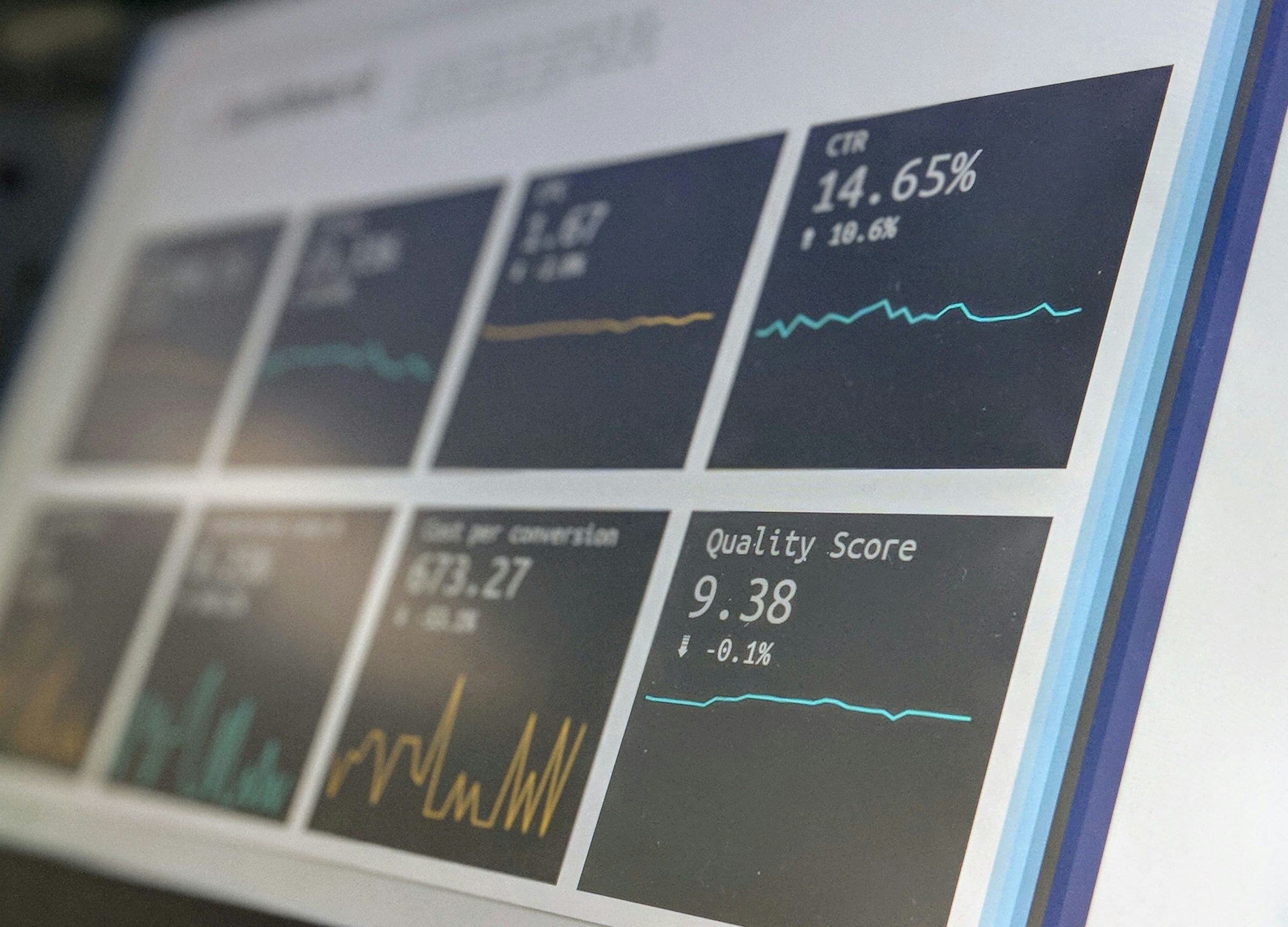
Koyfin has built a loyal following among independent analysts and self-directed investors who want Bloomberg-like charting and data access without the terminal price tag. Its strength is in financial data visualization — charting fundamental metrics over time, comparing companies across custom peer groups, and building dashboard views that update automatically. The AI layer is less sophisticated than AlphaSense, but Koyfin isn't trying to be a document intelligence platform. It's a financial data workbench.
Dashboards and Custom Peer Analysis
The dashboard builder lets you pull in any combination of fundamental, technical, and macro data into a single view. For a portfolio manager tracking 20 positions, building a dashboard that surfaces revenue revisions, price-to-earnings multiples, and relative strength simultaneously takes about 20 minutes the first time. After that, it updates daily without any manual work. The free tier is genuinely useful; the Pro plan at roughly $50 per month unlocks the full data depth.
Macro and Economic Data Integration
Koyfin integrates FRED data, central bank feeds, and economic calendar data alongside equity fundamentals. For a macro-oriented investor trying to map interest rate trajectories against sector performance, this cross-asset view in a single interface saves meaningful time. Federal Reserve Economic Data (FRED) is one of the most comprehensive free macroeconomic databases available, and Koyfin's integration with it is well-implemented.
Specialized AI Tools Worth Adding to Your Research Stack
Beyond the platforms above, several niche tools solve specific research problems well enough to warrant a place in a serious analyst's workflow.
Anara: Organizing Multi-Format Research Documents
Anyone who's managed a research folder full of PDFs, Word documents, spreadsheet models, and web clips knows the retrieval problem. Anara interprets and organizes documents across multiple formats to streamline research and content creation — a practical capability when you're trying to find a specific risk factor you noted three months ago across dozens of documents. For analysts who accumulate large private research libraries, this kind of structured document intelligence saves hours of grep-style searching.
Optimly: Monitoring How AI Describes Your Coverage Universe
This one requires a slightly different framing. Optimly helps individuals and brands evaluate and enhance how AI describes them through real-time monitoring. For IR professionals and analysts covering companies where AI-generated summaries increasingly influence retail investor perception, understanding what AI models say about a company — and how that changes over time — is becoming a legitimate research input. It's an early-stage capability, but one worth watching as AI-intermediated investing grows.
Articuler: Structured Outreach for Expert Network Research
Primary research — talking to former executives, customers, and industry experts — remains one of the few genuinely differentiated edges available to investors. Articuler helps with the networking side, using AI to deliver researched, high-yield introductions seamlessly integrated with outreach workflows. For analysts who rely on expert networks but find the cold outreach process inefficient, this kind of AI-assisted contact strategy compounds over time.
Comparing Platforms: A Framework for Choosing
The right platform depends on your role, budget, and the specific bottleneck in your research workflow. Institutional professionals doing primary document research should lead with AlphaSense. Self-directed investors building screened portfolios will get faster time-to-value from Magnifi. Analysts who want financial data visualization comparable to a Bloomberg terminal at a fraction of the cost should look at Koyfin seriously. Visualping belongs in almost every coverage analyst's toolkit regardless of what else they use — its ambient monitoring capability fills a gap that no other tool on this list addresses.
Budget Considerations
AlphaSense is expensive by design — it's priced for professionals whose research output has direct monetary consequences. Koyfin and Magnifi offer meaningful free tiers that let you stress-test the product before committing. Visualping's free plan covers basic use cases. If budget is constrained, a Koyfin Pro subscription plus Visualping's paid tier is a high-ROI starting stack that costs under $100 per month combined.
Workflow Integration
Consider where your research bottleneck actually lives. If you're drowning in documents, AlphaSense or Anara solves that. If you're spending too long on screening, Magnifi is the right fix. If you're missing signals between earnings cycles, Visualping is the answer. The worst outcome is buying a powerful general-purpose tool when you have a specific, solvable problem.
It's also worth situating AI investment research tools within the broader wave of AI-powered productivity infrastructure. Just as Graphlit's API-first approach to unstructured data extraction shows how developers are building structured knowledge from messy document sources, the best investment research platforms are applying the same fundamental capability to financial content at scale. The underlying technology is converging; the differentiation is in the financial-domain training, source coverage, and workflow design.
For teams thinking about AI adoption more broadly, the pattern holds across industries. The AI tools reshaping customer retention workflows in 2026 operate on the same principle as research intelligence platforms: surface the right signal earlier, act on it before it becomes obvious, and systematize what used to require experienced human pattern recognition. Investment research is just a domain where the stakes for getting that right are particularly high.
The investment research landscape will look different again by 2027. Agentic workflows — where AI doesn't just surface information but executes multi-step research tasks autonomously — are already in early deployment at several platforms. AlphaSense has hinted at agentic features in its roadmap. For now, the tools above represent the practical frontier. Pick the one that solves your actual bottleneck, build fluency with it, and reassess as the capabilities compound. The analysts who build AI-augmented research habits now will have a significant head start when the next generation of tools arrives.