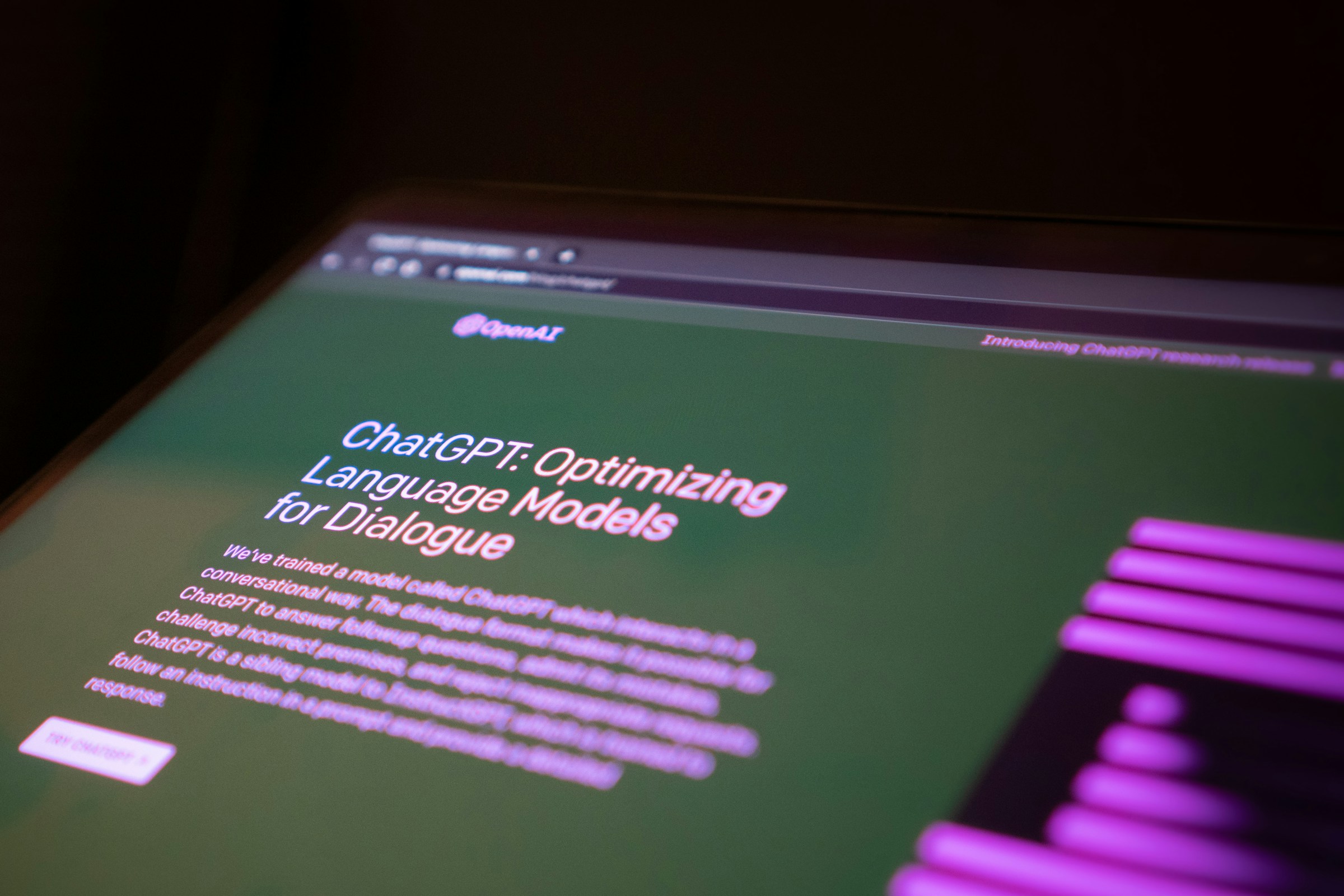
The AI assistant market has fractured in the best possible way. ChatGPT still carries enormous brand recognition, but several competitors have quietly overtaken it in specific domains — long-context reasoning, real-time web search, coding, and multimodal work. This post breaks down the strongest ChatGPT alternatives available right now, what each one actually costs, where it outperforms OpenAI's flagship, and which use cases it genuinely fits. By the end you'll have a clear map for swapping or supplementing ChatGPT based on what you're trying to get done.
Why Look Beyond ChatGPT at All?
OpenAI's model is excellent, but "excellent on average" isn't the same as "best for your job." ChatGPT's free tier is rate-limited, its web browsing is inconsistent, and its context window — while large — is not the largest available. Competitors have attacked every one of those weaknesses. Some are cheaper. Some handle longer documents. Some are faster. Knowing the field means you stop paying for capabilities you don't need and start using tools that genuinely accelerate your work.
The Pricing Landscape Has Changed
Twelve months ago, most capable models cost $20/month or more. Today you can access frontier-class inference for free through Gemini Advanced's trial, Mistral's open weights, or Meta's Llama-based apps. If budget is a constraint, that changes the calculation entirely. On the other end, enterprise buyers can now get dedicated throughput from Anthropic, Google, and Cohere at predictable per-token rates that undercut OpenAI's API pricing on several workloads.
Context Windows Now Differentiate Models Meaningfully
Gemini 1.5 Pro ships with a one-million-token context window, which is a different class of tool for anyone processing large codebases, legal contracts, or research corpora. Claude 3.5 Sonnet handles 200K tokens and is widely regarded as the strongest model for long-document summarization and careful instruction-following. If your work involves anything longer than a few thousand words, context length is the first spec to check — not marketing copy.
The Strongest ChatGPT Alternatives Right Now
These aren't ranked by hype. They're ordered by how often practitioners in specific roles report switching to them permanently.
Claude 3.5 Sonnet (Anthropic)
Anthropic's Claude consistently scores highest in independent evaluations for following nuanced, multi-step instructions without drifting. The interface is clean, the 200K context window is immediately useful, and the free tier is genuinely capable. Paid plans start at $20/month, matching ChatGPT Plus. Where Claude wins clearly: long document analysis, careful rewriting tasks, and anything where you need the model to hold a complex constraint across a long conversation. Writers producing long-form content should test it before assuming ChatGPT is the better tool — and if you want an AI writing assistant purpose-built for publishing, also check out the Muses review for a more focused option.
Gemini 1.5 Pro (Google DeepMind)
Gemini's headline feature is that context window. Feed it an entire codebase, a full book, or hours of meeting transcripts — it processes all of it in a single call. Google has also tightly integrated Gemini into Workspace, so if your team lives in Docs and Sheets, the friction cost of switching is near zero. The model's reasoning quality on complex STEM problems is competitive with GPT-4o, and the multimodal capabilities (image, audio, video input) are more mature than most alternatives.
Perplexity AI
Perplexity is built for one thing ChatGPT still does awkwardly: real-time, cited web research. Every answer surfaces sources inline, and the Pro tier lets you switch between underlying models including GPT-4o and Claude. For journalists, analysts, and SEO professionals researching content, it's genuinely faster than using ChatGPT plus a browser. If you're building an SEO workflow, pairing Perplexity with a tool like TermSniper — which decodes the search intent behind keywords by analyzing top-ranking pages — creates a tight research loop that ChatGPT alone can't replicate.
Mistral Large and Le Chat
Mistral is the European contender worth watching. Their flagship API model is significantly cheaper than GPT-4o at scale, and Mistral Large benchmarks competitively on reasoning and multilingual tasks. For developers building products, the open-weight releases (Mistral 7B, Mixtral 8x7B) mean you can run capable models on your own infrastructure with no per-token cost at all. Le Chat, their consumer interface, is free and fast — a solid daily driver for anyone who doesn't need OpenAI's ecosystem integrations.
Microsoft Copilot
Copilot runs on GPT-4o under the hood but adds something ChatGPT's standalone app doesn't offer: deep Office 365 integration. If your workflow is PowerPoint, Excel, Outlook, and Teams, Copilot surfaces the model's capabilities exactly where you need them rather than requiring a context switch to a chat interface. The $30/user/month enterprise tier is expensive, but for knowledge workers spending hours daily in Office apps, the productivity math often works out.
Open-Source and Self-Hosted Options
For teams with data privacy requirements or infrastructure budgets, self-hosted models have reached a point where they're genuinely viable. Meta's Llama 3 family, Mistral's open weights, and multimodal models like the ones covered in the Molmo AI review can all run on-premises — eliminating API costs and keeping sensitive data off third-party servers. The tradeoff is operational overhead: you need someone who can manage deployment, quantization, and updates. For the right team, that's a reasonable trade.
How to Match a Model to a Use Case
The mistake most teams make is picking one model and routing everything through it. The better approach is task-specific routing — using the cheapest capable model for high-volume low-stakes tasks (drafting subject lines, classifying support tickets) and reserving expensive frontier models for work where quality variance is costly (legal review, complex code generation, strategic analysis).
Content and Marketing Teams
Claude and Gemini both outperform ChatGPT at maintaining brand voice across a long conversation because of their larger context windows — you can paste in a full style guide and examples without truncation. For ad copy specifically, a purpose-built tool like 30characters generates high-converting search ad headlines faster than any general-purpose chat model. Specialized tools beat general ones when the task is well-defined and repetitive.
Researchers and Analysts
Perplexity for real-time web research, Claude for long-document synthesis, and Gemini 1.5 Pro for multimodal data (charts, PDFs, audio) form a capable research stack. For qualitative research specifically, an AI platform like HeyMarvin is built for the workflow in a way that chat models fundamentally aren't — it processes interview transcripts, tags themes, and surfaces insights rather than requiring you to engineer that process through prompts.
Developers and Engineers
GitHub Copilot (powered by OpenAI Codex) remains the default for inline code completion, but Claude 3.5 Sonnet has become many engineers' preferred model for architectural discussion, code review, and debugging complex issues. Mistral's open-weight models are the pick for on-device or edge deployments where latency and cost matter more than raw capability. For teams building AI-powered products on top of a model, the inference efficiency of tools like General Compute can meaningfully reduce per-query costs at production scale.
Ecommerce and Business Operations
If you're running an online store, no single general-purpose AI chat model replaces a purpose-built ecommerce tool. The best AI tools for ecommerce in 2026 guide covers the specific stack for product descriptions, ad creatives, and SEO — and the short version is that specialized tools outperform ChatGPT on structured, repeatable ecommerce tasks by a wide margin.
Pricing Summary: What You Actually Pay
Free tiers have expanded dramatically. Gemini Advanced, Claude.ai, and Perplexity Pro all offer capable free access with rate limits. Paid tiers across Claude, Gemini, and Perplexity sit at $20/month for consumers — identical to ChatGPT Plus. API pricing is where real differences emerge: Mistral's API is often 50-70% cheaper than GPT-4o for comparable output quality on many tasks, which matters enormously at scale. Microsoft Copilot for enterprise is priced as a productivity suite add-on, not a pure AI cost, which changes how finance teams evaluate it.
When ChatGPT Is Still the Right Answer
Custom GPTs, the plugin ecosystem, DALL-E integration, and deep third-party integrations (Zapier, Make, dozens of SaaS tools) still favor ChatGPT. If your team has already built workflows around it, the switching cost is real. OpenAI also moves fast — capabilities that are "missing" today often ship within a quarter. For general-purpose use with a wide integration surface, ChatGPT Plus remains a strong default. The point isn't to abandon it — it's to stop assuming it's always the best tool for the specific thing you're doing.
The AI assistant market in 2026 rewards the people who shop deliberately rather than default to brand familiarity. Pick the model whose strengths match your actual workload, run it alongside your current setup for two weeks, and let the output quality settle the argument. The tools are good enough now that the right choice depends almost entirely on what you're building or writing — not on which company has the most name recognition.