Glindra is an AI-powered productivity tool aimed at streamlining document creation and workflow automation for professionals and teams. Like any single-vendor AI tool, it has a specific feature mix, pricing tier, and integration footprint that doesn't fit every team. If you've hit a wall on price, missed a platform, or need a different angle on AI-assisted documents, this guide covers the top glindra alternatives worth a serious look.
Why look for a Glindra alternative?
Users tend to leave Glindra for a few well-defined reasons. The most common is pricing: per-seat AI productivity subscriptions add up fast, and many teams discover that a freemium alternative covers 80% of what they actually use. Others find that Glindra's editor feels too narrow, especially when the work shifts between long-form documents, slide decks, and quick web-style reports.
Platform coverage is another recurring concern. Teams that live inside Microsoft 365 or Google Workspace often want tighter ties to PowerPoint, Word, or Sheets. Finally, some users simply want a more opinionated AI workflow: tools that specialize in one job (slide generation, task automation, on-brand decks) rather than a generalist assistant.
What to look for in a Glindra alternative
Document and slide generation quality
The core promise of AI productivity tools is that a short prompt becomes a polished artifact. Evaluate the actual output: how clean is the layout, do charts and tables render correctly, and can you export to the formats your team uses (PPTX, DOCX, PDF)? Glindra handles generalist documents well, so any alternative should at least match baseline fidelity on the formats you care about.
Workflow and automation depth
If you're replacing Glindra partly for automation, check whether the alternative supports scheduled tasks, multi-step agents, and integrations with the tools you already pay for (Slack, Notion, Google Drive, CRMs). According to McKinsey's State of AI report, workflow automation is the single area where AI tools deliver the most measurable productivity gain, so depth here matters more than flashy demos.
Pricing transparency and free tier
Look for tools that publish clear pricing pages and offer a usable free tier or trial. Many AI apps use credit-based pricing that quietly caps power users. Compare the effective per-month cost for your expected usage, not just the sticker price.
Brand and design consistency
If your team produces client-facing decks, on-brand output is non-negotiable. The best tools let you lock in fonts, colors, and layout templates so every deliverable looks like it came from the same studio. For a broader overview of how AI is reshaping presentation design, Gartner's Hype Cycle for Generative AI offers useful context on where these capabilities sit today.
The best Glindra alternatives
NextDocs.io
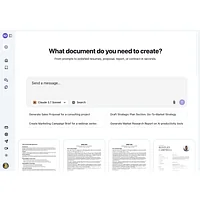
NextDocs.io is an AI-native document editor that generates professional slides and documents instantly from simple descriptions. Compared with Glindra, it leans harder into instant generation: you describe the deliverable and get a near-finished deck or doc in seconds, which is ideal for solo founders, consultants, and small teams that need volume over granular editing control. The free tier makes it a low-risk way to test whether AI-first authoring fits your workflow before committing to a paid Glindra-style subscription.
Skywork
Skywork is an AI workspace agent that streamlines productivity by automating paperwork and intelligent task management. Where Glindra focuses on document creation, Skywork positions itself as an agent that handles routine work — drafting follow-ups, organizing tasks, and chaining actions across apps. It suits operations-minded users and small teams who want AI to take work off their plate, not just help them write faster. The free entry point is useful for evaluating whether an agent-based approach beats a doc-centric one for your specific mix of work.
Slidely AI (backed by YC)
Slidely AI transforms PowerPoint presentations by creating on-brand slides efficiently, serving as your AI copilot for impactful business decks. If your main Glindra use case is generating client-facing or sales decks, Slidely is the more specialized pick: it lives inside PowerPoint rather than alongside it, which matters for teams whose stakeholders still expect .pptx files. The YC backing signals an actively developed product, and the free tier lets you test it on a real deck before upgrading.
Tome App AI
Tome App AI enhances PowerPoint presentations effortlessly, leveraging AI for design and content structuring. Tome is the most visually oriented option in this list, producing modern, web-style decks that often look closer to a product launch page than a traditional slide deck. It's a strong fit for marketers, designers, and anyone pitching visually rather than via dense bullet points. If Glindra's clean-but-corporate output doesn't match your brand, Tome's aesthetic-first approach is the obvious alternative to try.
How to choose
Pick NextDocs.io if you want the fastest path from prompt to polished document and value a generous free tier. Choose Skywork if your bottleneck is paperwork and task juggling rather than writing itself. Go with Slidely AI when your stakeholders live in PowerPoint and on-brand consistency is the priority. Reach for Tome App AI when the deliverable is a visually striking deck for an external audience. Glindra still wins for generalist teams who want one tool across many document types, but each of these alternatives beats it in a specific scenario.
Frequently asked questions
Is there a free Glindra alternative?
Yes. NextDocs.io, Skywork, Slidely AI, and Tome App AI all offer free tiers or free entry points that cover individual or light team use, making it possible to switch off Glindra without immediately paying for a replacement.
What is the best Glindra alternative overall?
There's no single winner — it depends on the job. NextDocs.io is the closest all-around replacement for general document work, Slidely AI leads for on-brand PowerPoint decks, and Skywork is the better pick when automation is the real priority.
Which Glindra alternative is best for PowerPoint decks?
Slidely AI is the most PowerPoint-native option, generating .pptx files with consistent branding. Tome App AI is the alternative if you'd rather present from a modern, web-style deck and don't strictly need a .pptx file.
Can AI tools really replace Glindra for business documents?
For most standard business documents — briefs, reports, internal memos, standard decks — yes. The remaining gap tends to be highly bespoke layouts, deep template customization, and strict corporate compliance, where human editing still matters.
Are these alternatives secure for business use?
All four tools are legitimate, actively maintained products used by real teams. As with any AI service handling business data, review each vendor's data handling, retention, and compliance documentation before uploading sensitive material.
Glindra remains a solid generalist, but the AI document and slide space has matured fast. Test a couple of these alternatives on a real piece of work this week — the friction of switching is much lower than it looks once you see the output side by side.