Captiongenerator helps creators turn ideas into captions for social content. People researching Captiongenerator alternatives may want a lower-cost route, a different platform fit, more control over video subtitles, or a workflow that goes beyond caption writing. The best choice depends on whether the job is short-form copy, media metadata, publishing automation, creator guidance, or complete video production. This guide compares the strongest HyperStore options by use case rather than assuming every tool solves the same problem.
Why look for a Captiongenerator alternative?
Captiongenerator can be a sensible choice when its core caption workflow matches what you publish and how you work. An alternative becomes worth considering when the price no longer fits, a needed feature is missing, or you want a tool that connects caption creation with a broader content process.
The word “caption” can also describe different jobs. A social manager may need post generation and scheduling, a video creator may mean subtitles in several languages, and a stock contributor may care more about image metadata. Those are changes in the job to be done, not necessarily evidence that Captiongenerator is a poor fit.
What to look for in a Captiongenerator alternative
Match the output to the job
Start by defining the asset you need at the end of the workflow: social copy, subtitles for an existing video, searchable metadata for an image, or a finished video. A tool can be excellent for one of these outputs while being the wrong replacement for another, so compare the result rather than the word “caption” alone.
Check platform and format fit
List the platforms and file types in your routine before switching. For video work, use YouTube’s official caption guidance as a reference point for the kind of subtitle workflow and review controls you may need, then check whether each candidate fits your publishing process.
Consider editing, language, and accessibility
Look for the level of review you need, especially when captions will be read as subtitles or relied on for access. The W3C guidance on captions is a useful reminder to evaluate readability, timing, and completeness instead of judging output only by how quickly it is produced.
Compare cost with time saved
Use the free or paid label as a starting point, not as the whole decision. A free tool may be ideal for a focused task, while a paid option can make sense when it replaces several manual steps or produces a format your audience already expects. Also consider how often you publish and how much editing you are willing to do.
The best Captiongenerator alternatives
Autokeyworder
Autokeyworder is a more specialized alternative to Captiongenerator: it automates AI image metadata optimization across stock platforms to improve discoverability and support passive-income workflows. It is a better fit for stock contributors whose main task is searchable image metadata, not drafting social captions. The listing is marked free, so it is worth considering when that narrower use case matches your needs.
Contents Pilot
Contents Pilot is the closest match here for a broader social publishing workflow. It generates personalized posts and schedules content, so it suits brands that want consistent social activity rather than a caption-only step. Listed as free, it may be a practical choice when publishing cadence and automation matter as much as the wording of each post.
FlowSub
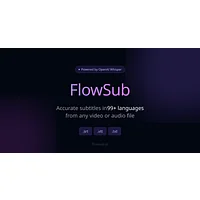
FlowSub is aimed at a different meaning of “captions”: it transforms video and audio files into accurate, multi-language captions. Choose it over Captiongenerator when subtitles, language coverage, and media-file processing are the main requirements. It is listed as paid, making it a better fit for video workflows where those capabilities justify a dedicated tool.
GetSpiced
GetSpiced is not a direct caption-writing replacement; it is an AI mentoring platform that learns a user’s goals and preferences to support productivity. It suits entrepreneurs and creators who need guidance around goals and working habits more than another caption-generation interface. The listing is free, so it can complement a caption tool when the bottleneck is planning or follow-through.
GoFaceless
GoFaceless moves further upstream from captions by creating ready-to-post faceless content for YouTube, TikTok, and Reels. It is a stronger fit when the desired output is a complete short-form video package rather than text to accompany existing content. The listing is marked paid, so compare it with Captiongenerator based on whether video production or caption writing is the bigger need.
How to choose
Stay with Captiongenerator when straightforward caption drafting is the main job. Choose Contents Pilot for personalized social posts with scheduling, FlowSub for video and audio subtitles, Autokeyworder for stock-image metadata, GetSpiced for creator mentoring, and GoFaceless when you need ready-to-post faceless video content. Start with the output and platforms that matter most, then weigh the listed cost against the amount of manual work you want to remove.
Frequently asked questions
Is there a free Captiongenerator alternative?
Yes. Autokeyworder, Contents Pilot, and GetSpiced are marked free in the HyperStore list, but they address different jobs: image metadata, social automation, and AI mentoring. Choose based on the output you need rather than treating “free” as a like-for-like replacement.
What is the best Captiongenerator alternative?
There is no single best choice for every workflow. Contents Pilot is the natural option for personalized social posts and scheduling, while FlowSub, GoFaceless, Autokeyworder, and GetSpiced fit subtitles, faceless video, stock-image metadata, and creator guidance respectively.
Which Captiongenerator alternative is best for video subtitles?
FlowSub is the clearest fit among these options because it turns video and audio files into accurate, multi-language captions. It is the one to examine when subtitle creation is the priority rather than social post copy.
Which alternative helps automate social media content?
Contents Pilot is designed for that scenario. It generates personalized posts and schedules content, making it a stronger choice than a caption-only workflow when a brand needs ongoing social publishing.
Can an alternative help with stock images or faceless videos?
Yes. Autokeyworder focuses on AI image metadata optimization across stock platforms, while GoFaceless creates ready-to-post faceless content for YouTube, TikTok, and Reels. Pick between them based on whether discoverable image assets or finished video content is the goal.
Begin with the format you need to produce, then compare each tool’s workflow and listed cost. Captiongenerator remains a reasonable choice for straightforward caption work, while these alternatives make sense when your goal expands into publishing, subtitles, metadata, mentoring, or video creation.