GPTBots is an enterprise AI agent platform developed by Metaverse Cloud. It lets businesses build, deploy, and manage custom AI solutions without writing a single line of code. Trusted by over 1,000 global brands, it targets operations, customer service, sales, and IT teams that need practical AI automation without a large engineering staff. The platform combines no-code development with genuine enterprise depth — multi-agent orchestration inside a click-based builder. If your organization is exploring AI-driven efficiency but can't staff a full AI team, GPTBots is worth a serious look.
What is GPTBots?
GPTBots is a no-code and low-code AI agent platform built specifically for enterprise use cases. Rather than offering a single chatbot widget, it gives teams an end-to-end environment for constructing interconnected AI agents that handle complex, multi-step business workflows. The platform covers four primary solution areas out of the box — AI Customer Support, AI Sales Development (SDR), Enterprise AI Search, and AI Data Insights — making it one of the more vertically focused tools in the AI agent category. Before diving into a platform like this, our plain-English guide to AI agents in 2025 is a useful primer on how AI agents work more broadly.
Key features
No-Code Agent Builder
The core of GPTBots is a visual, no-code builder that lets teams create and train AI agents through clicks rather than code. You can launch an agent in minutes using best-practice templates, and non-technical staff can adjust agent behavior over time without filing an IT ticket. The builder connects to leading large language models including ChatGPT and DeepSeek, and you can switch between models based on cost or performance. That flexibility means you're not locked into a single AI provider's roadmap.
Multi-Agent Orchestration
GPTBots's multi-agent capability lets several AI agents work together on complex tasks rather than funneling everything through a single bot. Agents can run in parallel or hand off work to one another intelligently. In practice, that might look like a customer query passing through a triage agent, then a knowledge-base agent, then a CRM-update agent — all without human intervention. Multi-agent systems are increasingly recognized as the next frontier in enterprise AI deployment, and GPTBots builds this directly into the platform rather than treating it as an add-on.
Enterprise Knowledge Base and Search
The Enterprise AI Search feature surfaces internal knowledge to employees on demand. Agents pull from knowledge bases, APIs, and databases to return precise, real-time answers and can suggest follow-up queries to keep work moving. The platform connects with Google Drive, Notion, and Microsoft Word, so your existing documentation doesn't need to be migrated or reformatted before it's useful. GPTBots reports that companies using this feature have saved an average of 26 hours per employee monthly on information retrieval.
Broad Integration and Multi-Channel Deployment
Agents built on GPTBots can reach customers and employees across Discord, WhatsApp, Slack, Telegram, Facebook, and Zapier, among others. You meet people where they already work rather than asking them to change habits. On the data side, AI Data Insights agents translate plain natural-language questions into accurate SQL queries, which lowers the barrier for non-technical staff to pull intelligence from complex databases. That combination of channel coverage and data querying is genuinely uncommon in no-code platforms.
Pricing and plans
GPTBots operates on a paid pricing model that reflects its enterprise positioning. There's a free tier to get started (listed as "Join Free" on the website), with paid plans scaling based on usage, agent complexity, and team size. Exact tier pricing isn't publicly listed — you'll typically need a demo or a direct conversation with sales, which is standard practice for enterprise software where requirements vary widely. If you anticipate high agent interaction volumes or need dedicated support and custom deployment, request a tailored quote and budget accordingly. Smaller businesses should weigh whether the pricing structure fits before committing.
Pros and cons
GPTBots brings a strong set of capabilities to the enterprise AI agent space, but it's not without trade-offs. Here's an honest breakdown:
There are some genuine considerations before signing up:
Alternatives on HyperStore
EZClaws is worth considering for teams that want private AI agent deployment with minimal setup. It focuses on one-click deployment of self-hosted agents, making it a strong alternative if data sovereignty or privacy requirements make a fully managed cloud platform less attractive than GPTBots.
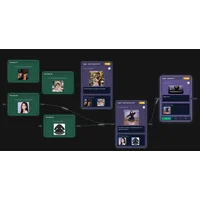
For teams whose primary need is improving how AI workflows are designed and described rather than how they're coded, VoooAI offers a natural-language approach to building complex AI workflows through its Vibe Flow interface. It's a lighter-weight entry point into workflow automation compared to GPTBots's full enterprise suite.
If a key part of your AI strategy involves streamlining internal communication and team collaboration rather than customer-facing automation, Spoke.ai integrates with Slack, Microsoft Teams, and Gmail to intelligently summarize and prioritize information — complementing or partially overlapping with GPTBots's enterprise search capabilities.
Teams specifically interested in AI-powered automation that connects across dozens of third-party tools may also want to look at how EZClaws handles private deployment alongside GPTBots's broader multi-channel agent deployment — the two approaches are complementary for organizations with hybrid cloud and on-premise requirements.
Frequently asked questions
Do I need coding skills to use GPTBots?
No. The visual builder is designed for non-technical users — you create and train agents through clicks. That said, advanced configurations like custom API integrations or intricate multi-agent workflows will benefit from some technical familiarity, which is why the "low-code" label also applies for power users.
What LLMs does GPTBots support?
GPTBots integrates with OpenAI's ChatGPT and DeepSeek, with flexible model switching built in. You can choose the model that best balances cost, performance, and data residency requirements without being locked into a single provider.
Is GPTBots secure enough for enterprise use?
GPTBots holds ISO 27001 (Information Security Management), ISO 27701 (Privacy Information Management), SOC 2 Type II, and ESOF certification. Those credentials put it in the same category as other enterprise-grade software offerings and should satisfy most compliance teams in regulated industries.
Which channels can GPTBots agents be deployed to?
GPTBots supports deployment across WhatsApp, Slack, Discord, Telegram, Facebook, and Zapier, among others. You can put customer-facing or internal-facing agents wherever your audience already spends time, without rebuilding each agent from scratch per channel.
What kinds of businesses is GPTBots best suited for?
GPTBots is primarily designed for mid-to-large enterprises automating customer support, sales development, internal search, or data analytics at scale. E-commerce, healthcare, education, and IT services are highlighted as key verticals on the GPTBots website. Smaller businesses can try the free tier, though the platform's value is most apparent at higher volumes and workflow complexity.
How does GPTBots compare to building a custom AI agent from scratch?
Building from scratch requires machine learning expertise, infrastructure setup, and months of development time. GPTBots cuts most of that by providing pre-built templates, a visual workflow builder, and managed infrastructure — shrinking deployment timelines from months to days. The trade-off is that highly bespoke or proprietary requirements may eventually hit the platform's customization ceiling, though for most enterprise use cases, the available flexibility should be sufficient.
GPTBots earns its place as a serious contender in the enterprise AI agent market, particularly for organizations that want real automation depth without hiring an internal AI engineering team. No-code accessibility, multi-agent sophistication, and strong security certifications make it worth evaluating closely — especially for customer service, sales, and knowledge management use cases where the documented ROI figures are difficult to set aside.