sclof is an AI-powered job search tool built to streamline how candidates discover roles, tailor applications, and track their progress through the hiring pipeline. Like most tools in this category, it bundles discovery, resume or profile help, and outreach workflows into a single dashboard. People look for sclof alternatives for very practical reasons: a missing feature, a price tier that no longer fits, a preferred workflow, or simply curiosity about what else is available.
Why look for a sclof alternative?
No single job-search tool covers every stage of a modern hunt, and sclof is no exception. Some users find that its strongest features lean toward discovery or tracking, while the actual application materials (cover letters, tailored profiles, interview prep) feel underweight for their needs.
Others switch because pricing has changed, because they want a tool that doubles as interview practice, or because they prefer a more specialized point solution that does one thing very well rather than a generalist suite. Platform availability and integration with boards like LinkedIn or Upwork can also be deciding factors.
What to look for in a sclof alternative
Stage coverage across the funnel
The job hunt has distinct phases: sourcing, application materials, outreach, interview, and follow-up. The best alternatives either cover the whole funnel or excel so convincingly in one phase that you willingly use a second tool alongside it. Match the tool to the stage where you actually feel the most friction.
Personalization depth
Generic AI output is easy to spot and easy to reject. Strong alternatives generate material that reflects your actual experience and the specific role or company you are targeting. Look for tools that ingest your real resume, portfolio, or profile rather than asking you to write the content first.
Pricing and free tier
Job searching is often a short, high-intensity project, not a permanent subscription. A generous free tier, a one-time payment, or a low monthly cap matters more here than in most software categories. Always check whether the features you need sit behind the paid wall.
Real workflow fit
A tool that lives in your browser, syncs with your calendar, or posts directly to platforms like Upwork will save more time than a separate dashboard you have to remember to open. Prioritize tools that fit how you already work.
The best sclof alternatives
CoverPilot
CoverPilot focuses tightly on one high-leverage stage: writing cover letters. It generates personalized, ATS-optimized letters tuned to each job posting, which addresses the most common complaint about sclof and similar tools, namely that the written application is the weakest link. This is a strong pick if your pipeline is full but your response rate is low.
Hat Stack
Hat Stack is built for multi-talented professionals whose experience does not fit neatly into one title. Instead of a single resume, it lets you assemble tailored career profiles for different opportunities and industries. If sclof feels too one-dimensional for someone who spans multiple roles, Hat Stack is worth a close look.
innerTrack – Job Application Assistant
innerTrack takes a deliberately anti-spam stance, replacing mass applying with strategic, personalized outreach. The positioning is the opposite of volume-driven tools, which makes it a natural sclof alternative for candidates who feel that quantity has stopped working for them. It suits people who want every application to be deliberate.
JobInterview
JobInterview tackles the stage sclof often does not: the interview itself. It offers realistic AI-powered practice across more than 250 professions, which is genuinely broad coverage. Candidates who land interviews but struggle to convert them into offers will find this complementary to a discovery-oriented tool like sclof.
MockMe.ai
MockMe.ai goes deep on a single interview format: system design. It uses real-time diagram recognition and AI feedback to simulate whiteboard sessions, which is something generalist interview tools rarely handle well. Engineers preparing for senior or staff interviews will get more value here than from sclof's broader feature set. Note that it sits in the paid tier.
TripleTen Career Aptitude Test
TripleTen's aptitude test uses AI to match candidates with IT and tech career paths. It is a better fit earlier in the journey, when someone is still deciding which direction to pursue rather than actively applying. Pairing it with sclof, or using it as a planning step before committing to a job search tool, works well.
U Never Sleep
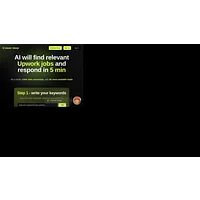
U Never Sleep automates job responses on Upwork, applying to new opportunities within minutes of posting. Freelancers who treat Upwork as their primary funnel will see immediate time savings. For anyone whose sclof workflow does not include freelance platforms at all, this is a clear specialty add-on.
How to choose
If your bottleneck is the written application, start with CoverPilot. If you wear multiple hats and need flexible profiles, Hat Stack fits best. For a deliberate, low-volume strategy, innerTrack is the obvious match. Candidates weak on interviewing should layer in JobInterview, while senior engineers should consider MockMe.ai. Still deciding on a direction? Begin with the TripleTen Career Aptitude Test. Upwork freelancers get the most lift from U Never Sleep.
Frequently asked questions
Is there a free sclof alternative?
Yes. Most tools in this list, including CoverPilot, Hat Stack, innerTrack, JobInterview, TripleTen Career Aptitude Test, and U Never Sleep, are free to use. MockMe.ai is the main paid option, reflecting its specialized system-design focus.
What is the best sclof alternative overall?
It depends on your weakest stage. For application materials, CoverPilot. For interview prep, JobInterview. For strategic outreach, innerTrack. There is no single winner because the categories differ, which is exactly why alternatives exist.
Can I use more than one sclof alternative at the same time?
Absolutely. Many candidates pair a discovery or tracking tool with a specialized helper like MockMe.ai for interviews or CoverPilot for letters. The strongest job searches usually combine two or three focused tools rather than relying on one suite for everything.
Do these tools actually improve response rates?
Tools that personalize output to a specific job posting generally outperform generic templates, which is well documented in hiring research. The U.S. Bureau of Labor Statistics and Harvard Business Review have both published useful context on how candidates and employers are using AI today.
Which sclof alternative is best for freelancers?
U Never Sleep is purpose-built for Upwork and is the clearest fit. Freelancers with diverse portfolios may also benefit from Hat Stack, which handles multi-track positioning better than most generalist tools.
Try one or two of these alongside sclof and keep what genuinely saves you time. The right combination is the one that matches how you actually search, apply, and interview, not the one with the longest feature list.