Stuvio is an AI video-creation app for turning a creative idea into shareable video content. It can be a practical starting point when you want a focused path from concept to finished media. Someone may look for Stuvio alternatives when they need a lower-cost option, a specialized workflow such as captioning or image-to-video, or a different publishing format. The tools below are not identical replacements; each fits a different kind of creator or content job.
Why look for a Stuvio alternative?
Even when Stuvio fits the core brief, alternatives can make sense when the workflow is more specific than general video creation. A creator may prioritize a lower-cost entry point, multilingual captions, ready-to-post faceless content, image animation, or a way to turn existing media into a digest. Those are different jobs, so the right comparison is less about replacing every part of Stuvio and more about solving the task that matters most.
It is also worth checking the entire path from input to publication. The best choice can depend on whether you start with text, images, audio, or existing video; whether you need script, voiceover, music, summaries, or captions; and whether a free listing is sufficient for your expected volume and quality. Stuvio may remain the better fit if its workflow is already familiar and delivers the format you need.
What to look for in a Stuvio alternative
Workflow fit
Start with the job you want to complete, not the feature list. Decide whether your priority is generating a new video, refining existing media, adding captions, animating an image, or turning content into a digest. A specialized tool can be a better Stuvio alternative when it removes steps from the task you perform most often.
Input and output compatibility
Check what you can bring into the app and what you can take out of it. This matters when your source is a text prompt, still image, audio file, video, YouTube link, podcast, or newsletter. For caption workflows, the W3C WebVTT specification is a useful reference for a common timed-text format, while video tools should be judged on whether they accept the media you already have and return a usable format.
Creative control
Decide how much of the process you want the app to handle versus direct yourself. A workflow that assembles a script, visuals, voiceover, and music can be convenient, while an image-animation or subtitle-focused tool may be preferable when you want the source material to stay central. Compare the amount of automation with the level of adjustment your projects require.
Budget and publishing fit
Use the free or paid listing as a starting point, then consider the cost of moving your regular workflow. If captions are part of the decision, review YouTube's official caption guidance alongside the destinations you publish to. A tool is a better fit when its access model and output align with your audience, channels, and production frequency.
The best Stuvio alternatives
FlowSub
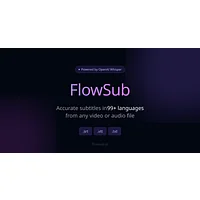
FlowSub is a more focused alternative to Stuvio when the main need is turning video or audio into accurate, multi-language captions. Its listing positions it as an AI subtitle generator that creates captions instantly, rather than a general video workflow. It is marked paid, so it suits creators who value specialized captioning more than a free starting point.
GoFaceless
GoFaceless is a better fit when the goal is ready-to-post faceless content for YouTube, TikTok, and Reels. Compared with Stuvio, its positioning is narrower and more channel-oriented: it focuses on generating the content rather than solving every possible video task. The app is listed as paid, making it a match for creators who want a dedicated faceless workflow.
Kinovi - AI Video Generator
Kinovi is useful when you want to transform images, videos, or audio into polished clips rather than start with a blank brief. It uses Seedance 2.0 technology according to its listing and is marked free. Choose it over Stuvio when asset-based clip creation and a free entry point matter most.
MojoMake - AI Image to Video Generator
MojoMake focuses on image-to-video creation and gives users unified access to multiple video creation models in one account. That makes it a practical Stuvio alternative for creators starting from still images who want model choice in one workspace. It is listed as free, so it is worth testing when minimizing upfront cost is important.
MurmurCast
MurmurCast is an adjacent alternative rather than a like-for-like video generator: it turns YouTube videos, podcasts, and newsletters into AI-summarized daily email digests. It suits people who are trying to consume information in a concise daily format, not produce new videos. The app is listed as free, which makes it a low-friction option when the real need is summarization.
Scenes AI
Scenes AI is a strong fit when the starting point is a text prompt and the desired output is a polished, full-length video with script, visuals, voiceover, and music. Compared with Stuvio, it is aimed at a more explicitly assembled text-to-video workflow, so it may suit creators who want those elements handled together. It is listed as paid.
Zorq AI
Zorq AI specializes in turning static images into animated videos through AI-powered motion synthesis within a unified creative workspace. Choose it over Stuvio when the source material is primarily still imagery and the desired result is motion rather than a broader video project. It is listed as paid, so it fits creators willing to pay for an image-animation-focused workflow.
How to choose
Choose FlowSub for subtitle-first work, GoFaceless for ready-to-post faceless channels, and MurmurCast when summaries and email digests are the actual goal. Pick Kinovi or MojoMake for asset-led video creation, Zorq for animating still images, and Scenes AI for text-prompted full-length video. Stay with Stuvio if its workflow already matches your input, output, and budget; switch when one of these narrower fits removes a clear bottleneck.
Frequently asked questions
Is there a free Stuvio alternative?
Yes. Kinovi - AI Video Generator, MojoMake - AI Image to Video Generator, and MurmurCast are marked free in the HyperStore list. They cover different needs, so choose based on whether you want asset-to-clip creation, image-to-video work, or summarized daily digests rather than assuming any one is a complete replacement.
What is the best Stuvio alternative?
There is no single best choice for every Stuvio user. Scenes AI fits text-prompted, full-length video; GoFaceless fits faceless channel content; FlowSub fits captioning; and the image-focused tools make more sense when still images are the starting point.
Which Stuvio alternative is best for subtitles?
FlowSub is the clearest match because its listing is specifically about generating accurate, multi-language captions from video and audio. It is marked paid, so compare that focused workflow with Stuvio if you also need broader video creation.
Which Stuvio alternative is best for image-to-video?
MojoMake is the most direct image-to-video match, while Kinovi works with images, videos, and audio and Zorq focuses on animating static images. Use the one that matches your source material and whether a free or paid listing fits your plans.
Can I use a Stuvio alternative for faceless content?
Yes. GoFaceless is specifically positioned to create ready-to-post faceless content for YouTube, TikTok, and Reels, so it is the most direct option in this list for that scenario. Stuvio may still suit you if you want a less specialized workflow.
Stuvio remains a sensible choice when its workflow already covers the job and you prefer not to change tools. Otherwise, match the alternative to the task you repeat most often, then weigh the listed free or paid access against the control and output you need.