Ungrind is an AI-assisted B2B sales and lead generation tool that helps teams find prospects and run personalized outreach at scale. Sales reps typically use it to build targeted lists, automate sequences, and book more meetings without grinding through manual prospecting. When the workflow clicks, it quietly multiplies rep productivity, though many teams eventually look at Ungrind alternatives due to pricing, channel limits, or specific integration gaps. This guide compares the strongest options currently available on HyperStore.
Why look for a Ungrind alternative?
Many Ungrind users run most of their outreach through LinkedIn, which works well when buyers actually live on the platform. The trouble starts when reps need to follow up by email, phone, or chat, since stitching channels together through separate tools can eat the time automation was supposed to save. Pricing is another frequent friction point: per-seat outbound tools often scale poorly once a team grows past a handful of reps, and the ROI math shifts fast when each new SDR adds another monthly line item. Compliance is a quieter concern. LinkedIn places restrictions on automated activity, and it is worth checking LinkedIn's user agreement before scaling any tool, including Ungrind. Integration gaps with CRMs, dialers, or intent data sources round out the usual list of reasons to evaluate alternatives.
What to look for in a Ungrind alternative
Channel coverage beyond a single network
A tool limited to one channel becomes a liability the moment your buyers drift off it. The strongest Ungrind alternatives now run sequences across email, phone, social, and sometimes SMS so a single rep can hold a conversation wherever a prospect engages. Prioritize platforms that treat channels as one workspace rather than silos you have to stitch together manually.
Personalization quality
Generic first lines are increasingly obvious to buyers and easy for spam filters to flag. The bar has moved past merge tags to genuine personalization grounded in real triggers like funding events, hiring announcements, or recent web activity. Look for tools where the AI can reference specific, verifiable signals rather than recycling job titles and company names.
CRM and pipeline integration
An outreach tool that does not sync cleanly with your CRM creates more admin work than it removes. Bidirectional sync with Salesforce, HubSpot, or Pipedrive is table stakes for most teams, and the best platforms also ingest enrichment data so reps are not switching tabs. According to Salesforce's annual State of Sales research, reps spend less than a third of their week actually selling, which makes this category of friction more painful than it looks on paper.
Pricing model that scales with you
Per-seat pricing punishes growth, while per-contact or usage-based models can surprise in the other direction. Compare what each tool would cost for a real-life scenario, say three reps running 2,000 contacts a month, and weigh that against deliverability and reply rates rather than just feature checklists.
The best Ungrind alternatives
AutoReach
AutoReach positions itself as a fully autonomous B2B prospecting agent that finds leads, qualifies them, and runs outreach without a rep babysitting every step. Compared with Ungrind's more hands-on sequence building, AutoReach leans harder into agentic AI, which suits teams that want to delegate the top of funnel rather than configure campaigns by hand. The free tier listed on HyperStore makes it a low-risk way to benchmark autonomous prospecting against your current workflow.
Intedat
Intedat takes a wider lens than Ungrind, framing itself as a market and partner discovery platform rather than just an outbound sequencer. If your priority is mapping a new territory or building a supplier network before any message goes out, Intedat's broader data layer is worth a look. It suits strategy and business development teams who want long lists and structured company insights more than plug-and-play sequences.
Jason AI
Jason AI is the most direct comparison to Ungrind in this list: a paid AI sales assistant that handles outreach, follow-ups, and meeting booking for B2B reps. If you have been happy with Ungrind's general approach but want more control over reply handling and calendar conversion, Jason AI is the natural shortlist candidate. The paid pricing reflects a more opinionated AI agent than typical sequence tools, which trades a higher entry cost for less manual campaign tuning.
Lightfield
Lightfield solves a problem Ungrind only partly addresses: keeping the CRM accurate without hours of manual entry. It rebuilds your customer database from email history automatically, so when an SDR replies to a prospect, the contact and deal context already exists. For teams whose real bottleneck is data hygiene rather than outbound volume, Lightfield pairs well as a foundation underneath a separate outreach tool.
MagicBlocks
MagicBlocks shifts the focus from cold outbound to captured demand. Once a visitor raises a hand, conversational AI keeps the conversation going across web chat, SMS, and social. Where Ungrind helps you find the lead, MagicBlocks helps you close the lead that is already on your site, which is a complementary rather than competing job. It is worth considering if your pipeline problem is warm-lead conversion rather than top-of-funnel volume.
Sensorhub
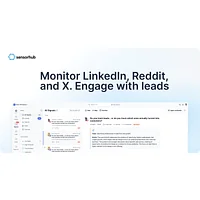
Sensorhub listens to public conversations on LinkedIn, Reddit, and similar networks to surface buyers actively asking for the kind of solution you sell. Compared with Ungrind's sequence-based outbound, this is intent-driven prospecting, which typically converts at higher rates because the prospect already cares about the topic. Teams that want to layer social-listening signals on top of traditional outreach will find it a sharp complement.
How to choose
Map your real bottleneck before picking. If your main pain is replying faster to warm leads, Lightfield or MagicBlocks will deliver more value than another outbound sequencer. If you want to replace Ungrind's manual campaign building with something more autonomous, AutoReach and Jason AI are the closest substitutes. For territory mapping or buying-signal sourcing, Intedat and Sensorhub change the workflow from push to pull. Most teams end up combining two of these rather than choosing just one.
Frequently asked questions
Is there a free Ungrind alternative?
Yes. AutoReach, Intedat, Lightfield, MagicBlocks, and Sensorhub all list free tiers or entry points on HyperStore, so you can pilot AI-driven prospecting without committing to a paid seat. That said, free tiers usually cap contacts, channels, or team size, so plan to evaluate the paid upgrade once volume scales.
What is the best Ungrind alternative overall?
There is not a single winner; it depends on what you want Ungrind to do. For a like-for-like swap with more AI autonomy, Jason AI is the closest paid option. For a free, broader workflow overhaul, AutoReach covers most of the same ground plus email and enrichment.
Which Ungrind alternative is best for LinkedIn-first prospecting?
If you strictly need LinkedIn-native automation, Jason AI is built for that environment with reply handling and meeting scheduling included. Sensorhub is also relevant if you want to find LinkedIn and Reddit conversations where buyers are already asking for help rather than blasting cold prospects.
Are AI sales tools safe to use with LinkedIn?
They can be, but always check each tool against LinkedIn's Professional Community Policies and the current automation guidance. Heavy automated activity on personal accounts has historically led to restrictions, so confirm the tool's approach to warm-up, daily caps, and human-in-the-loop review before scaling.
Should I keep Ungrind and add another tool alongside it?
Many teams do. Layering an intent tool like Sensorhub or a conversational layer like MagicBlocks on top of an existing sequencer is often cheaper and lower risk than a full migration. Test the combination on one segment of your pipeline before rolling it out broadly.
Whichever direction you go, run a two-week pilot on a real segment of your pipeline before committing. That gives you honest data on reply rates, deliverability, and how the tool feels on the days you do not want to use it. Then scale the winner, and keep the runner-up warm in case your needs shift.