Buildship
Buildship is a low-code visual platform for building backend APIs, workflows, and cloud functions powered by AI.
Buildship at a glance
- Pricing
- Free — from $25/month
- Rating
- ⭐ 3.0/5 · 1 reviews
- Key strengths
- Visual node-based workflow builder simplifies backend development · AI-powered node generation accelerates integration and customization · Supports multimodal AI workflows with major LLM and image/video providers
Screenshots
About Buildship
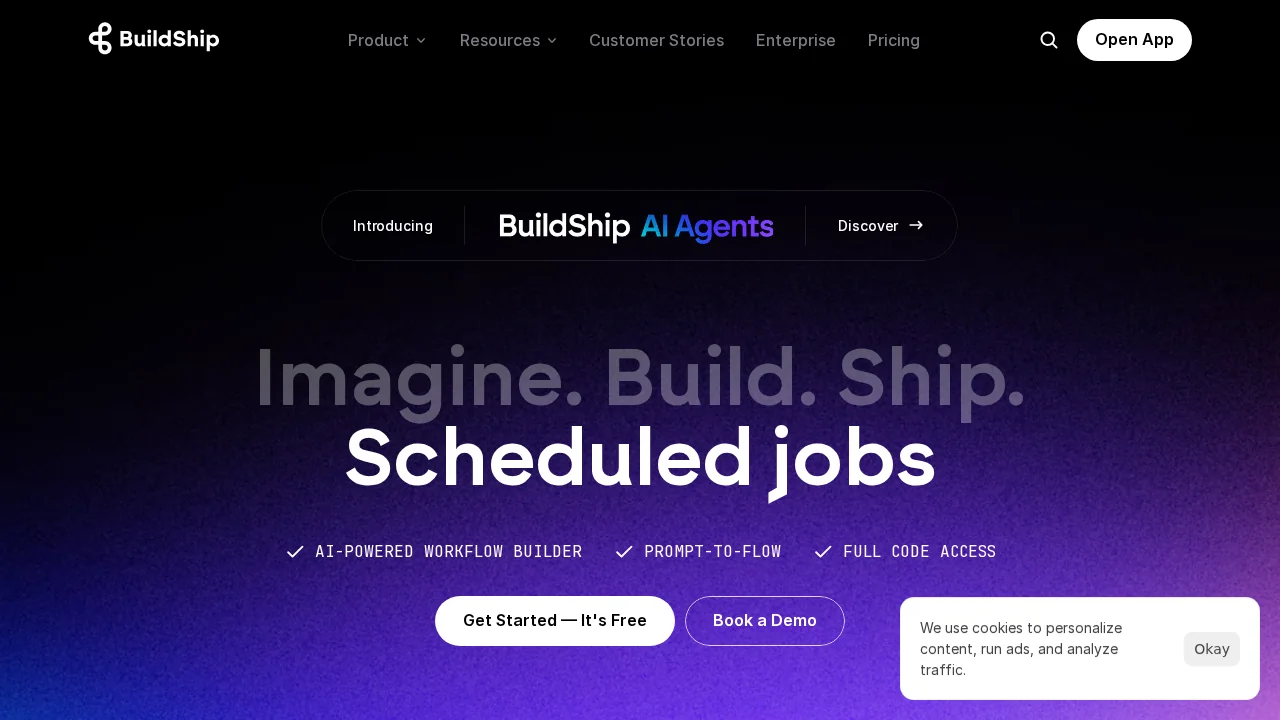
Buildship enables developers to construct production-ready backend infrastructure using a visual, node-based interface rather than traditional coding. The platform combines low-code development with AI capabilities, allowing you to build APIs, scheduled jobs, and cloud functions efficiently without writing extensive code. Users can connect pre-built integration nodes or generate custom nodes using AI, dramatically reducing development time and eliminating delays waiting for third-party integrations.
The platform supports multimodal AI workflows, enabling you to combine multiple AI models and tools within a single backend system. Buildship integrates with leading AI providers including OpenAI, Stable Diffusion, and HuggingFace, supporting language models, image generation, and video processing tasks. This flexibility allows developers to create sophisticated AI-powered applications with complex logic across various data types and processing requirements.
Buildship includes developer-friendly tools such as version control, a built-in code editor with advanced debugging capabilities, and support for JavaScript and TypeScript for custom logic. The platform provides pre-built templates addressing common use cases, enabling faster development cycles. Whether you need real-time APIs, background job processors, or AI-enhanced workflows, Buildship delivers a streamlined alternative to traditional backend development approaches.
Pros
Cons
Alternatives to Buildship
Octopoda
KiloClaw
MiDash AI
Nanoswarm: OpenClaw App
TaskFire
theMultiplicity.ai
Nebius Token Factory