Capacities
Capacities is an object-based note-taking app that organizes information as interconnected networks rather than rigid folders.
Capacities at a glance
- Pricing
- Free — from $9.91/month
- Key strengths
- Flexible object-based organization that mirrors natural thinking patterns · Cross-device access with mobile and desktop apps for capturing ideas anywhere · EU-based encrypted storage with GDPR compliance and two-factor authentication
Screenshots
About Capacities
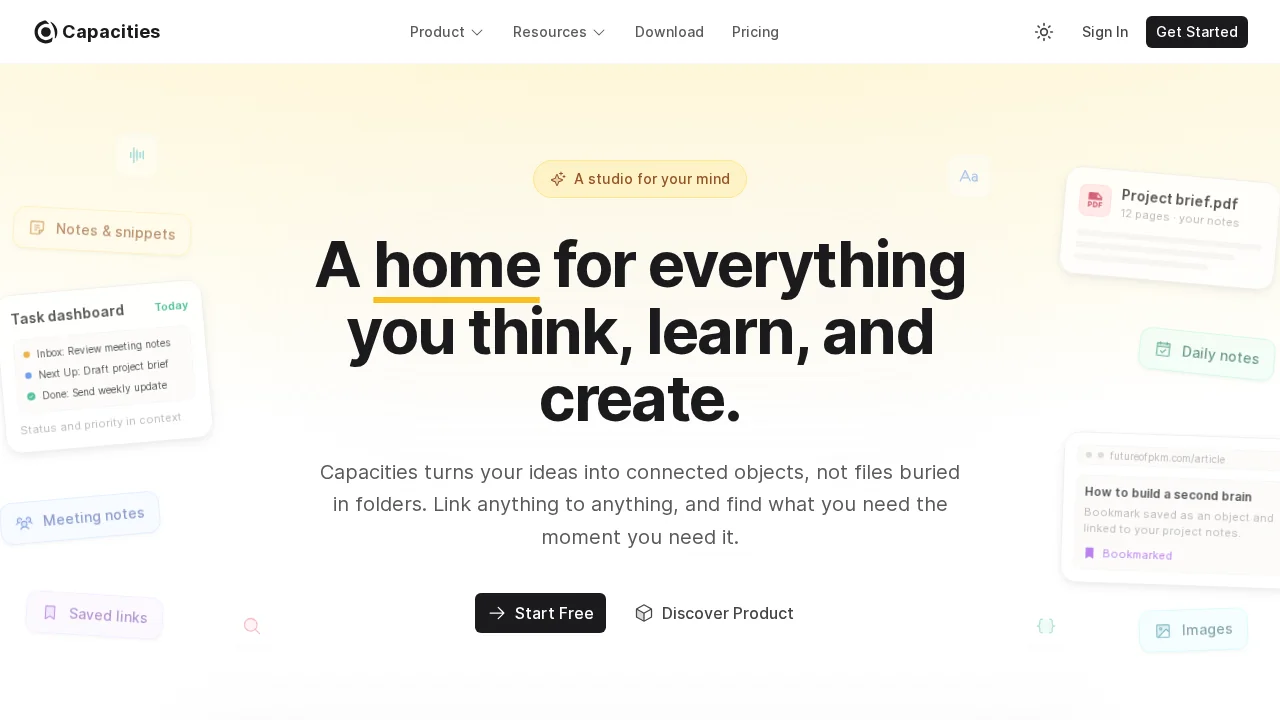
Capacities reimagines note-taking by abandoning traditional folder hierarchies in favor of an object-oriented system. Instead of organizing notes into nested directories, users create and connect objects—such as books, people, projects, and ideas—that form a dynamic knowledge network. This approach mirrors how the human mind naturally makes associations and discovers patterns, making it ideal for knowledge workers who think in webs of relationships rather than linear structures.
The platform excels at managing large volumes of information without overwhelming users. A calm, distraction-free interface combined with powerful search functionality helps users quickly locate relevant content across their entire knowledge base. Daily notes feature, quick-capture for photos and content, and AI-assisted interactions with objects further streamline the note-taking workflow, whether you're working at a desk or on the move.
Mobile and desktop applications work in tandem, allowing seamless transitions between devices. Users can search, upload, and capture notes wherever they are, ensuring that ideas are never lost. The platform also surfaces hidden connections between different pieces of information, helping users discover insights they might otherwise miss.
Security and privacy are built in by default. Capacities maintains GDPR compliance and stores all data on encrypted servers within the European Union. Two-factor authentication adds an extra layer of protection for user accounts, giving knowledge workers peace of mind that their ideas and projects remain private and secure.
Pros
Cons
Alternatives to Capacities
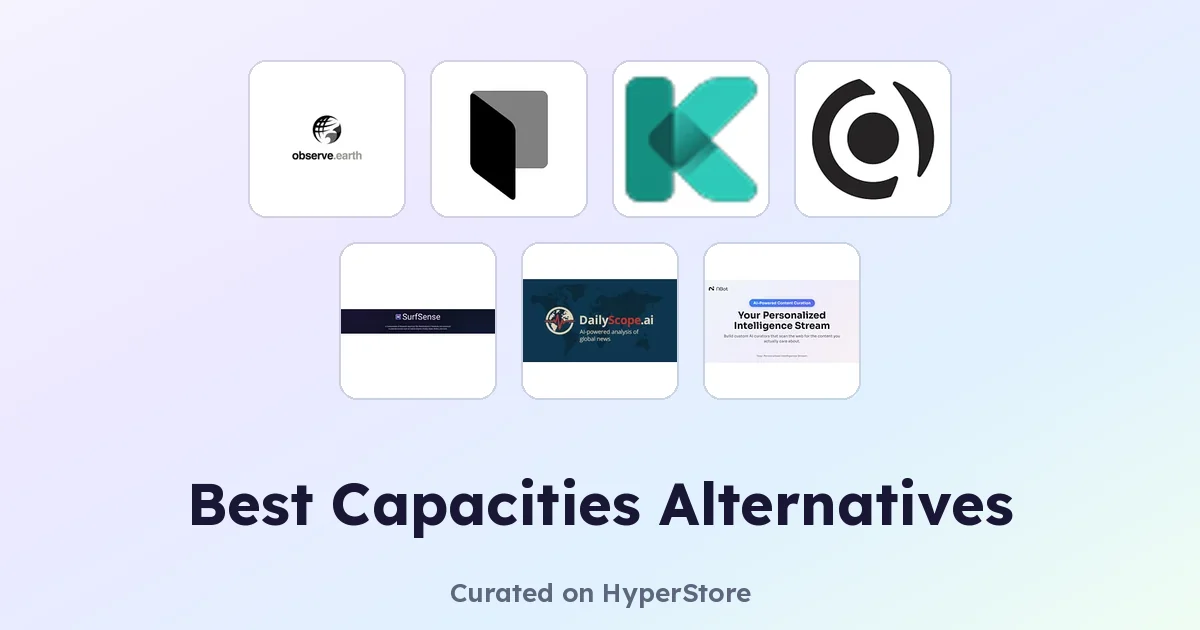
remio: Your Personal ChatGPT
Kolva
Paperbook
DailyScope.ai
NBot AI
SurfSense
Observe Earth