
Click Connector
Click Connector is an AI customer support platform that automates service delivery through chatbots, self-service portals, and omni-channel messaging.
Screenshots
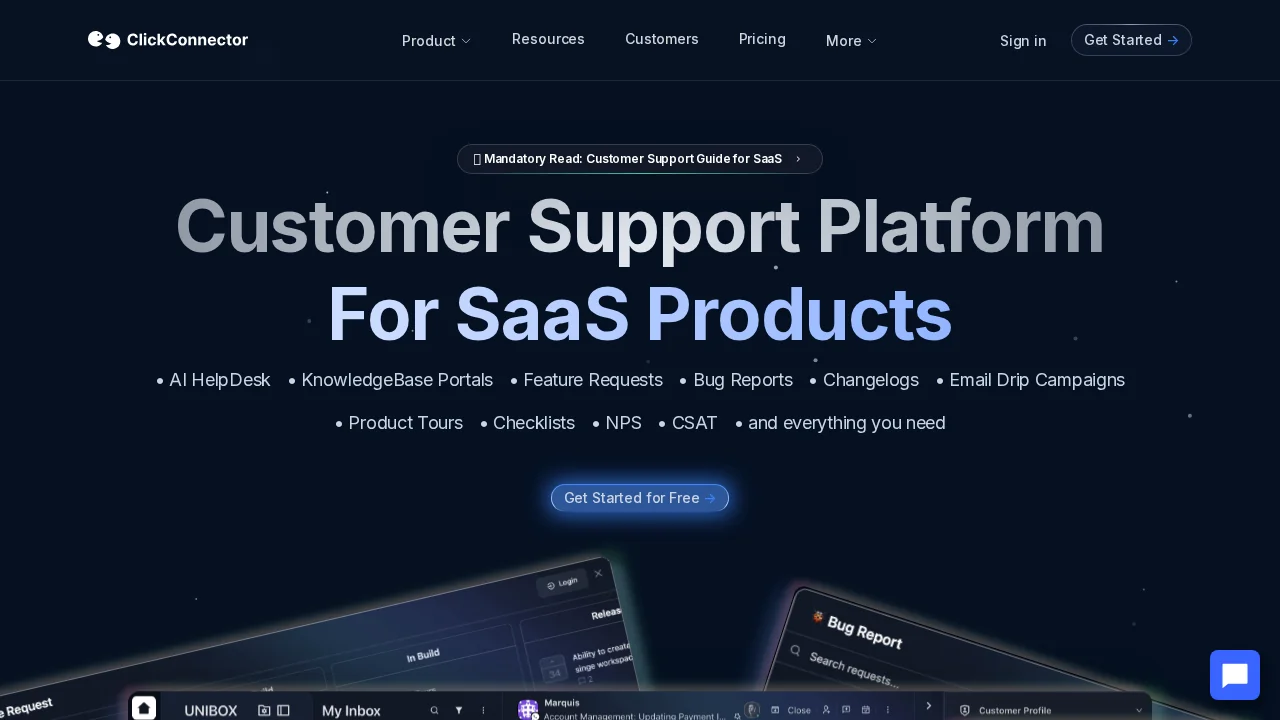
About Click Connector
Click Connector streamlines customer support operations by combining artificial intelligence with multi-channel communication tools. The platform enables organizations to reduce support ticket volume through intelligent self-service portals where customers independently resolve common issues, allowing human agents to focus on complex problems requiring personal attention.
The AI-powered chatbot feature delivers instant responses and round-the-clock customer support without human intervention. By automating routine inquiries and frequently asked questions, businesses can maintain service availability while improving response times and reducing operational costs associated with manual support processes.
Omni-channel chat consolidation brings all customer communications—including SMS, email, social media, and other messaging platforms—into a unified dashboard. This integration eliminates the need to monitor multiple separate channels, enabling support teams to maintain context across conversations and respond more effectively regardless of the customer's preferred communication method.
The platform prioritizes data security and regulatory compliance, incorporating privacy-focused technologies to protect customer information during interactions. Organizations can deploy Click Connector with confidence that their customer data handling meets modern data protection standards.
Pros
Cons
Alternatives to Click Connector
Pencil'd
Asyntai
Sideconvo
VoicePod
CloudTalk | AI Voice Agents
AgentDesk
BlitzSupport