Credal
Credal secures enterprise AI adoption by protecting sensitive data while enabling safe access to AI tools.
Screenshots
About Credal
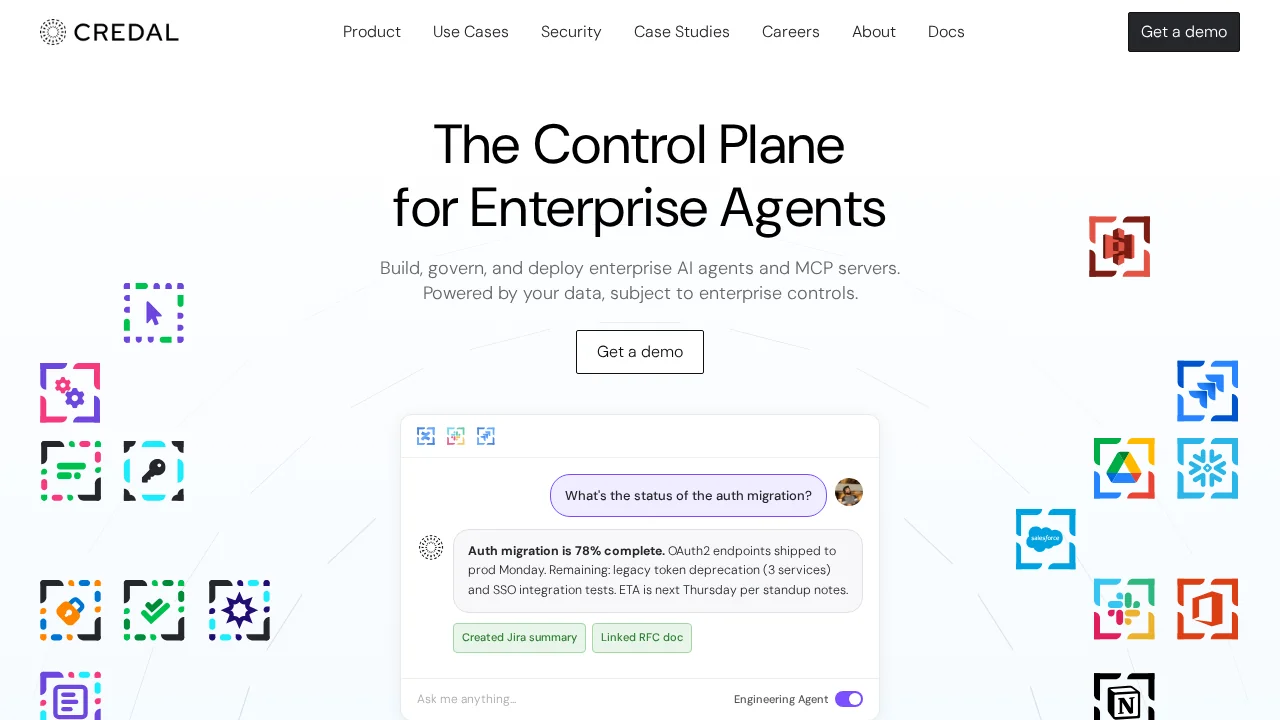
Credal is a data protection platform that enables enterprises to safely harness AI applications without compromising security or compliance. By acting as a governance layer between your organization and AI systems, Credal automatically enforces access policies, redacts sensitive information, and maintains audit trails—ensuring that business secrets and personally identifiable data remain protected even when integrated with popular AI models.
The platform provides multiple integration points including APIs, a secure chat interface, and a Slack bot that connect seamlessly with your existing data sources like Google Drive, Confluence, and Slack. Developers can build custom applications using drop-in replacements for OpenAI and Anthropic APIs, while the system automatically masks sensitive keywords, syncs permissions with source systems, and generates detailed audit logs that track exactly what data is shared with external AI providers.
For organizations with heightened security requirements, Credal supports full on-premise deployment, including language models themselves, ensuring data never leaves your network. The platform respects existing infrastructure investments by integrating with Azure OpenAI and AWS Bedrock, giving enterprises granular control over which users can access which AI tools and data sources. This combination of automated security controls and transparent audit capabilities allows teams to adopt AI confidently while maintaining compliance and protecting intellectual property.
Pros
Cons
Alternatives to Credal
KiloClaw
Nanoswarm: OpenClaw App
TaskFire
Clico
MyClaw.Host
88Agents
Tars