
Datatera
Datatera transforms unstructured data from files, emails, and websites into clean, organized spreadsheets and CRM systems automatically.
Datatera at a glance
- Pricing
- Free — from $19/month
- Key strengths
- No coding required—intuitive interface for non-technical users · Supports multiple data formats and complex parsing tasks · Automates data cleansing and preparation, saving time
Screenshots
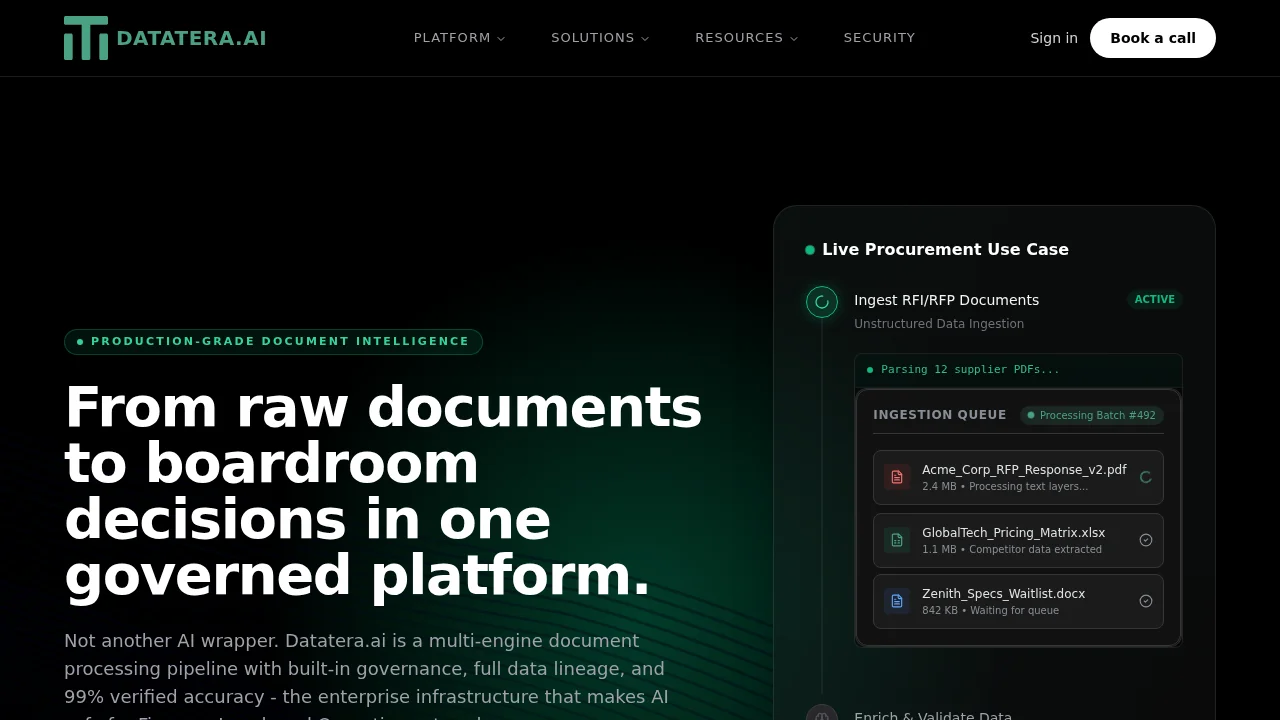
About Datatera
Datatera is an AI-powered data transformation platform that eliminates manual data entry by automatically converting raw information into structured formats. Whether you're working with files, emails, websites, or complex documents, Datatera's intelligent engine parses and organizes your data into tables and databases without requiring coding skills or technical expertise.
The platform supports multiple data formats including HTML, XML, JSON, and TXT, handling complex parsing tasks that would typically demand significant manual effort or specialized knowledge. By automating data preparation and cleansing, Datatera accelerates your workflow and reduces the resources needed to ready data for analysis. Users can import data directly into spreadsheets, CRM systems, and other business applications seamlessly.
Datatera enables faster decision-making by transforming raw data into actionable insights quickly. The platform generates instant visualizations and comprehensive tables, allowing analysts and business teams to explore their data immediately without waiting for lengthy preparation phases. Integration with various apps and databases makes it easy to upload and synchronize information across your existing tools and workflows.
Flexible pricing plans accommodate different organizational needs, with customized options available for enterprise requirements. By removing the friction from data transformation, Datatera helps businesses unlock new opportunities and leverage their data more effectively for informed strategic decisions.
Pros
Cons
Alternatives to Datatera
Analytify - A GenBI Platform
DealNavigator.Ai
GA4.so
Hanalyzer.ai
MyReport
SportBot AI
Wandercrafted