DeepAI
DeepAI's Text to Image API transforms written descriptions into unique AI-generated artwork instantly.
DeepAI at a glance
- Pricing
- Free — from $4.99/month
- Rating
- ⭐ 4.0/5 · 7 reviews
- Key strengths
- Fast generation of unique, stylized images from text descriptions · Multiple artistic styles and customization options available · Commercial use permitted for business and professional projects
Screenshots
About DeepAI
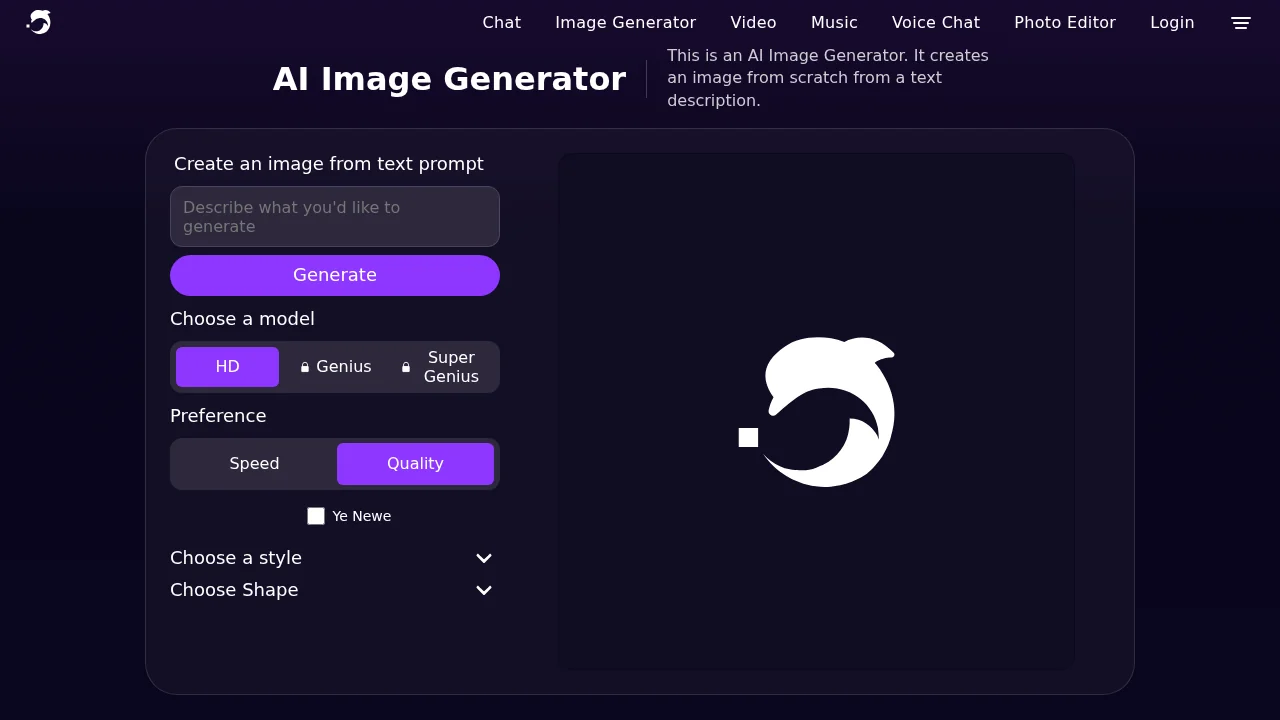
DeepAI's Text to Image API converts your text prompts into original visual creations using advanced machine learning technology. Simply describe what you want to see—from fantastical creatures to cyberpunk landscapes—and the AI generates a corresponding image. This tool excels at producing stylized and creative artwork, making it ideal for artists, designers, and content creators seeking rapid visual ideation without requiring extensive design skills.
The platform offers multiple artistic styles and customization options, allowing users to experiment with different visual aesthetics and image compositions. You can refine your results by adjusting prompts, selecting different output shapes, and applying enhancement features to achieve your desired creative direction. Each generation produces unique variations, providing endless opportunities for exploration and discovery.
DeepAI's Text to Image API supports commercial applications, making it suitable for professional projects, marketing materials, and business use cases. The tool's accessibility and ease of use enable rapid iteration and experimentation, allowing creators to quickly test visual concepts and generate multiple variations. While the output style is artistic rather than photorealistic, this characteristic often proves advantageous for illustration, concept art, and imaginative design work where stylization is valued over literal representation.
Pros
Cons
Alternatives to DeepAI
SellShots
VisualGPT
Hireable Headshots
Mintshot
VibePaint.ai
GPT Caricature
AvatarStyle