Eyre
Eyre is an AI-powered collaborative platform that transforms meetings into productive brainstorming and task management sessions.
Eyre at a glance
- Pricing
- Free — from $9.95/month
- Key strengths
- AI-generated templates streamline meeting setup and structure · Real-time task creation and assignment keeps action items on track · Persistent session history enables continuity across multiple meetings
Screenshots
About Eyre
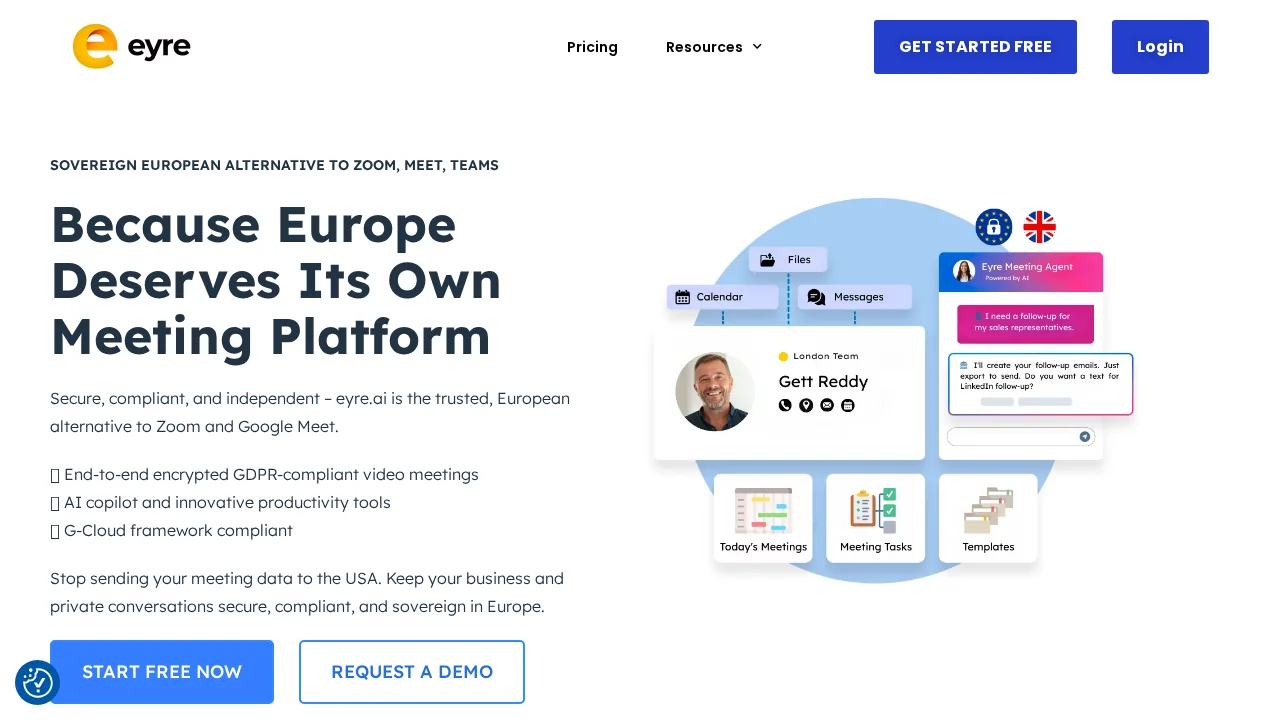
Eyre combines a virtual whiteboard with intelligent task management to streamline how teams collaborate during meetings. The platform's interactive canvas allows teams to sketch diagrams, annotate ideas, and organize thoughts using digital sticky notes—all in real-time. This visual-first approach helps participants stay engaged and ensures nothing gets lost in translation.
At the heart of Eyre is Jane, an AI assistant powered by GPT-4 that generates custom whiteboard templates tailored to your meeting objectives. Rather than starting from a blank canvas, teams can instantly access structured layouts that guide discussion and keep conversations focused. Jane also synthesizes meeting insights into organized summaries, actionable agendas, and exportable files automatically.
Task management integrates seamlessly into the meeting experience, allowing teams to create action items directly from the whiteboard and assign ownership without switching tools. Deadlines can be set and tracked in-context, keeping accountability clear from the moment decisions are made. Integration with external task management platforms extends Eyre's utility into existing workflows without friction.
Security and access control are built in, with granular permissions enabling secure content distribution and selective sharing across teams. Meeting sessions are fully persistent—teams can save and revisit whiteboard work to refresh context on previous discussions, capture decisions, and build on past momentum across multiple sessions.
Pros
Cons
Alternatives to Eyre
Hedy AI
Recal
Workmate
Convo
Echother
Himala AI Meeting Assistant
LinaFlow