Fabi.ai
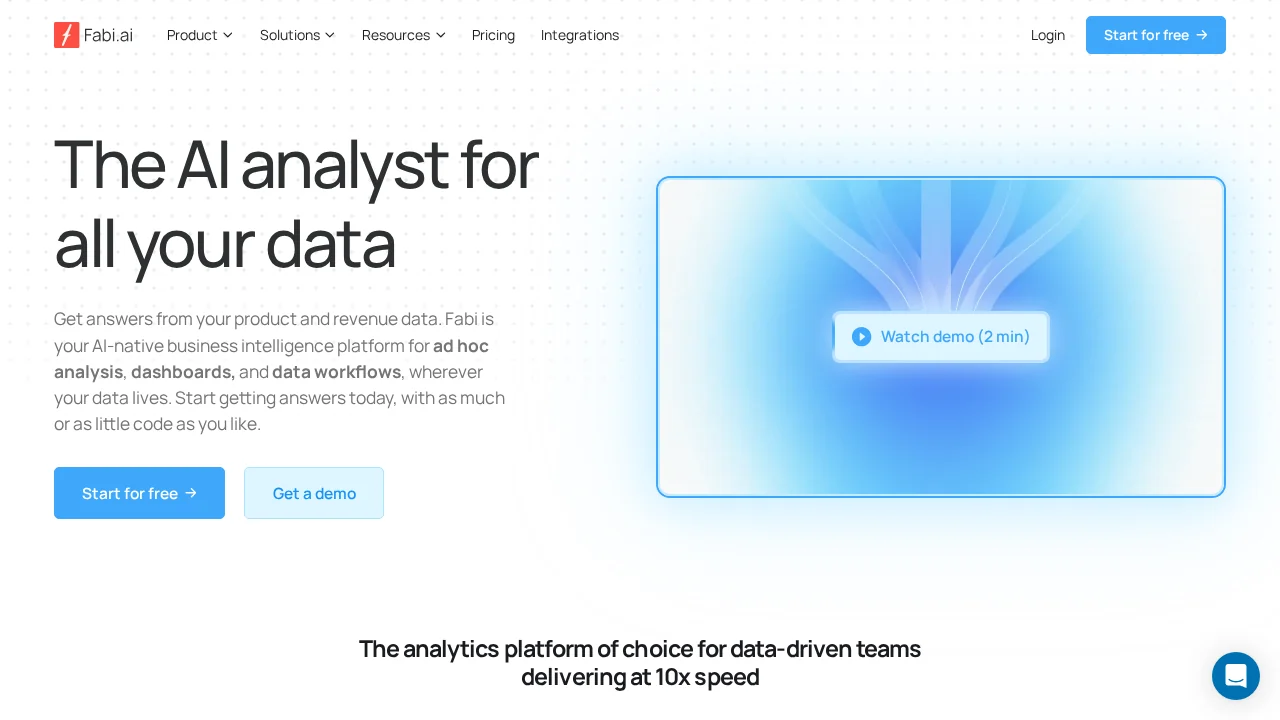
Fabi.ai is an AI-powered data analysis platform combining SQL, Python, and automation for faster insights.
Fabi.ai at a glance
- Best for
- Data Analysts
- Pricing
- Free — from $199/month
- Rating
- ⭐ 5.0/5 · 4 reviews
- Key strengths
- Combines SQL and Python in one interface for streamlined analysis · AI assistant accelerates exploration, coding, and debugging tasks · Reactive cells auto-update downstream analyses when data changes
Screenshots
About Fabi.ai
Fabi.ai transforms how data teams approach analytics by merging SQL and Python capabilities with intelligent AI assistance in a single collaborative workspace. The platform eliminates the friction of switching between tools, allowing analysts to write, execute, and refine queries seamlessly while leveraging AI-powered code suggestions to accelerate exploration and debugging workflows.
The platform excels at delivering rapid answers to ad hoc business questions without requiring new model development. Its reactive cell architecture automatically propagates upstream data changes downstream, reducing manual recalculation and freeing analysts from repetitive tasks. This design enables teams to shift focus from routine maintenance toward strategic analysis and decision-making.
Fabi.ai supports advanced use cases including statistical modeling, machine learning, and complex business analytics such as A/B testing, churn prediction, pricing optimization, and sales forecasting. The backend maintains a complete, version-controlled Python codebase that remains portable and reproducible across team members and environments.
Automatic reporting capabilities allow teams to schedule and publish interactive reports with customizable filters, embedding insights directly into business workflows. The platform integrates smoothly with existing data infrastructure, making adoption straightforward for organizations with established data stacks. Together, these capabilities enable data-driven teams to operate with greater agility while maintaining code quality and governance standards.
Pros
Cons
Alternatives to Fabi.ai
Analytify - A GenBI Platform
DealNavigator.Ai
GA4.so
Hanalyzer.ai
MyReport
SportBot AI
Wandercrafted