fabric NEON
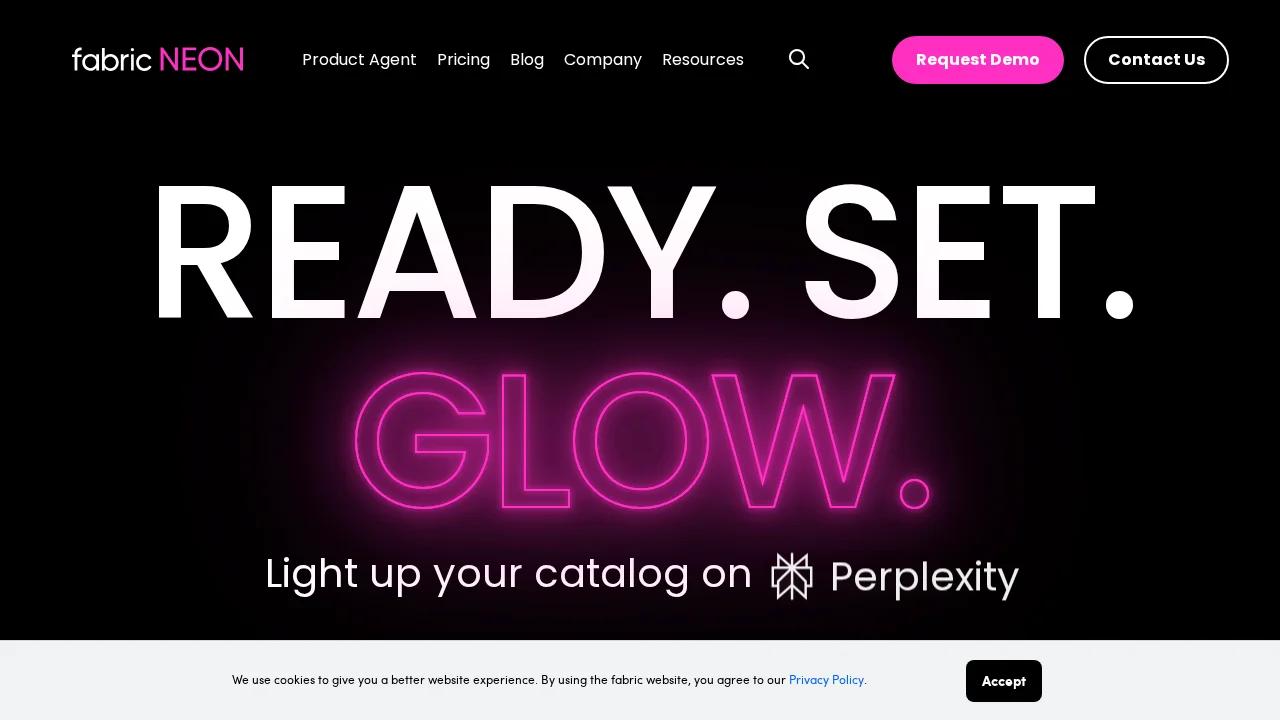
Fabric NEON is an AI-powered agentic commerce platform that optimizes product discovery and demand across multiple sales channels.
fabric NEON at a glance
- Pricing
- Paid — from $500/month
- Key strengths
- AI-driven product optimization for agentic commerce visibility · Streamlined SKU onboarding with intent-signal enrichment · Multi-channel integration including Shopify, ChatGPT, and Google Shopping
Screenshots
About fabric NEON
Fabric NEON transforms how enterprises manage product visibility in the age of agentic commerce. By combining AI-driven product discovery with intelligent demand optimization, the platform enables businesses to ensure their catalogs are discoverable and performant across AI-powered shopping agents and traditional channels. The system monitors product visibility metrics, analyzes content depth, and benchmarks performance against category standards to identify optimization opportunities.
The platform's Product Agent feature serves as the core intelligence layer, continuously monitoring how products perform in agentic environments while automatically enriching product data with intent signals derived from leading category prompts. This real-time activation ensures that new SKUs enter the market faster with strategically positioned data that resonates with both AI systems and customer intent patterns.
Fabric NEON's modular architecture—featuring dedicated Monitor and Activate modules—allows enterprises to seamlessly integrate with existing infrastructure. Support for multiple data sources including CSV, Shopify, ChatGPT integrations, Google Shopping feeds, and custom product data pipelines means businesses can implement the solution without major system overhauls. This flexibility enables organizations to respond quickly to market changes and maintain competitive product positioning across evolving commerce channels.
Pros
Cons
Alternatives to fabric NEON
Obsess AI
AI Product Title Generator
Merchant Floor | Product Descriptions
Size the Market
Runner AI
CataSEO
Genstore