Flowtest
Flowtest automates website QA testing with AI agents that simulate real user behavior and detect issues before users encounter them.
Flowtest at a glance
- Pricing
- Free — from $370/month
- Key strengths
- No coding required—intuitive workflow design for non-technical users · Automatically adapts to website changes, reducing test case maintenance · Real-time alerts with debugging details for quick issue resolution
Screenshots
About Flowtest
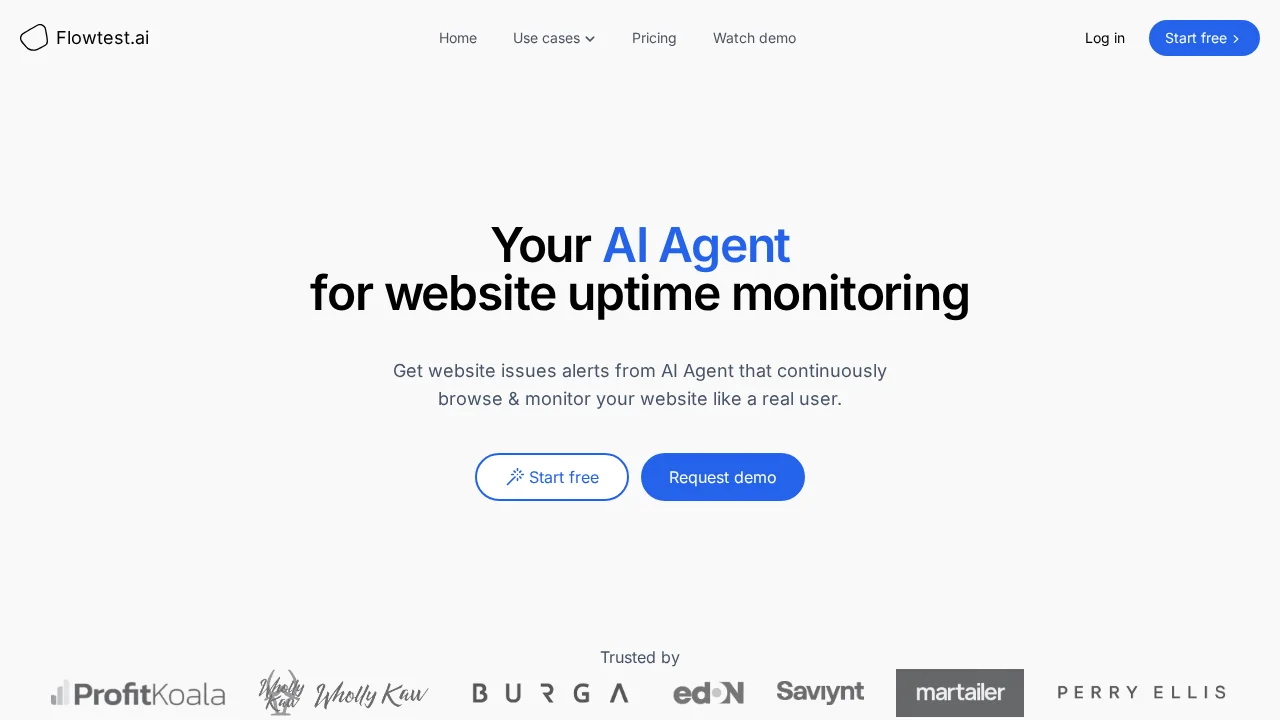
Flowtest is an intelligent automation platform that transforms how teams approach quality assurance for websites. By deploying AI agents to perform realistic user interactions—including form submissions, login procedures, content verification, and dynamic decision-making—the platform continuously monitors your site for potential issues and reports problems with debugging details before they impact your audience.
The platform eliminates the burden of repetitive manual testing, freeing your team to concentrate on strategic development and feature enhancements rather than routine validation tasks. Flowtest adapts automatically to structural changes in your website, dramatically reducing the maintenance overhead traditionally required to keep test cases current and relevant.
Defining testing workflows is straightforward through Flowtest's intuitive interface, requiring no coding expertise or complex configuration. You can schedule regular automated tests and receive immediate alerts when problems are detected, enabling rapid debugging and resolution. This end-to-end testing automation helps maintain optimal website performance, improve load speeds, and reduce technical friction that could otherwise drive users away.
Businesses of all sizes benefit from Flowtest's ability to scale quality assurance efforts without proportionally increasing resource demands. By catching issues early and maintaining consistent site quality, organizations can protect their reputation and user experience.
Pros
Cons
Alternatives to Flowtest
Test Management by Testsigma | Test Faster with AI
Outset
Embeddable
AdsCreator.com
CodePup AI
AccuChats
AdScriptly