Genworlds
GenWorlds is an open-source framework for building trustworthy multi-agent AI systems with customizable behaviors and cognitive processes.
Genworlds at a glance
- Pricing
- Freemium
- Key strengths
- Multiple cognitive frameworks enable agents to think and solve problems differen · Modular architecture with plug-and-play tools and memories reduces development t · Scalable design adapts to various environments and processing demands
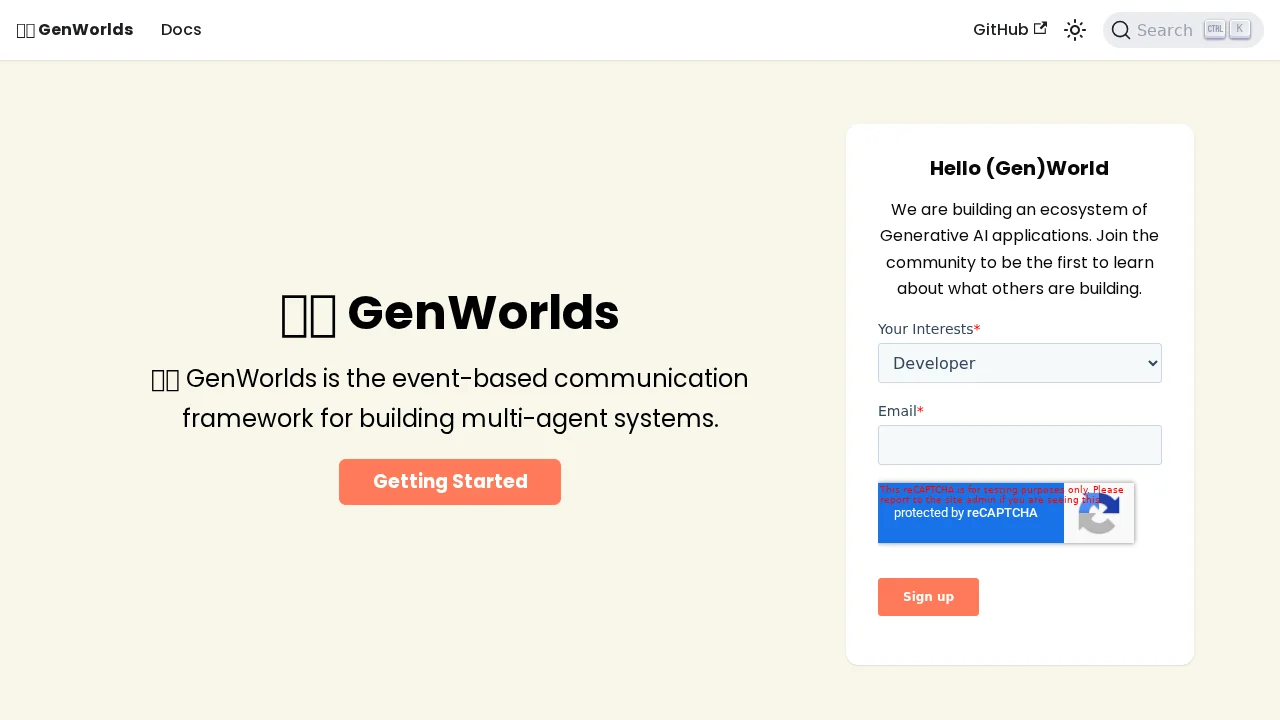
Screenshots
About Genworlds
GenWorlds empowers developers to construct sophisticated multi-agent systems by providing a flexible framework for creating, configuring, and managing autonomous AI agents. Users can define agent goals, memories, and behavioral patterns while selecting from multiple cognitive processing approaches including Tree of Thoughts, Chain of Thoughts, and AutoGPT methodologies. This flexibility enables agents to reason and operate differently based on their specific use cases and requirements.
Scalability is a core architectural strength, allowing GenWorlds systems to expand seamlessly across different environments and interfaces without performance degradation. The framework includes built-in coordination protocols that support various execution models, from token-bearer approaches to serialized processing, giving developers fine-grained control over how agents interact and complete tasks.
The framework facilitates rapid development through plug-and-play repositories of pre-built memories and tools, eliminating the need to build components from scratch. Developers can integrate external GenWorlds and agents into their systems, leveraging a collaborative marketplace ecosystem to extend functionality and capabilities. This modular approach accelerates deployment while maintaining system integrity and trustworthiness throughout the agent network.
Pros
Cons
Alternatives to Genworlds
KiloClaw
Nanoswarm: OpenClaw App
TaskFire
Clico
MyClaw.Host
88Agents
Tars