Google Antigravity
Google Antigravity is an agent-first development platform that empowers developers to create and ship software faster with intelligent automation.
Google Antigravity at a glance
- Pricing
- Free — from Free
- Rating
- ⭐ 5.0/5 · 4 reviews
- Key strengths
- Agent-first architecture automates repetitive development tasks · Intelligent environment adapts to team workflows and preferences · Accelerates software delivery and reduces time-to-market
Screenshots
About Google Antigravity
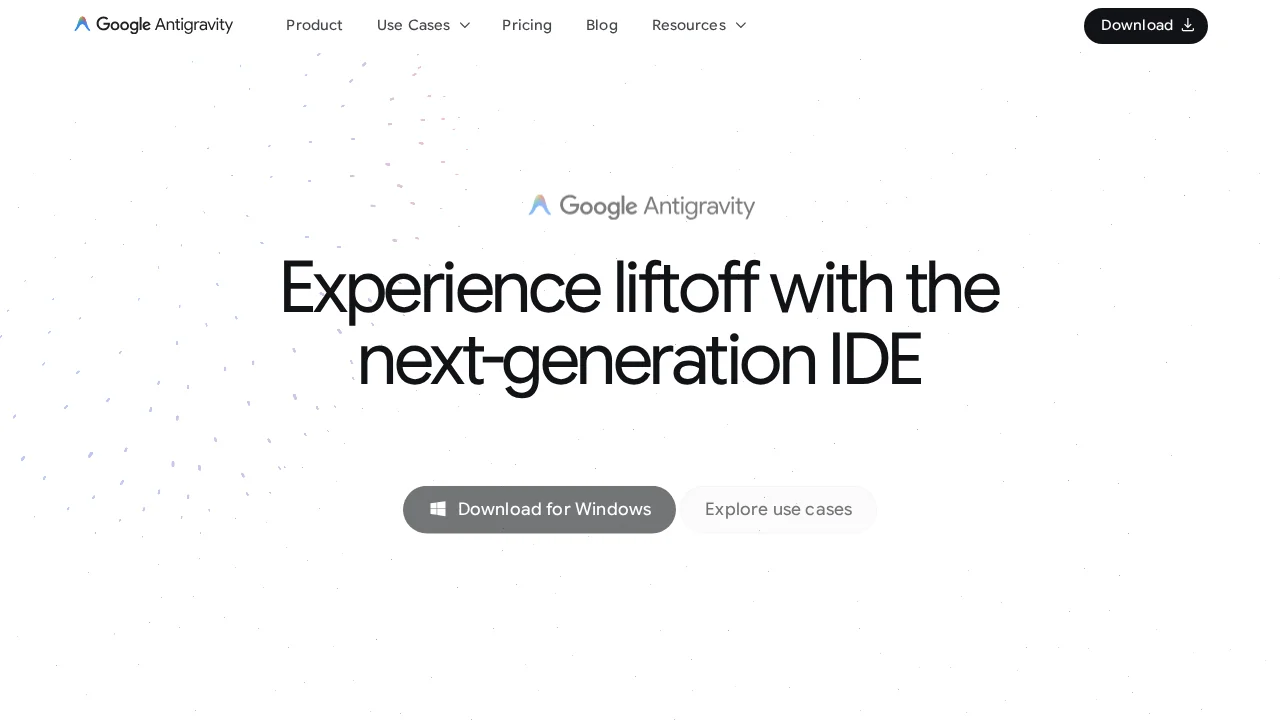
Google Antigravity represents a fundamental shift in how developers approach software development. By moving beyond traditional integrated development environments, it introduces an agentic architecture that handles repetitive tasks, accelerates decision-making, and streamlines the entire development workflow. This agent-first approach means developers can focus on high-level problems while the platform intelligently manages implementation details.
The platform excels at fostering collaboration among development teams. Its adaptive environment learns from team workflows and preferences, creating a personalized experience that evolves with your project's needs. By leveraging Google's advanced artificial intelligence capabilities, Antigravity provides contextual assistance that improves code quality and reduces debugging time.
Developers benefit from significantly faster iteration cycles and reduced time-to-market for software projects. The intelligent automation handles boilerplate code generation, testing coordination, and deployment orchestration, allowing teams to concentrate on innovation rather than mechanical tasks. This translates to higher productivity and lower cognitive load across the entire development lifecycle.
Pros
Cons
Alternatives to Google Antigravity
CodeRabbit
Kilo | Code Reviewer
Verdent
Base44
Rocket
Pulse Editor: Vibe Code & Automate
Mocha