GPT Engineer
GPT Engineer transforms natural language into executable Python code, accelerating development workflows.
GPT Engineer at a glance
- Pricing
- Free
- Key strengths
- Converts natural language directly into executable Python code · Interactive refinement process ensures accurate requirement capture · Supports multiple Python versions with flexible deployment options
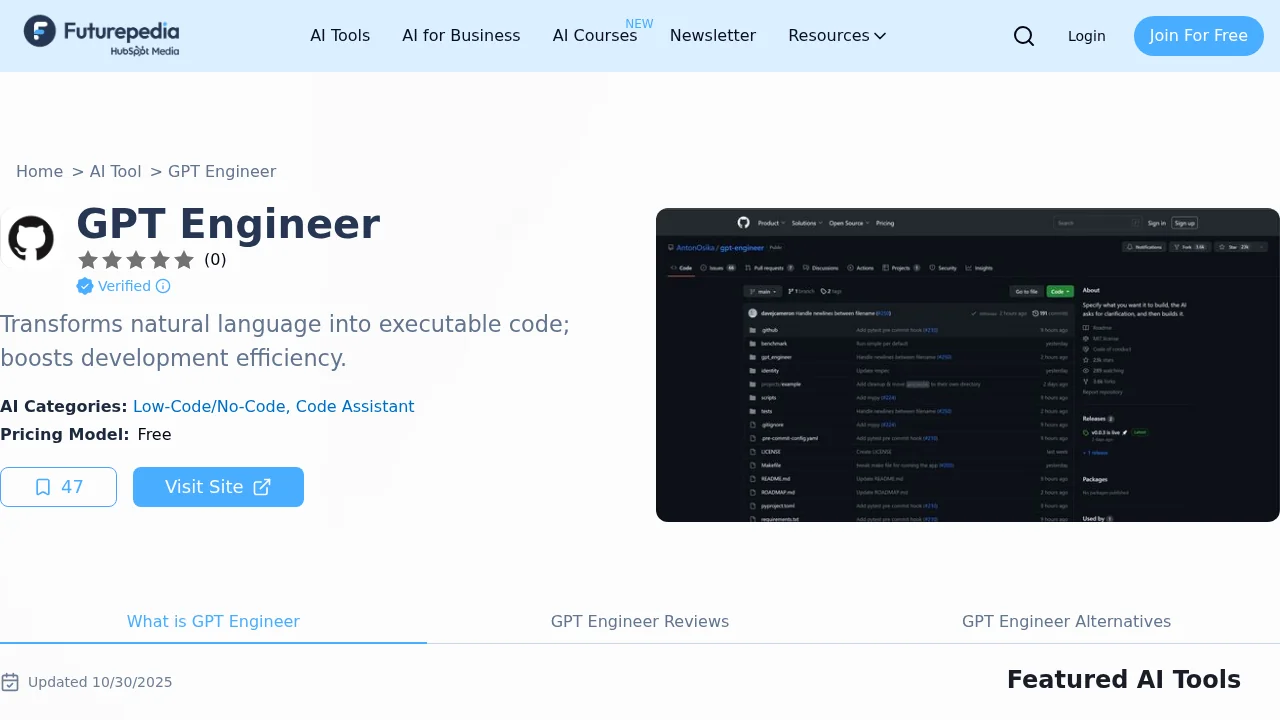
Screenshots
About GPT Engineer
GPT Engineer bridges the gap between human intent and machine-executable code by converting everyday language descriptions into fully functional Python applications. Users simply describe their software requirements in plain English, and the tool interprets those instructions to generate production-ready code. This approach dramatically reduces the friction of traditional coding, making development accessible to both experienced programmers and those new to software development.
The tool employs an interactive clarification process that engages users in refining their instructions before code generation begins. This dialogue-based approach ensures that the generated code aligns precisely with your vision, minimizing misunderstandings and revisions. By asking clarifying questions and confirming requirements, GPT Engineer produces more accurate and contextually appropriate solutions.
Flexibility is built into GPT Engineer's core. The platform supports Python versions 3.10 through 3.12, with backward compatibility for versions 3.8 and 3.9 in earlier releases. Users can customize the AI agent's identity to create a personalized development assistant that matches their workflow style. Additionally, the tool's open-source model compatibility—including support for alternatives like WizardCoder—gives developers the freedom to run the system with their preferred language models, whether cloud-based or locally deployed.
For teams and individuals seeking to streamline code generation and reduce development cycles, GPT Engineer offers a practical solution that maintains code quality while accelerating project timelines.
Features
- Natural Language Understanding: Interprets user input written in everyday language to understand the software requirements.
- Interactive Clarification Process: Engages with users to refine and clarify development instructions.
- Automated Code Generation: Transforms clarified instructions into executable code.
- Support for Multiple Python Versions: Compatible with Python versions 3.10 to 3.12, with legacy support for versions 3.8 and 3.9 up to release 0.2.6.
- Customizable AI Identity: Allows users to specify the "identity" of the AI agent for a personalized development assistant.
- Open Source Model Compatibility: Offers the flexibility to run with open-source models like WizardCoder.
Pros
Cons
GPT Engineer Pricing Plans
Free Tier
Free