grafychat
Grafychat is a visual platform for designing, testing, and managing conversational AI solutions interactively.
grafychat at a glance
- Pricing
- Paid — from $39
- Rating
- ⭐ 5.0/5 · 1 reviews
- Key strengths
- Visual design interface simplifies conversational AI development for all skill l · Real-time flow visualization helps identify and fix conversation logic issues qu · Built-in testing and simulation reduce deployment risks
Screenshots
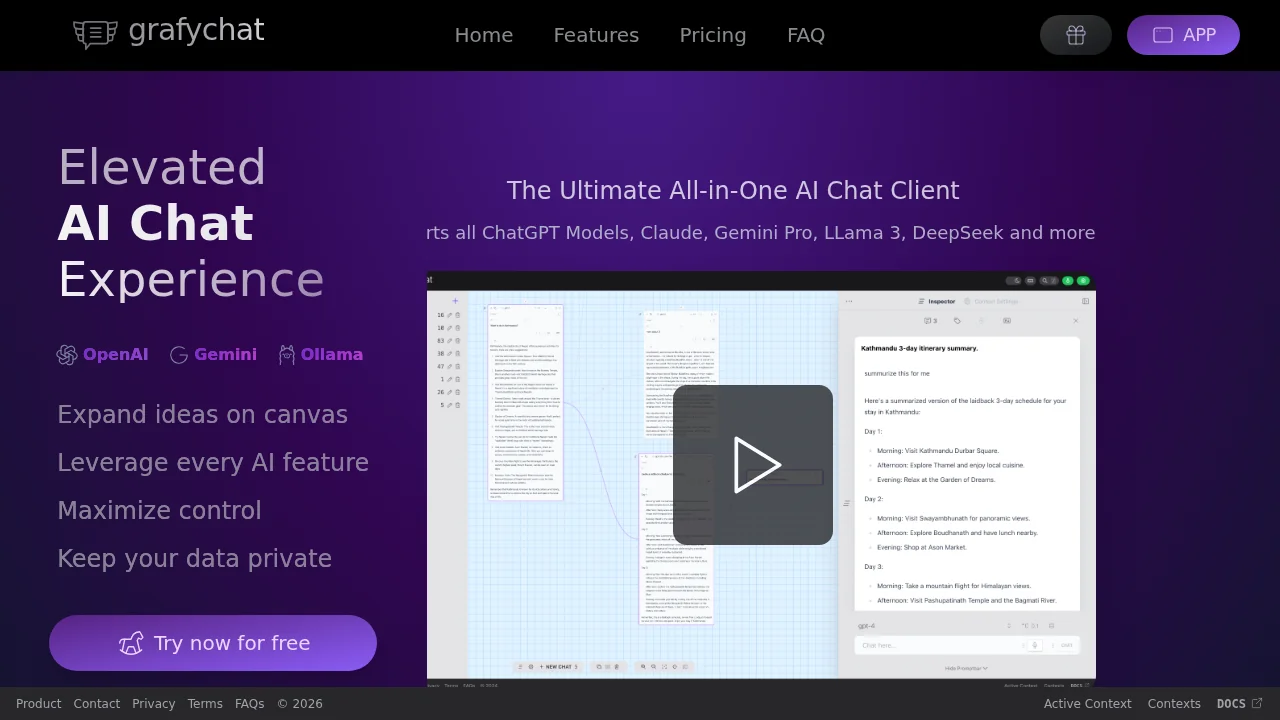
About grafychat
Grafychat provides a visual development environment specifically built for conversational AI creation. Rather than coding in traditional text-based formats, users can design chatbot and voice assistant logic through an intuitive graphical interface, making it accessible to developers at all skill levels. The platform enables real-time visualization of conversational flows, allowing teams to see exactly how dialogues progress and identify bottlenecks or inefficiencies before deployment.
Testing and simulation are core to Grafychat's workflow. Users can run scenarios against their conversational AI models to observe behavior, validate logic, and refine responses without touching production systems. This iterative approach accelerates development cycles and reduces the risk of deploying suboptimal conversational experiences. The visual design paradigm makes it simple to spot where improvements are needed and implement adjustments quickly.
Collaboration features built into the platform facilitate team discussions and decision-making around design choices. Multiple stakeholders—from engineers to product managers—can review and contribute to conversational flow diagrams, streamlining approval processes and alignment. This shared workspace approach helps teams move faster and maintain clarity on requirements throughout development. Grafychat ultimately simplifies the complexity of conversational AI development by combining design, testing, and management tools in one visual-first interface.
Pros
Cons
Alternatives to grafychat
88Agents
Modulate
AccuChats
Site2CRM
OC Maker
Chattitude
Lexikon AI: Real Roleplay