
Graphlit
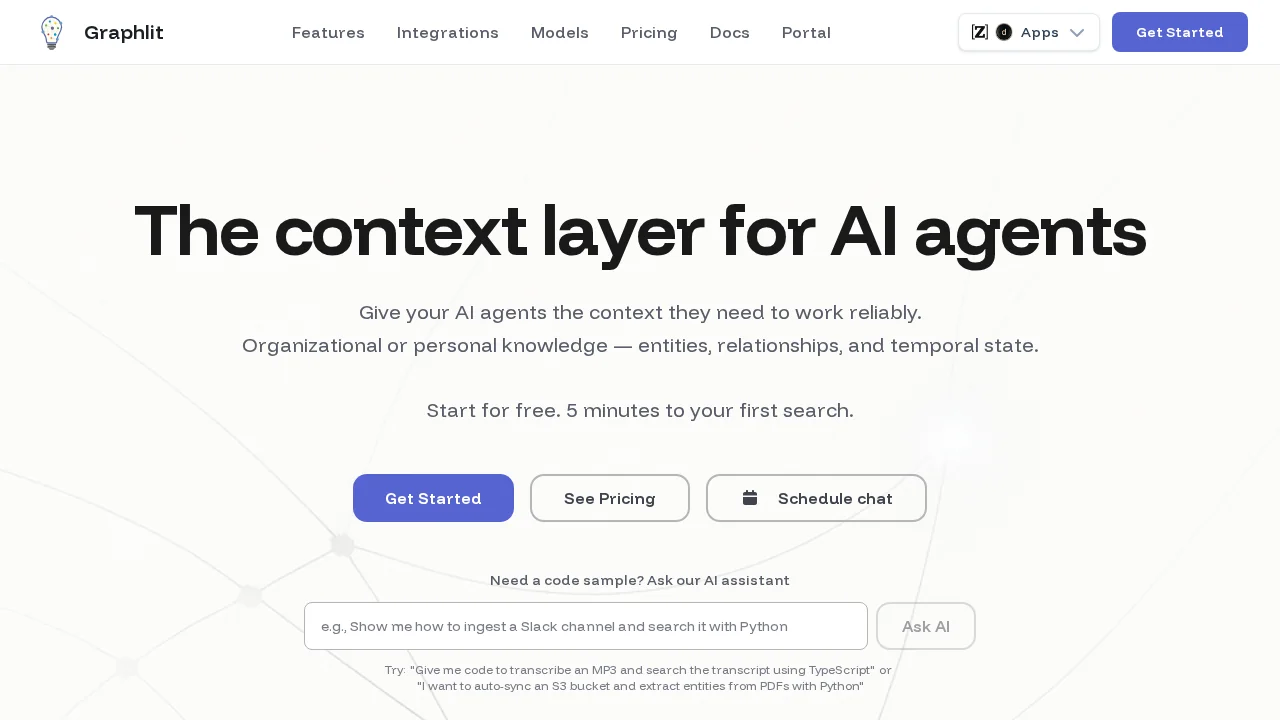
Graphlit is an API-first platform for building AI applications that extract knowledge from unstructured data.
Graphlit at a glance
- Pricing
- Free — from $49/month
- Rating
- ⭐ 5.0/5 · 2 reviews
- Key strengths
- Processes diverse unstructured data formats natively · Serverless infrastructure eliminates DevOps overhead · Built-in RAG pattern with semantic search capabilities
Screenshots
About Graphlit
Graphlit provides developers with a serverless, cloud-native infrastructure purpose-built for handling unstructured data at scale. The platform automates complex workflows across data ingestion, knowledge extraction, semantic search, and LLM integration, enabling teams to transform raw content into actionable intelligence without managing underlying infrastructure.
The platform excels at processing diverse content types—PDFs, images, videos, podcasts, RSS feeds, web pages, and messaging platforms—converting them into searchable, contextualized knowledge graphs. By leveraging Retrieval Augmented Generation (RAG) patterns and Schema.org's entity data model, Graphlit enables developers to build conversational AI systems powered by leading language models like GPT-4, all through a clean API interface.
Graphlit's multimedia content management system provides secure storage, vector-based retrieval, and sophisticated media processing capabilities including image thumbnails and preview generation. The platform supports enterprise-grade security with encrypted storage, role-based access control, and granular usage tracking, allowing developers to monitor costs and maintain compliance across legal, healthcare, sales, and engineering applications.
Built for production workloads, Graphlit eliminates the complexity of building RAG pipelines from scratch. Developers can leverage webhook integrations and alerting systems to create responsive AI workflows, while the free tier enables exploration before committing to usage-based pricing tied to content ingestion volumes.
Pros
Cons
Alternatives to Graphlit
AppDeploy
Rocket
biela.dev
Momen | Vibe Architect
Sketchflow.ai
ThinkRoot - The AI Compiler
Atoms