
GymBuddy
GymBuddy is an AI-powered workout planner that creates personalized exercise routines tailored to your fitness level and goals.
GymBuddy at a glance
- Pricing
- Free — from $3.99
- Rating
- ⭐ 1.0/5 · 3 reviews
- Key strengths
- AI-powered personalization based on fitness level and goals · Comprehensive exercise tracking and progress monitoring · User-friendly interface for easy workout configuration
Screenshots
About GymBuddy
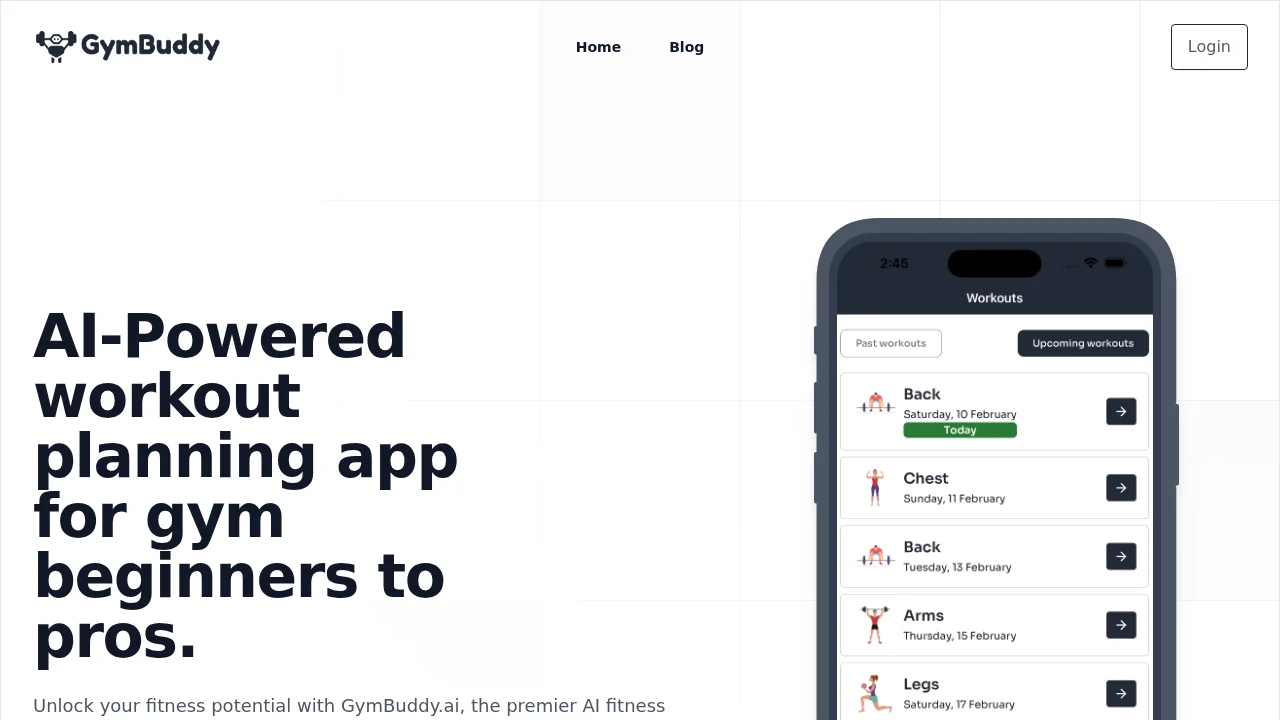
GymBuddy harnesses artificial intelligence to deliver customized workout plans designed around your specific fitness objectives. Whether you're targeting particular muscle groups or following a full-body routine, the app adapts exercises to match your current fitness level, ensuring workouts remain effective and sustainable. The intelligent system learns your preferences and adjusts recommendations accordingly, making every session count toward your goals.
Tracking your fitness journey becomes effortless with GymBuddy's built-in progress monitoring tools. Log your exercises, track weight changes, and identify movements that challenge you most. This data-driven approach helps you understand your strengths and areas for improvement, enabling informed decisions about your training direction. The intuitive configuration screen simplifies workout creation, requiring just a few inputs to generate a personalized routine.
Your privacy and security are prioritized within the platform. All user data remains encrypted and protected, with strict policies preventing third-party access. GymBuddy is available on both Apple App Store and Google Play, with flexible subscription options at €7.99 monthly or €79.99 annually. New users benefit from a two-month free trial to explore the app's capabilities before committing to a paid plan. Professional support is readily available via email for any technical questions or guidance.
Pros
Cons
Alternatives to GymBuddy
Pelaris
Calibrex
Financial Fitness Passport
Autocoder.cc
FoundersPlan.ai
FlexToast
BounceBunny