
Happily.ai
Happily.ai is an AI platform that transforms employee engagement through sentiment analysis and actionable workforce insights.
Happily.ai at a glance
- Pricing
- Paid — from $9/month
- Key strengths
- Real-time sentiment analysis replaces time-consuming traditional surveys · Actionable insights drive immediate engagement and retention improvements · AI-powered performance tracking enables proactive management interventions
Screenshots
About Happily.ai
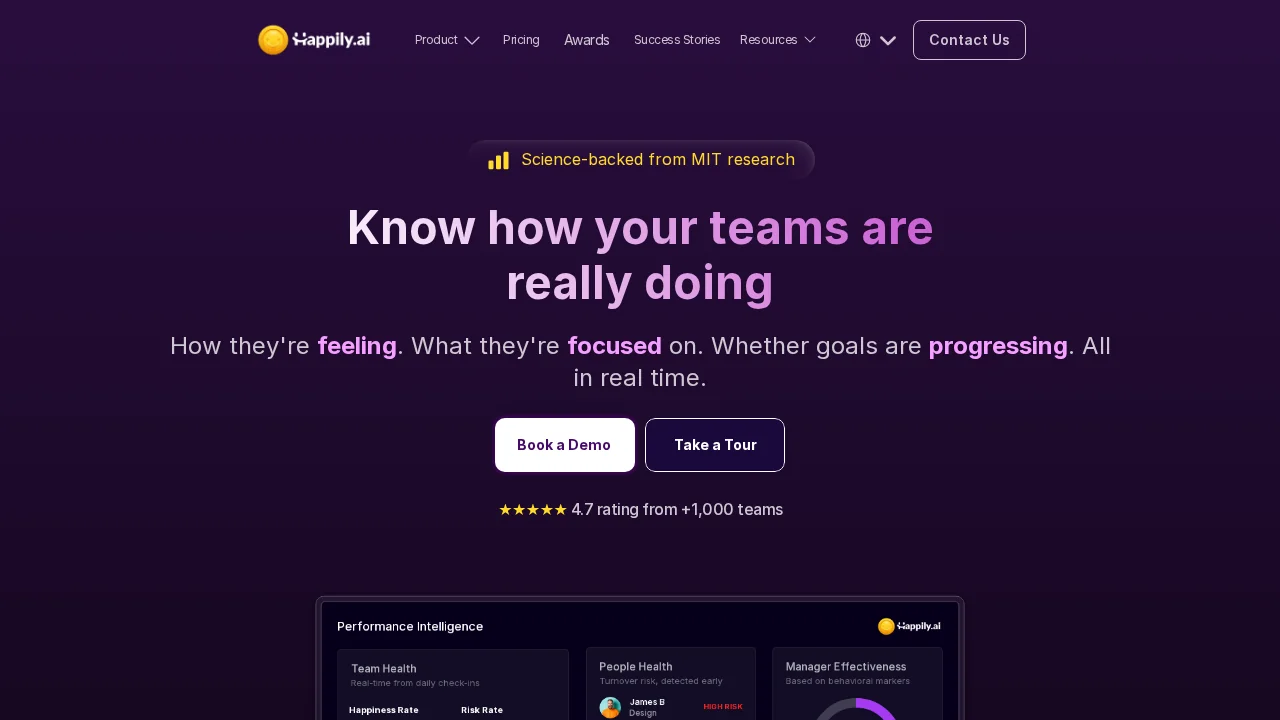
Happily.ai replaces outdated employee surveys with intelligent sentiment analysis that captures genuine employee feedback in real time. The platform enables HR professionals and managers to identify engagement issues, diagnose root causes, and implement targeted solutions that drive meaningful organizational change. By leveraging AI to understand team dynamics, Happily.ai helps leaders make data-driven decisions that improve retention and boost productivity.
The platform offers comprehensive features including pulse surveys, continuous feedback loops, real-time analytics, and skills assessments designed to unlock employee potential. Managers gain instant visibility into team sentiment and performance metrics, allowing them to address concerns proactively rather than reactively. This approach transforms performance management from periodic reviews into ongoing development conversations.
Happily.ai extends beyond engagement tracking by supporting hiring decisions based on cultural fit and alignment with organizational values. The system uses empirical methodology to connect people management directly to measurable business outcomes, enabling teams to uncover opportunities for growth and improvement. With focus on communication enhancement and untapped talent discovery, the platform creates a foundation for sustained workplace positivity and performance excellence.
Pros
Cons
Alternatives to Happily.ai
empirio.ai
HelloDay.ai