ImagePipeline
ImagePipeline is a multi-model Stable Diffusion API platform for generating high-quality AI images at scale.
ImagePipeline at a glance
- Pricing
- Paid — from $9/month
- Rating
- ⭐ 5.0/5 · 1 reviews
- Key strengths
- No GPU infrastructure required—eliminates hardware maintenance costs · Supports multiple advanced techniques: ControlNets, LoRA, and embeddings · REST API integration—simple to implement in existing systems
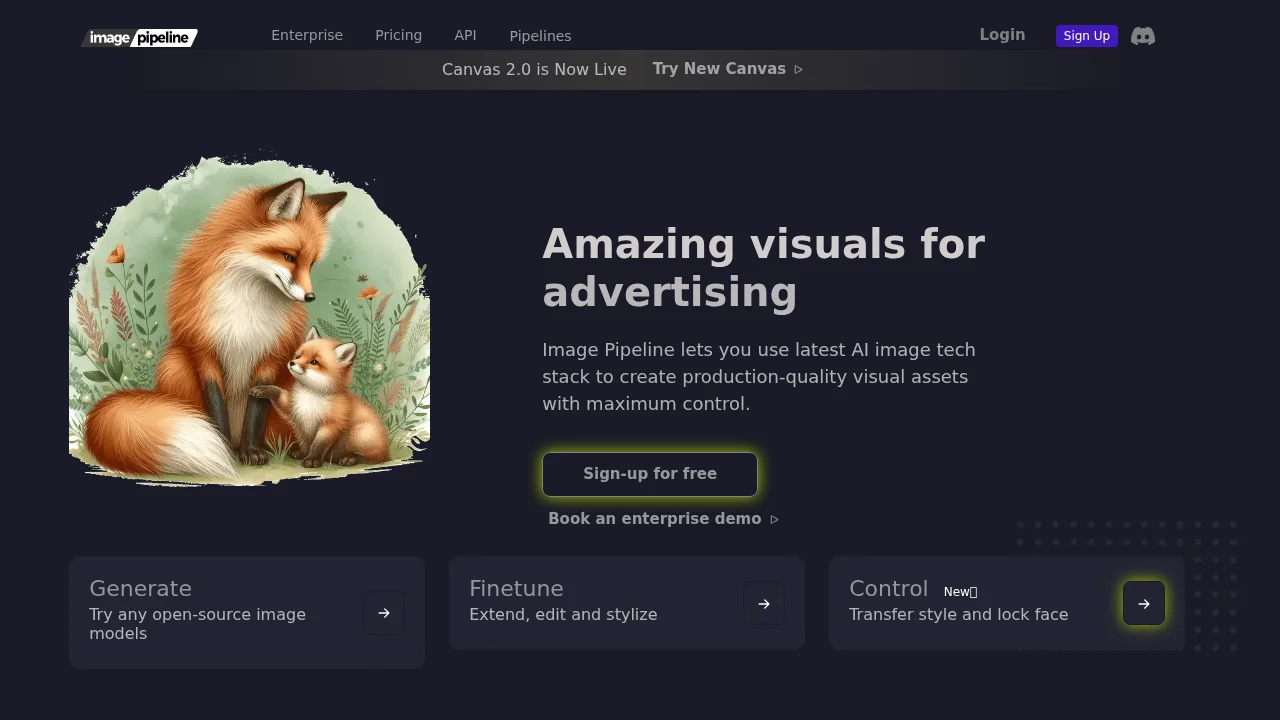
Screenshots
About ImagePipeline
ImagePipeline provides developers with a powerful REST API interface to access multiple advanced image generation models. The platform eliminates the need to manage GPU infrastructure, allowing teams to focus on building AI-driven products without heavy operational overhead. By removing infrastructure barriers, ImagePipeline makes large-scale image generation accessible to businesses of any size.
The platform supports essential image generation techniques including Stable Diffusion, ControlNets for structural control, and LoRA technology for precise positioning and composition adjustments. These capabilities enable users to generate diverse image types while maintaining fine-grained control over output characteristics and visual consistency across batches.
ImagePipeline also offers embeddings functionality that maps image data into multidimensional vector spaces, enhancing both generation quality and processing efficiency. For specialized use cases, the platform supports custom model creation, letting teams train and deploy proprietary models tailored to specific creative or commercial requirements.
The REST API architecture ensures simple integration into existing workflows and applications. By handling all computational complexity server-side, ImagePipeline significantly reduces development costs and accelerates time-to-market for AI-powered image products.
Pros
Cons
Alternatives to ImagePipeline
Bulk Image Generator
BulkGen