
Kaily
Kaily is a no-code AI agent platform for building intelligent virtual teammates that automate customer support, sales, and marketing tasks.
Screenshots
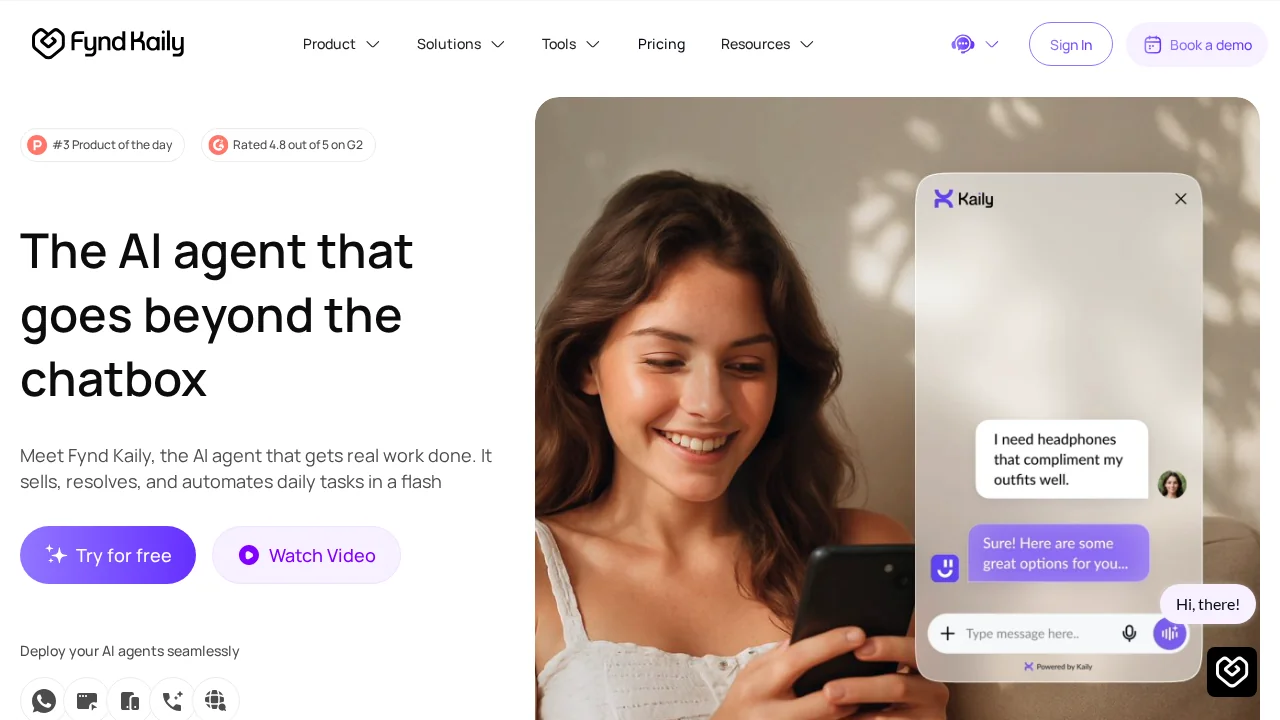
About Kaily
Kaily empowers businesses to create and deploy AI agents without writing code, eliminating the need for technical expertise. These intelligent virtual teammates handle customer support, sales conversations, onboarding workflows, and marketing campaigns autonomously, freeing your team to focus on higher-value work. Unlike traditional chatbots that only respond to queries, Kaily agents take meaningful actions, execute multi-step workflows, and complete tasks end-to-end.
The platform supports omnichannel communication, enabling your AI agents to engage customers across websites, mobile apps, WhatsApp, email, voice, and video in a unified experience. This flexibility ensures you reach customers on their preferred channels while maintaining consistent service quality. Real-time data integration and seamless connections with your existing business tools allow agents to access information instantly and trigger actions across your tech stack.
Kaily helps businesses scale personalized customer experiences while reducing operational costs and improving team efficiency. Agents learn from interactions, adapt to customer needs, and deliver contextual responses that feel natural and helpful. Whether you're managing support tickets, nurturing sales leads, or onboarding new users, Kaily's autonomous agents work around the clock to drive results.
Pros
Cons
Alternatives to Kaily
88Agents
BabyMealBot
TalkWiz.ai
AccuChats
Site2CRM
Chattitude
Recall