
Kua.ai
Kua.ai is an AI content generator built for ecommerce businesses to create SEO-optimized product listings and marketing content at scale.
Kua.ai at a glance
- Pricing
- Free — from $14.20/month
- Key strengths
- 200+ ready-to-use content applications for ecommerce tasks · AI image generation integrated for product visuals · Flexible AI model selection for cost optimization
Screenshots
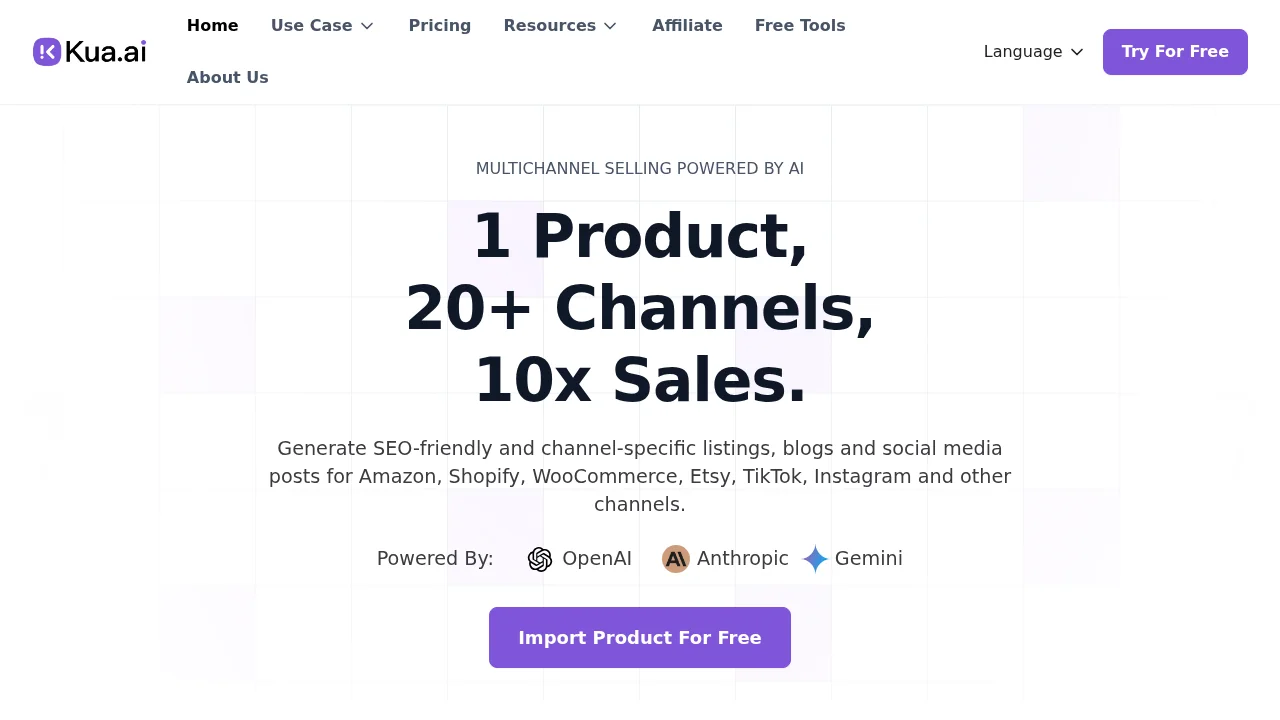
About Kua.ai
Kua.ai accelerates content production for ecommerce sellers by automating the creation of product descriptions, Amazon listings, SEO content, and marketing materials. The platform provides access to over 200 pre-built applications designed to handle repetitive content tasks, allowing businesses to generate on-brand, search-optimized content across multiple channels without manual writing. This capability directly drives higher traffic, improved conversion rates, and increased sales by reducing time-to-market for new products and campaigns.
The platform simplifies content creation through a three-step workflow: select from available content applications, input product details and preferred tone, then review and confirm AI-generated results. Users can leverage the Infobase feature to store brand guidelines, product specifications, and voice parameters, ensuring all generated content maintains consistency and authenticity. This approach eliminates the need for extensive brand briefs and reduces revisions needed before publishing.
Kua.ai includes built-in AI image generation capabilities, enabling users to create product visuals by describing desired images, generating style variations, and adjusting backgrounds—eliminating the need for external design tools or stock photo services. The integrated AI Chat assistant functions as an ecommerce-focused partner, offering flexible access to multiple AI models including GPT-3.5 and GPT-4, real-time web data retrieval for research, and one-click prompt refinement to generate professional-quality queries without technical expertise.
Pros
Cons
Alternatives to Kua.ai
GetLogit
Vidocu
CASi Scout by Cntent
RepurposingBot
Contents Pilot
ViralCanvas.ai
Soolo.ai - AI Brand Builder