
Labelbox
Labelbox is a data-centric AI platform for building, training, and deploying machine learning applications.
Labelbox at a glance
- Pricing
- Free — from Free tier available
- Key strengths
- Integrated data-centric AI platform for end-to-end model development · Supports model training, fine-tuning, and LLM automation workflows · Streamlines data annotation and preparation for faster model iteration
Screenshots
About Labelbox
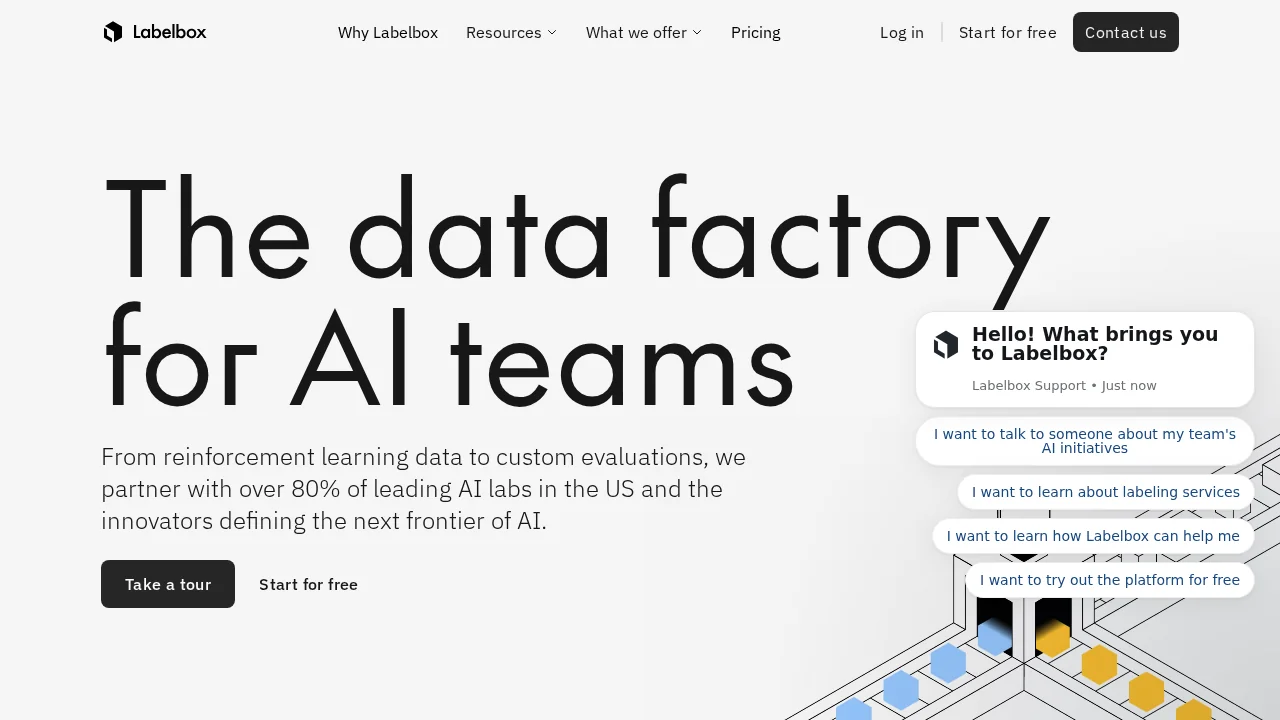
Labelbox is a comprehensive platform designed to streamline the entire lifecycle of AI application development. It enables teams to build production-ready machine learning models by providing robust tools for data annotation, model training, and fine-tuning. The platform supports both traditional machine learning workflows and modern large language model implementations, allowing organizations to automate complex tasks efficiently.
The platform emphasizes a data-centric approach to AI development, recognizing that model quality depends fundamentally on data quality and proper labeling. Labelbox provides intuitive workflows for organizing, annotating, and validating training datasets, ensuring that teams can quickly prepare data for model training. This reduces time spent on data preparation and accelerates the path from concept to deployment.
Labelbox offers flexible model training and fine-tuning capabilities, accommodating various use cases from computer vision to natural language processing. Organizations can leverage pre-existing models or develop custom solutions tailored to their specific requirements. The platform also facilitates LLM-based automation, enabling teams to build intelligent workflows that reduce manual work and improve operational efficiency.
By consolidating data management, annotation, model training, and deployment into a single environment, Labelbox reduces complexity and improves collaboration across data science and engineering teams. The unified platform eliminates silos between different development stages and provides visibility into the entire AI development pipeline.
Pros
Cons
Alternatives to Labelbox
AppDeploy
Rocket
biela.dev
Momen | Vibe Architect
Sketchflow.ai
ThinkRoot - The AI Compiler
Atoms