LangWatch
LangWatch optimizes LLM applications with automated prompt discovery, collaboration tools, and production monitoring.
LangWatch at a glance
- Pricing
- Paid — from $61/month
- Rating
- ⭐ 5.0/5 · 3 reviews
- Key strengths
- Automated prompt and model discovery dramatically reduces optimization time · Cross-functional collaboration enables non-technical experts to contribute effec · Comprehensive monitoring tracks quality, latency, and cost in one dashboard
Screenshots
About LangWatch
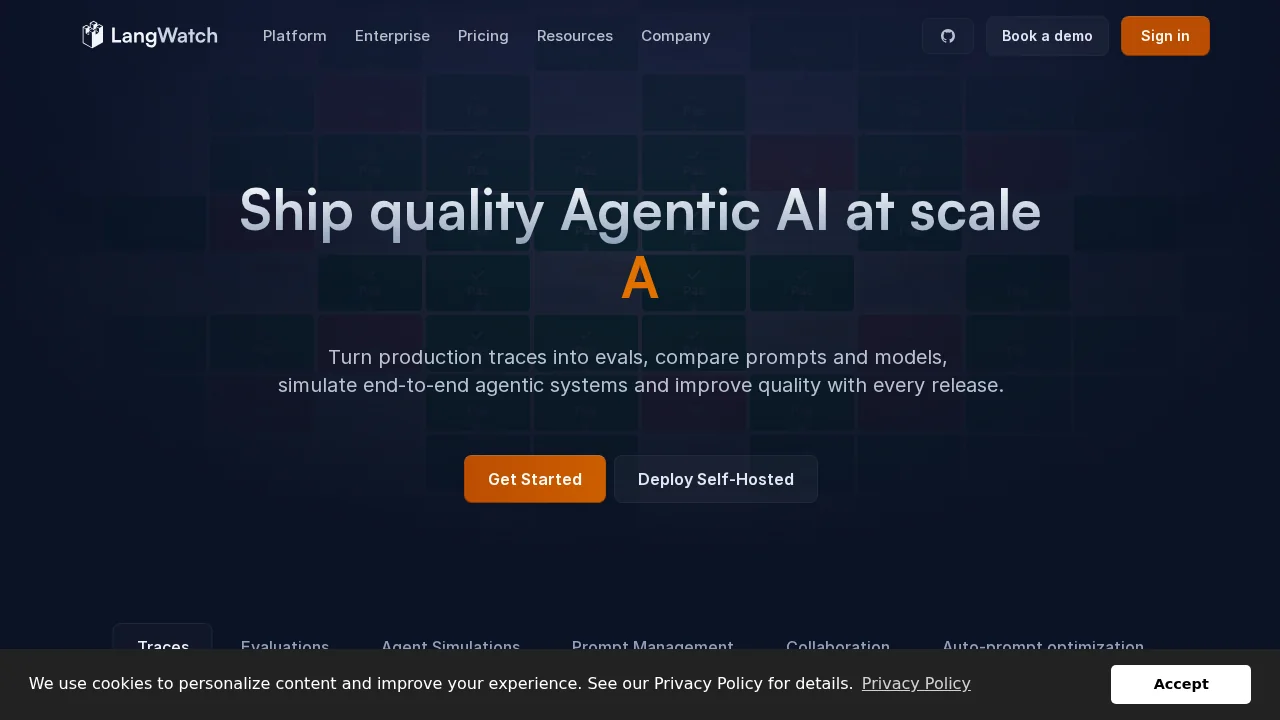
LangWatch is a comprehensive optimization platform designed to accelerate the development and deployment of language model applications. By automating prompt and model selection through Stanford's DSPy framework, the platform reduces manual testing cycles and enables teams to discover optimal configurations in a fraction of the traditional time. This intelligent automation allows both technical developers and domain experts from diverse fields—including legal, sales, customer service, HR, healthcare, and finance—to participate meaningfully in the optimization process without requiring deep machine learning expertise.
The platform streamlines team collaboration through intuitive drag-and-drop interfaces and centralized dataset management, enabling multiple stakeholders to work together efficiently while maintaining consistent quality standards. Version control for experiments ensures teams can track and reproduce their best-performing prompts, models, and pipelines, building institutional knowledge over time. The integrated analytics dashboard provides real-time visibility into critical metrics including quality, latency, and cost, allowing teams to make data-driven decisions about model performance and resource allocation.
LangWatch's debugging capabilities and DSPy Visualizer offer transparent insights into model behavior in production environments. The platform supports full compatibility with all major LLM models and optimization frameworks, eliminating vendor lock-in and providing flexibility as the AI landscape evolves. By consolidating monitoring, evaluation, and optimization into a single workspace, LangWatch transforms quality assurance from a bottleneck into a competitive advantage, enabling faster iteration cycles and more reliable deployments.
Pros
Cons
Alternatives to LangWatch
Octopoda
KiloClaw
MiDash AI
Nanoswarm: OpenClaw App
TaskFire
theMultiplicity.ai
Nebius Token Factory