
Layla
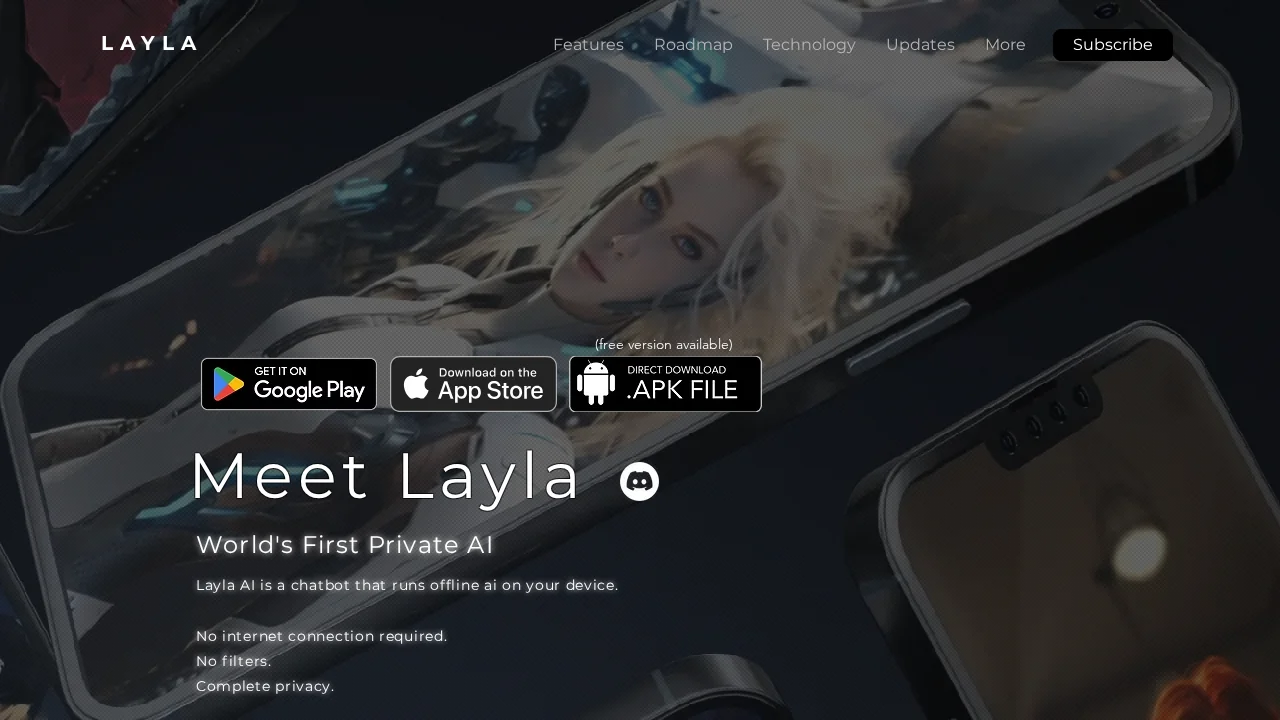
Layla is a private, offline AI assistant that runs directly on your device without internet connectivity.
Layla at a glance
- Pricing
- Free — from $19.99
- Key strengths
- Complete offline functionality with no internet connection required · Full data privacy with all processing done locally on your device · Versatile capabilities including chat, creative writing, character roleplay
Screenshots
About Layla
Layla represents a fundamental shift in personal AI technology by operating entirely on your device without requiring internet access. This approach eliminates cloud dependencies and ensures your conversations, queries, and interactions remain completely private and under your control. The offline-first architecture means you can use Layla anywhere, anytime, without concerns about data transmission or third-party monitoring.
Beyond privacy, Layla delivers versatile functionality tailored to daily needs. Engage in natural conversations, generate creative stories and ideas, receive factual answers to questions, and enjoy entertainment through character impersonations. The assistant adapts to different personalities and use cases, making it equally useful for productivity tasks like scheduling and shopping as it is for creative inspiration and casual interaction.
The platform leverages advanced Large Language Model technology optimized to run efficiently on standard consumer hardware like smartphones and tablets. This technical achievement eliminates the performance limitations traditionally associated with on-device AI, delivering responsive and capable assistance without compromising device resources.
Layla's development roadmap includes expanded capabilities such as real-time web search, task reminders, social sharing features, image generation, and 3D character modeling. Regular updates continuously enhance the user experience while maintaining the privacy-first principles that define the platform.
Pros
Cons
Alternatives to Layla
88Agents
Modulate
AccuChats
Site2CRM
OC Maker
Chattitude
Lexikon AI: Real Roleplay