
Mem0
Mem0 is an open-source memory system that enables AI agents to learn, retain, and leverage information across interactions.
Mem0 at a glance
- Pricing
- Free — from $19/month
- Key strengths
- Open-source architecture enables full transparency and community-driven developm · Persistent memory layer allows AI agents to improve through user interactions · Well-documented codebase with examples and notebooks for quick integration
Screenshots
About Mem0
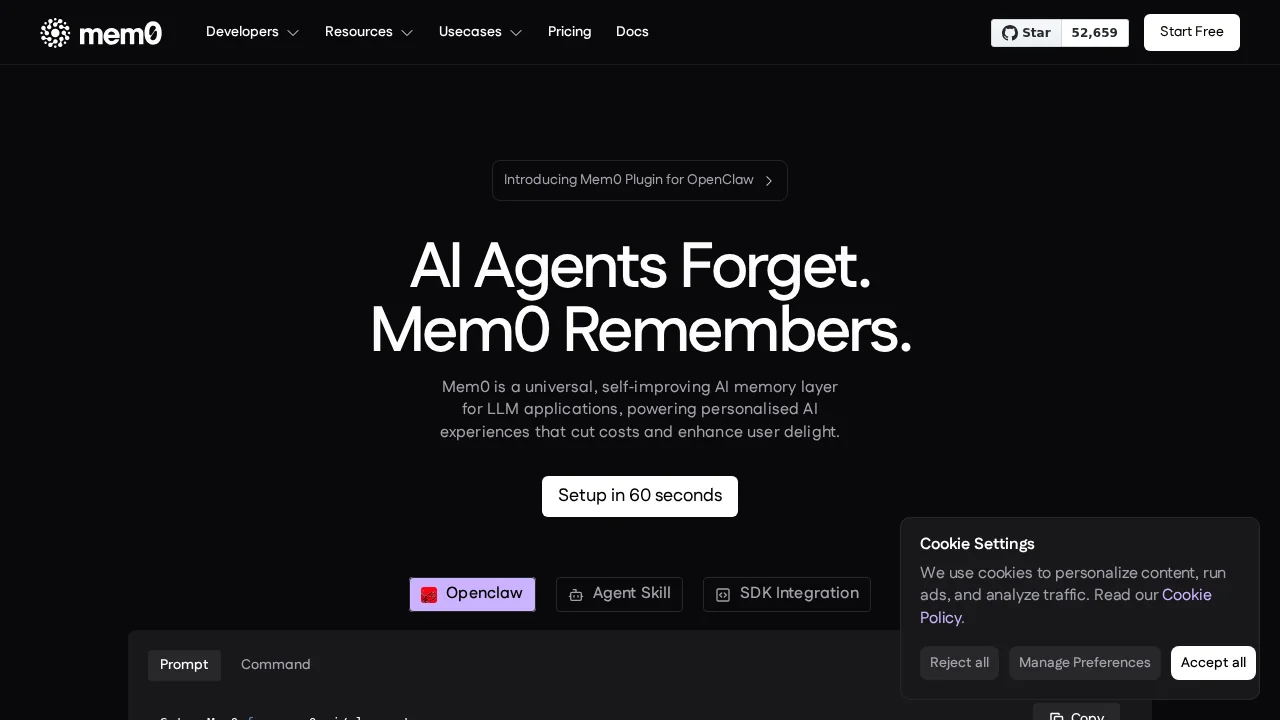
Mem0 provides AI agents with a sophisticated memory layer that transforms how they interact with users and retain context over time. By integrating persistent memory capabilities, agents can understand user preferences, learn from past conversations, and deliver increasingly personalized responses. This foundational technology is essential for building AI systems that feel intelligent and adaptive rather than stateless and repetitive.
Developers benefit from Mem0's open-source architecture, which allows deep customization and integration into existing AI applications. The codebase is well-organized with comprehensive examples, notebooks, and documentation that guide implementation across various use cases. Contributors worldwide can enhance the tool, propose improvements, and shape its evolution through pull requests and community discussions.
The Apache-2.0 license ensures freedom to use, modify, and distribute Mem0 within both commercial and open-source projects. The repository structure includes configurations, test suites, and practical examples that accelerate development cycles. Whether you're building conversational AI, autonomous agents, or intelligent assistants, Mem0 provides the memory infrastructure needed to create more sophisticated and capable AI systems.
Pros
Cons
Alternatives to Mem0
88Agents
BabyMealBot
TalkWiz.ai
AccuChats
Site2CRM
Chattitude
Recall