MindsDB
MindsDB is an AI development platform that lets teams build intelligent applications by connecting LLMs to enterprise data sources.
Screenshots
About MindsDB
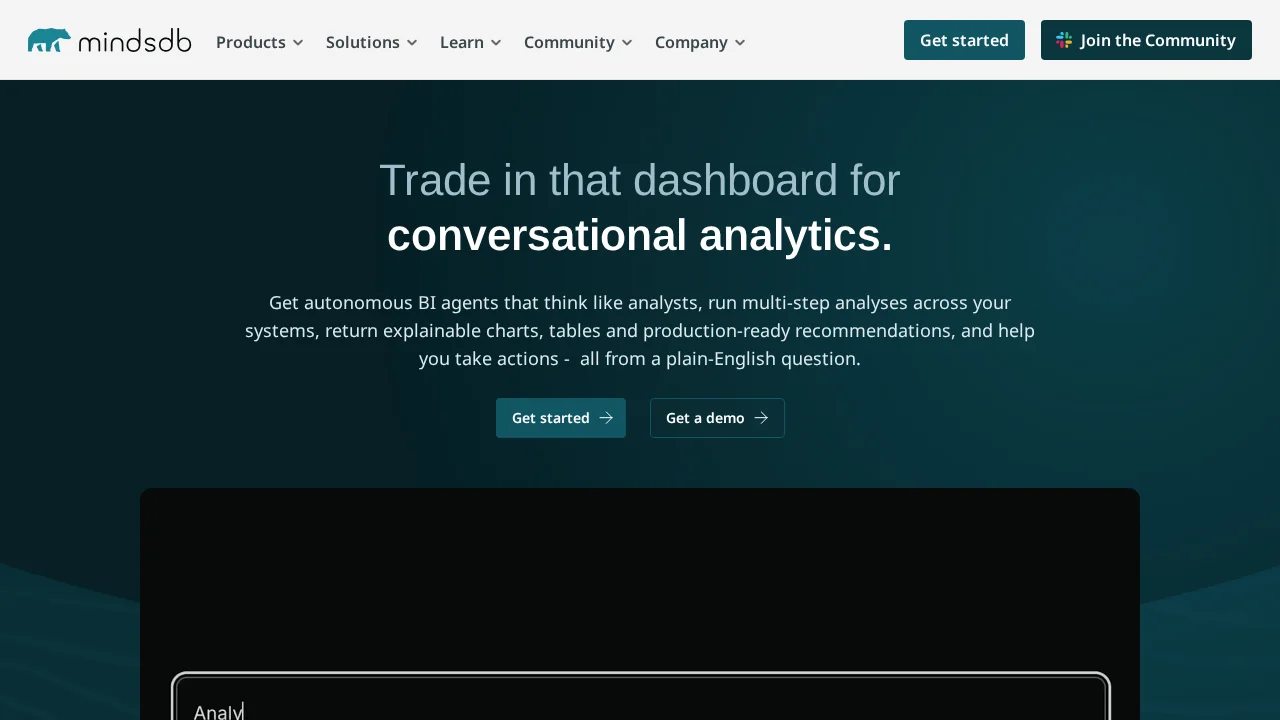
MindsDB bridges the gap between AI models and enterprise databases by abstracting generative AI and large language models as virtual tables. This approach eliminates the need for developers to learn new frameworks—teams can leverage their existing SQL, Python, JavaScript, and MongoQL skills to build AI-powered applications at scale. With support for over 100 data sources, organizations can seamlessly integrate their existing infrastructure with cutting-edge AI capabilities.
The platform enables developers to compare and select the most appropriate LLMs for their specific use cases, then deploy them directly on top of enterprise databases. This abstraction layer makes advanced AI accessible to organizations without requiring specialized AI expertise, while maintaining compatibility with existing data architectures and business intelligence tools.
MindsDB supports a comprehensive range of AI tasks including text understanding, summarization, generation, prediction, and conversational language models. Teams can also leverage text-to-image generation and time series prediction capabilities. The platform handles model training, deployment, and data enrichment with low latency, while automating complex data transformations that typically consume development resources.
Deployment flexibility is built into the platform, with options for dedicated cloud servers or AWS Marketplace integration. The active developer community, extensive documentation, and large open-source contributor base provide substantial support resources for teams building production-grade AI applications.
Pros
Cons
Alternatives to MindsDB
Analytify - A GenBI Platform
DealNavigator.Ai
GA4.so
Hanalyzer.ai
MyReport
SportBot AI
Wandercrafted