Msty
Msty unifies local and online AI models in one interface, eliminating subscription chaos and complex setups.
Msty at a glance
- Pricing
- Free — from $79/year
- Rating
- ⭐ 3.8/5 · 4 reviews
- Key strengths
- Compare multiple AI models in real-time with parallel chat feature · Works offline with full privacy; no data leaves your device · Unified interface eliminates need for multiple subscriptions and apps
Screenshots
About Msty
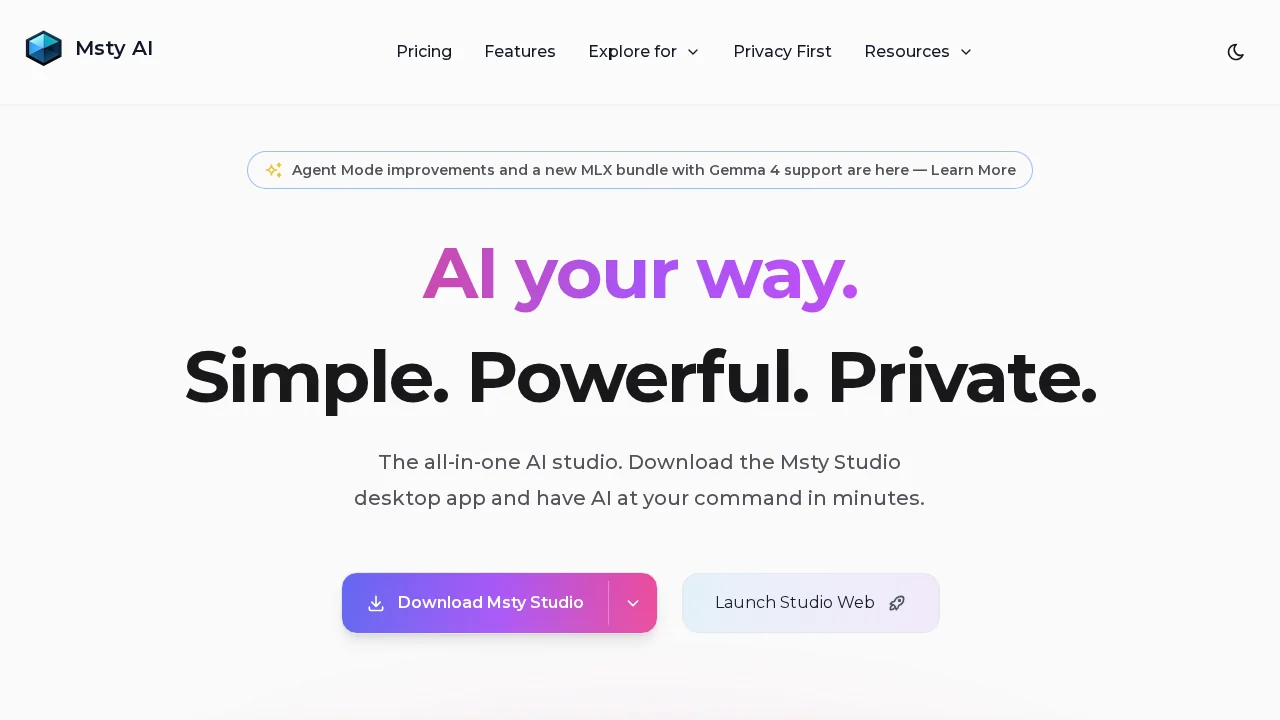
Msty consolidates access to multiple AI models—including OpenAI, Claude, Deepseek, Ollama, and Hugging Face—into a single, streamlined application. Instead of juggling separate subscriptions and accounts across different platforms, users manage all their AI interactions from one unified dashboard. This eliminates the friction of switching between tools and remembering various authentication credentials, making AI collaboration more efficient.
The platform's parallel multiverse chats feature lets you compare responses from different AI models side-by-side in real-time. This comparative approach surfaces diverse perspectives and reasoning styles, helping you evaluate which model performs best for specific tasks or uncover insights no single AI would provide alone. Combined with integrated web search capabilities, you can ground conversations in live data and fetch current information directly into your chats.
Privacy is built into Msty's core architecture. The application functions seamlessly offline, ensuring sensitive data never leaves your machine, while maintaining the flexibility to work online when needed. A Knowledge Stack feature lets you layer multiple data sources into your conversations, and you can integrate custom models from Hugging Face and Open Router to tailor the tool to your exact needs. Organizational features like chat folders and multiple isolated workspaces help teams and individual users maintain structured, scalable workflows without compromise.
Pros
Cons
Alternatives to Msty
Notis
remio: Your Personal ChatGPT
SureThing.io
TheLibrarian.io
Supernormal App
Base44 Superagents
Caret