OpenAssistantGPT
OpenAssistantGPT is an open-source platform for building custom AI chatbots powered by OpenAI models.
Screenshots
About OpenAssistantGPT
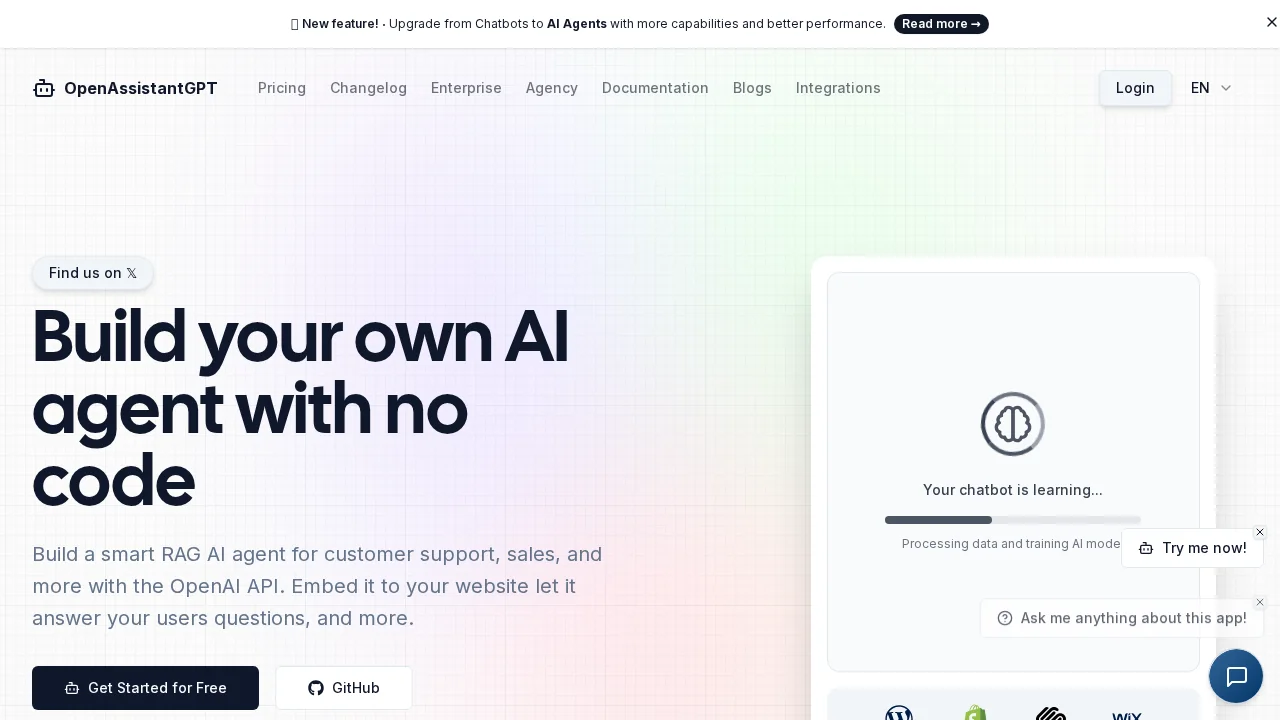
OpenAssistantGPT simplifies chatbot creation by leveraging OpenAI's advanced language models, including GPT-4 and GPT-3.5. The platform requires minimal setup—simply provide a website URL and the tool crawls your content to train the chatbot, eliminating complex configuration processes.
Seamless integration is a core strength of OpenAssistantGPT. The platform works directly with WordPress, Shopify, Squarespace, and Wix, allowing you to embed conversational AI into your website with minimal coding. This low-barrier approach makes enterprise-grade AI accessible to businesses of all sizes without significant development overhead.
Cost efficiency and data control are built into OpenAssistantGPT's model. You supply your own OpenAI API key and pay OpenAI directly for usage, eliminating platform markups and ensuring complete transparency in billing. This approach keeps your data management entirely under your control while maintaining full code transparency—the platform is open-source on Github, empowering users to customize, modify, and improve the codebase.
Flexibility extends to pricing plans designed for individual projects, teams, organizations, and large-scale deployments. This scalability ensures the platform grows with your needs while maintaining cost-effectiveness at every stage.
Pros
Cons
Alternatives to OpenAssistantGPT
88Agents
BabyMealBot
TalkWiz.ai
AccuChats
Site2CRM
Chattitude
Recall