
PearAI
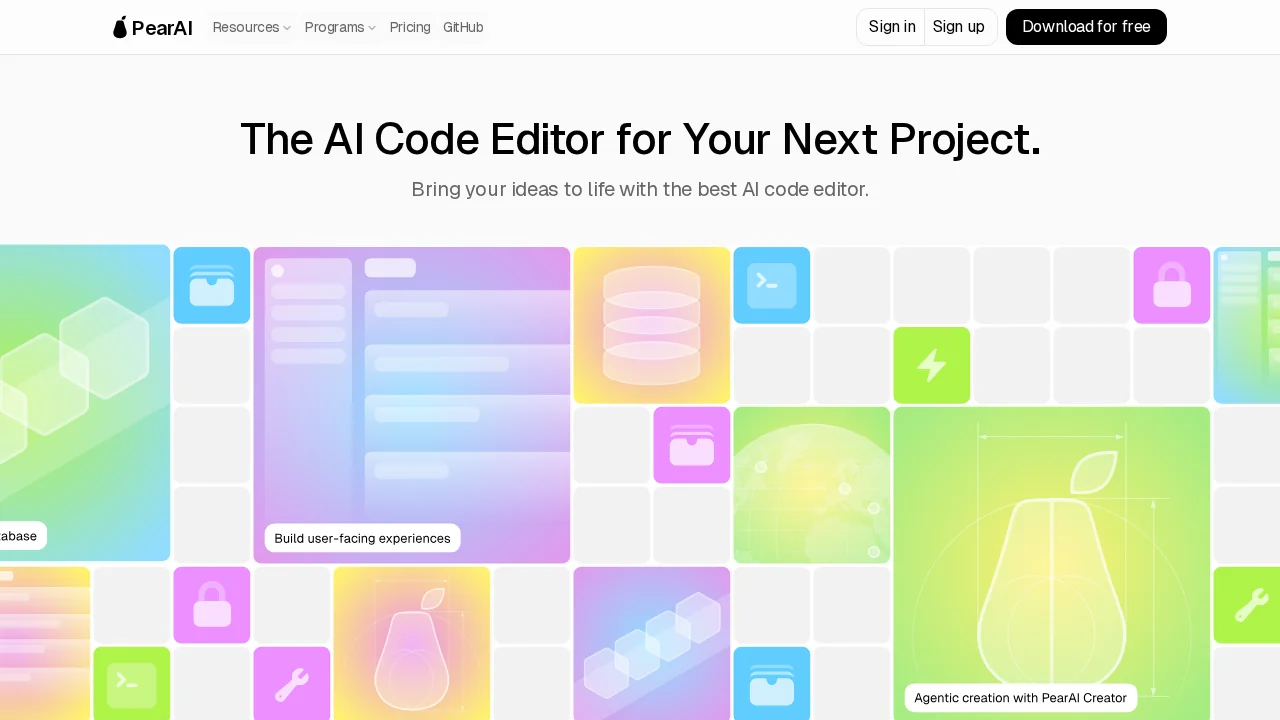
PearAI is an open-source AI code editor that accelerates development with integrated AI-assisted coding tools.
PearAI at a glance
- Pricing
- Free — from $10/month
- Key strengths
- Native integration of multiple AI tools eliminates context switching · Built on VSCode for familiar interface and seamless adoption · Contextual codebase awareness improves accuracy of AI suggestions
Screenshots
About PearAI
PearAI is an open-source code editor built on VSCode that brings AI-powered development capabilities directly into your workflow. By integrating multiple specialized AI tools, it enables developers to write, refactor, and debug code faster while maintaining full context awareness of their codebase. This integration reduces the friction between ideation and implementation, allowing teams to focus on architecture and logic rather than repetitive coding tasks.
The platform combines several powerful AI assistants natively, including Aider for automated code generation across features and bug fixes, Supermaven for intelligent code completion, and Continue as an embedded AI code assistant. These tools work together to understand your project structure and files, providing contextual suggestions that match your coding style and requirements. The result is more accurate assistance that adapts to your specific development patterns.
Beyond code generation, PearAI incorporates advanced capabilities like Mem0 for application-level memory layers that personalize the coding experience, and Perplexity integration for accessing web-based information within your development environment. This means you can research, implement, and test solutions without leaving your editor. The continuous updates to the integrated tool inventory ensure you always have access to the latest AI coding innovations without manual setup or configuration overhead.
Pros
Cons
Alternatives to PearAI
CodeRabbit
Kilo | Code Reviewer
Verdent
Base44
Rocket
Pulse Editor: Vibe Code & Automate
Mocha