Pickaxe
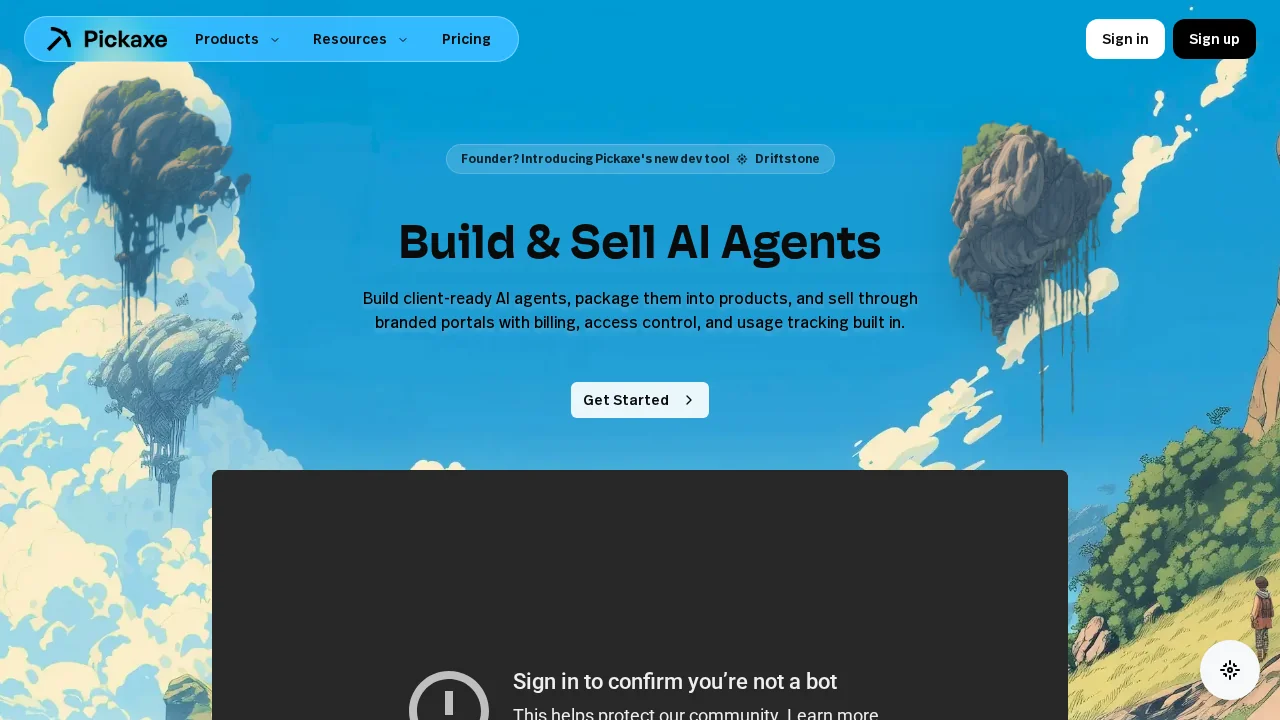
Pickaxe is a no-code platform for creating and deploying AI-powered applications without technical expertise.
Pickaxe at a glance
- Pricing
- Free — from $23/month
- Rating
- ⭐ 5.0/5 · 1 reviews
- Key strengths
- No-code interface makes AI app creation accessible to non-technical users · Train models on your own data, documents, and organizational expertise · Real-time monitoring and iterative refinement of deployed applications
Screenshots
About Pickaxe
Pickaxe eliminates the barrier between AI prompt engineering and practical deployment by offering a visual, no-code interface that anyone can use to build intelligent applications. The platform features a dedicated prompt-framing builder that lets you train AI models on your own documents, data, and organizational knowledge without writing a single line of code. This democratizes AI development, enabling prompt engineers and business teams to collaborate seamlessly on creating sophisticated AI tools.
The platform streamlines the entire app lifecycle with an intuitive dashboard that monitors performance, tracks user interactions, and captures feedback. You can review AI responses in real time, gather user insights, and iteratively refine your applications as more data becomes available. This continuous improvement cycle ensures your AI tools become more accurate and valuable to your organization over time.
Embedding AI applications into your website or internal systems is straightforward with Pickaxe's customization options and white-label capabilities. The platform provides pre-built templates to accelerate your launch, or you can create custom templates to standardize AI tools across your team. Whether you're building a single application or deploying enterprise-wide solutions, Pickaxe scales from free starter plans through gold and partner-level pricing designed for organizations with complex requirements and custom integrations.
Pros
Cons
Alternatives to Pickaxe
AppDeploy
Rocket
biela.dev
Momen | Vibe Architect
Sketchflow.ai
ThinkRoot - The AI Compiler
Atoms