PNGMaker
PNGMaker AI generates transparent PNG images from text descriptions in seconds for designers and content creators.
Screenshots
About PNGMaker
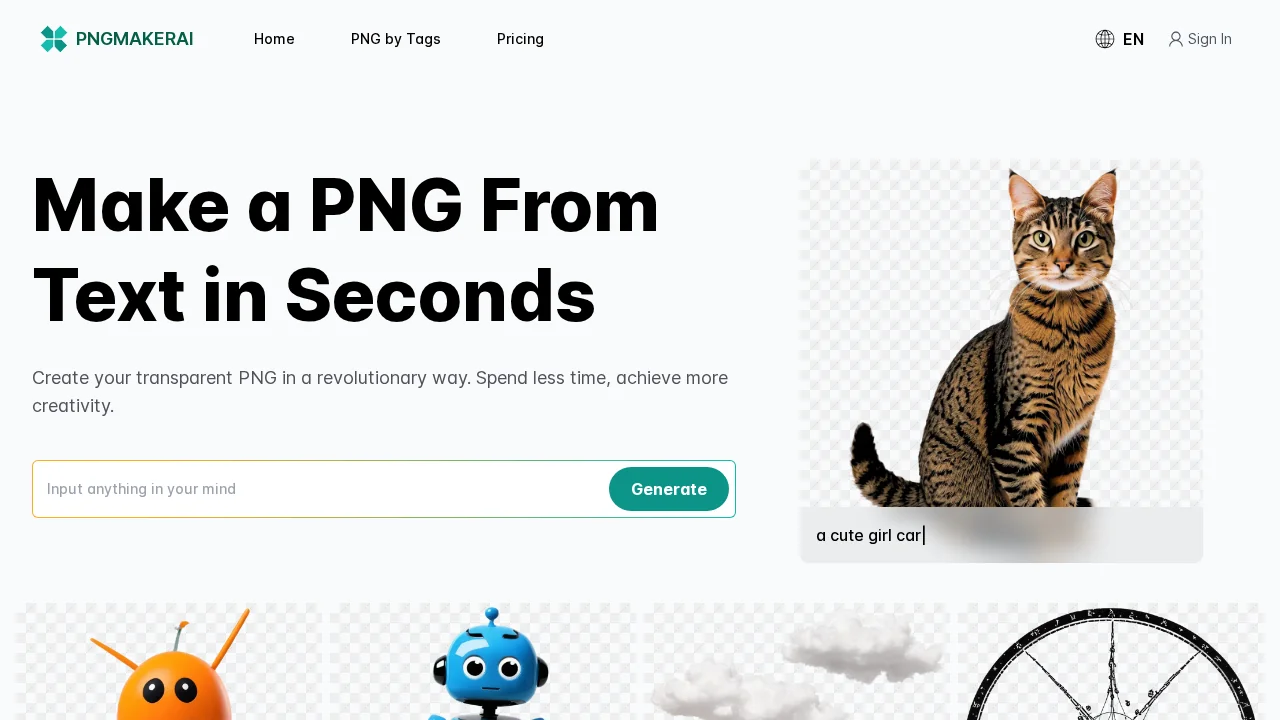
PNGMaker AI streamlines the creation of transparent PNG images by converting simple text descriptions into polished visuals within moments. The platform eliminates the need for complex design software, making professional-grade image generation accessible to designers, marketers, web developers, and content creators who need quick asset production without technical barriers.
The tool excels at handling intricate visual elements like hair strands, glass textures, and other complex transparency effects that traditionally require manual editing. Users can generate entirely new images with transparent backgrounds or blend new elements seamlessly into existing PNG files, ensuring perfect background integration for product photography, logos, and marketing materials.
The iterative workflow empowers users to refine results by adjusting text descriptions until they achieve their desired outcome. This flexibility means no specialized skills are required—simply describe your vision and let the AI handle the visual execution. Whether you're creating social media graphics, web assets, event materials, or branded collateral, the platform delivers results that match professional standards.
PNGMaker AI's gentle learning curve and rapid output make it ideal for teams operating under tight deadlines. The combination of speed, ease of use, and quality output positions it as a practical solution for anyone needing consistent, high-quality transparent graphics without the investment in professional design tools or external freelancers.
Pros
Cons
Alternatives to PNGMaker
SellShots
VisualGPT
Hireable Headshots
Mintshot
VibePaint.ai
GPT Caricature
AvatarStyle