Roboflow
Roboflow is an end-to-end computer vision platform enabling developers to annotate, train, and deploy AI vision models at scale.
Roboflow at a glance
- Pricing
- Freemium
- Key strengths
- End-to-end workflow reduces friction from annotation to production deployment · Flexible deployment options accommodate diverse infrastructure and regulatory ne · Extensive open-source libraries and pre-trained models accelerate development
Screenshots
About Roboflow
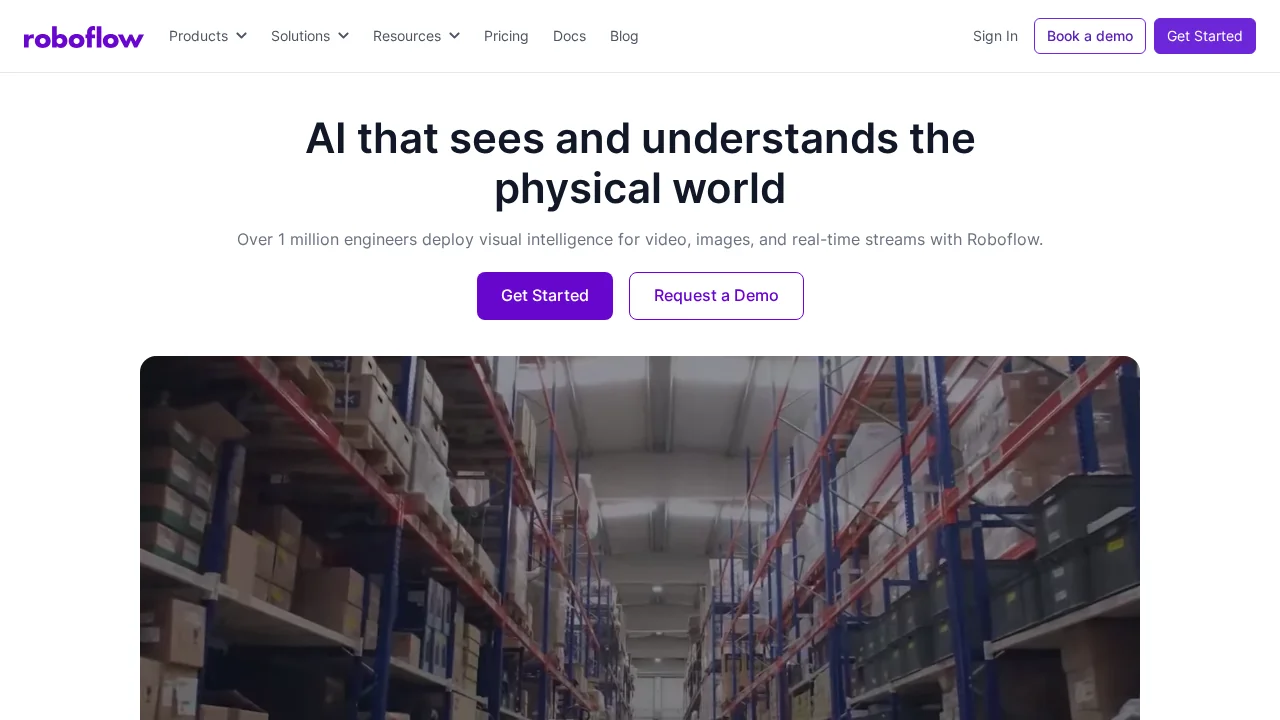
Roboflow streamlines the entire computer vision development lifecycle, from raw image and video data to production-ready models. The platform combines AI-assisted annotation tools that accelerate labeling workflows with hosted GPU infrastructure for training, eliminating the complexity of managing compute resources independently. This integrated approach reduces time-to-deployment and democratizes access to sophisticated vision AI capabilities for teams of all sizes.
The platform's flexibility extends across deployment scenarios. Whether you need cloud API access, edge device deployment, on-premises solutions, or hybrid architectures, Roboflow adapts to your infrastructure requirements. Workflows feature enables developers to chain multiple models together with custom logic and third-party integrations using a low-code interface, supporting complex multi-stage vision pipelines without extensive engineering overhead.
Roboflow's commitment to open source strengthens its ecosystem and developer community. Universe provides access to thousands of pre-trained models and datasets, while libraries like Supervision, Inference, and Autodistill empower developers to integrate vision capabilities and leverage foundation models for rapid model development. Integration with leading ML frameworks—PyTorch, TensorFlow, Ultralytics, Hugging Face—and cloud platforms ensures compatibility with existing development environments.
Enterprise adoption is supported through SOC2 Type 2 and HIPAA compliance, with encryption for data in transit and at rest. The platform serves over 1 million engineers and 16,000+ organizations across healthcare, automotive, logistics, retail, and other industries, with particular trust among Fortune 100 companies seeking scalable, secure vision AI solutions.
Features
- AI-assisted image and video annotation tools
- Hosted model training with GPU infrastructure
- Flexible deployment: cloud API, edge devices, VPC
- Low-code Workflows for building multi-model pipelines
- Open-source model hub (Universe) with datasets and pre-trained models
- Integrations with AWS, Azure, GCP, PyTorch, TensorFlow, and more
- Open-source libraries: Supervision, Inference, Autodistill, Trackers
- Enterprise security: SOC2 Type 2, HIPAA compliant