
Sapien
Sapien provides human-augmented AI data labeling across 235+ languages to create high-quality training datasets.
Sapien at a glance
- Pricing
- Paid
- Key strengths
- Global reach with 235+ languages and labelers in 73+ countries · Real-time human feedback integration ensures high-quality training data · Scalable infrastructure adjusts resources based on project demands
Screenshots
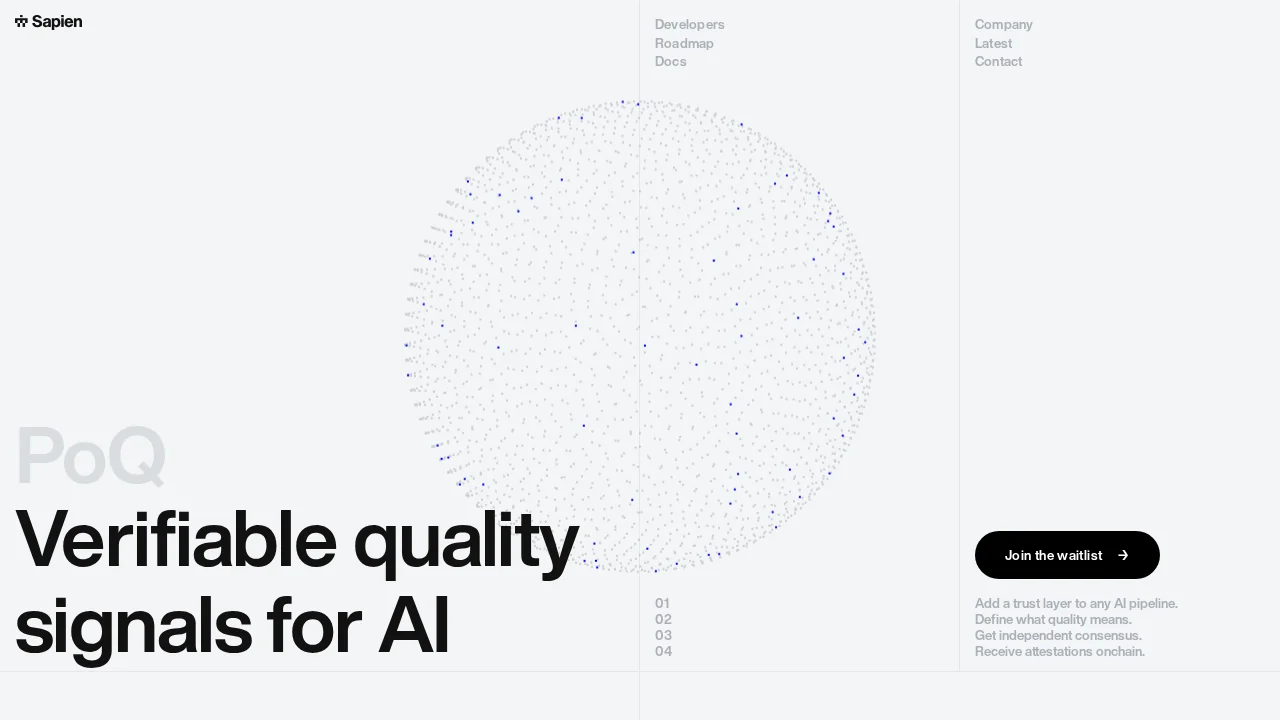
About Sapien
Sapien combines human expertise with AI-driven workflows to deliver precise data annotation at scale. By integrating real-time human feedback into the labeling process, Sapien ensures that training datasets meet rigorous quality standards essential for building robust language models and AI applications. This hybrid approach bridges the gap between fully automated labeling and manual annotation, reducing errors while maintaining efficiency.
The platform addresses the critical challenge of scaling annotation operations without sacrificing accuracy. Organizations can expand or reduce labeling resources on demand, making it cost-effective for both small pilot projects and enterprise-level initiatives. Whether you need specialized domain expertise or general data labeling, Sapien's flexible architecture adapts to your specific requirements and data types.
With a global network of labelers spanning over 73 countries and supporting 235+ languages and dialects, Sapien enables organizations to build truly multilingual AI systems. This geographic and linguistic diversity ensures that training data reflects authentic use cases across different regions and cultural contexts, resulting in more robust and equitable AI models. The platform's infrastructure handles complex annotation requirements while maintaining consistency and quality across all submissions.
Features
- Expert Human Feedback: Incorporates real-time human input to fine-tune datasets, ensuring high-quality training data that enhance LLM performance.
- Scalable Labeling Operations: Can quickly adjust its labeling resources to meet client demands efficiently, whether for small projects or large-scale operations.
- Customizable Labeling Solutions: Tailored to specific data types and annotation requirements, ensuring flexibility across various AI applications.
- Global Reach: Supports a diverse range of data labeling needs with labelers in over 73 countries and fluency in 235+ languages and dialects.