Scenario
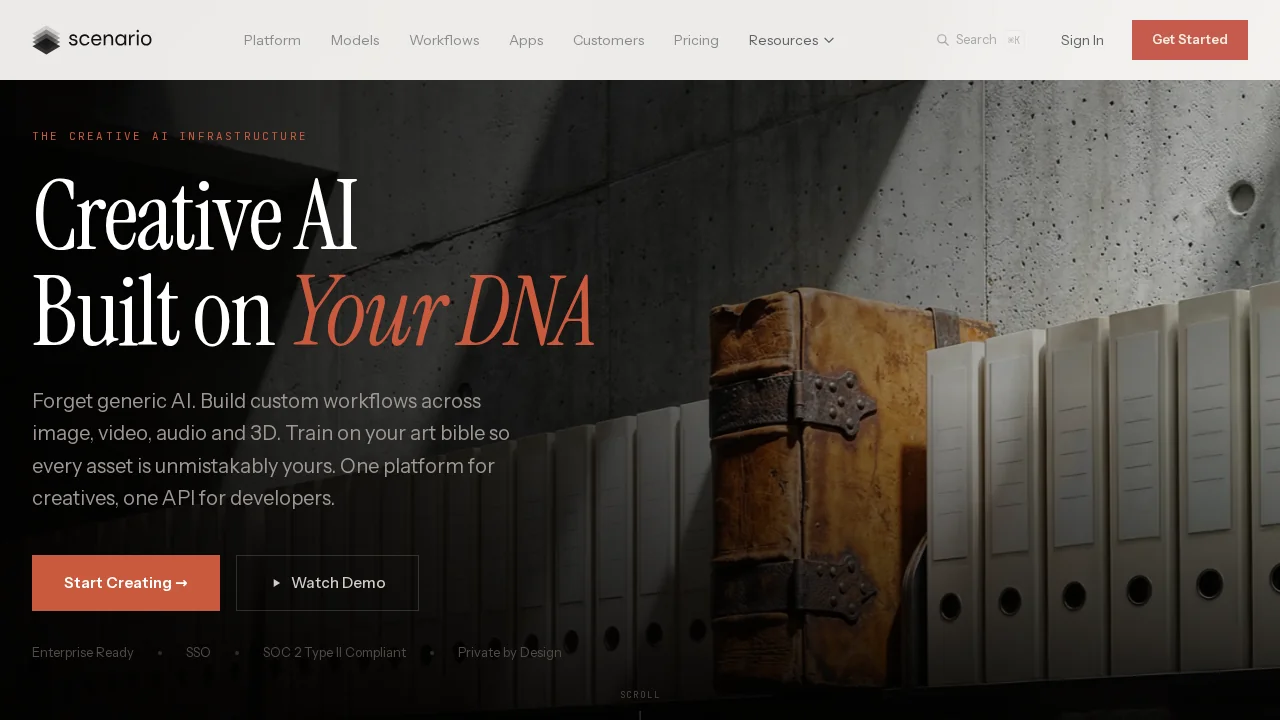
Scenario is an AI platform that generates production-ready game assets with consistent style and infinite variations.
Scenario at a glance
- Pricing
- Free — from $12/month
- Rating
- ⭐ 4.5/5 · 4 reviews
- Key strengths
- Generates infinite style-consistent asset variations instantly · Custom model training on proprietary art styles · Seamless integration with game engines and design tools
Screenshots
About Scenario
Scenario accelerates game development by automating the creation of high-quality visual assets through a custom-trained AI engine. Developers can train models on their own art style and design language, then generate unlimited variations of characters, environments, outfits, and seasonal content with pixel-perfect control. This approach eliminates tedious asset creation cycles and maintains visual consistency across entire game projects.
The platform integrates seamlessly into existing workflows through API-first architecture, connecting directly to popular game engines and design software. Teams can embed Scenario into their production pipeline without disrupting established processes, allowing artists and designers to focus on creative direction rather than repetitive asset generation.
Scenario empowers collaboration across studios by dramatically reducing production timelines for visual asset creation. The platform includes advanced controls like Composition Control and Pixel-Perfect Inpainting, enabling fine-grained adjustments to generated outputs. This balance between automation and creative control ensures developers maintain artistic vision while gaining significant productivity gains.
Beyond studio use, Scenario's API can power player-generated content within games, automatically maintaining style consistency and quality standards. This capability opens new possibilities for user-generated content while keeping visual integrity intact across community contributions.
Pros
Cons
Alternatives to Scenario
Iliad
Chatforce